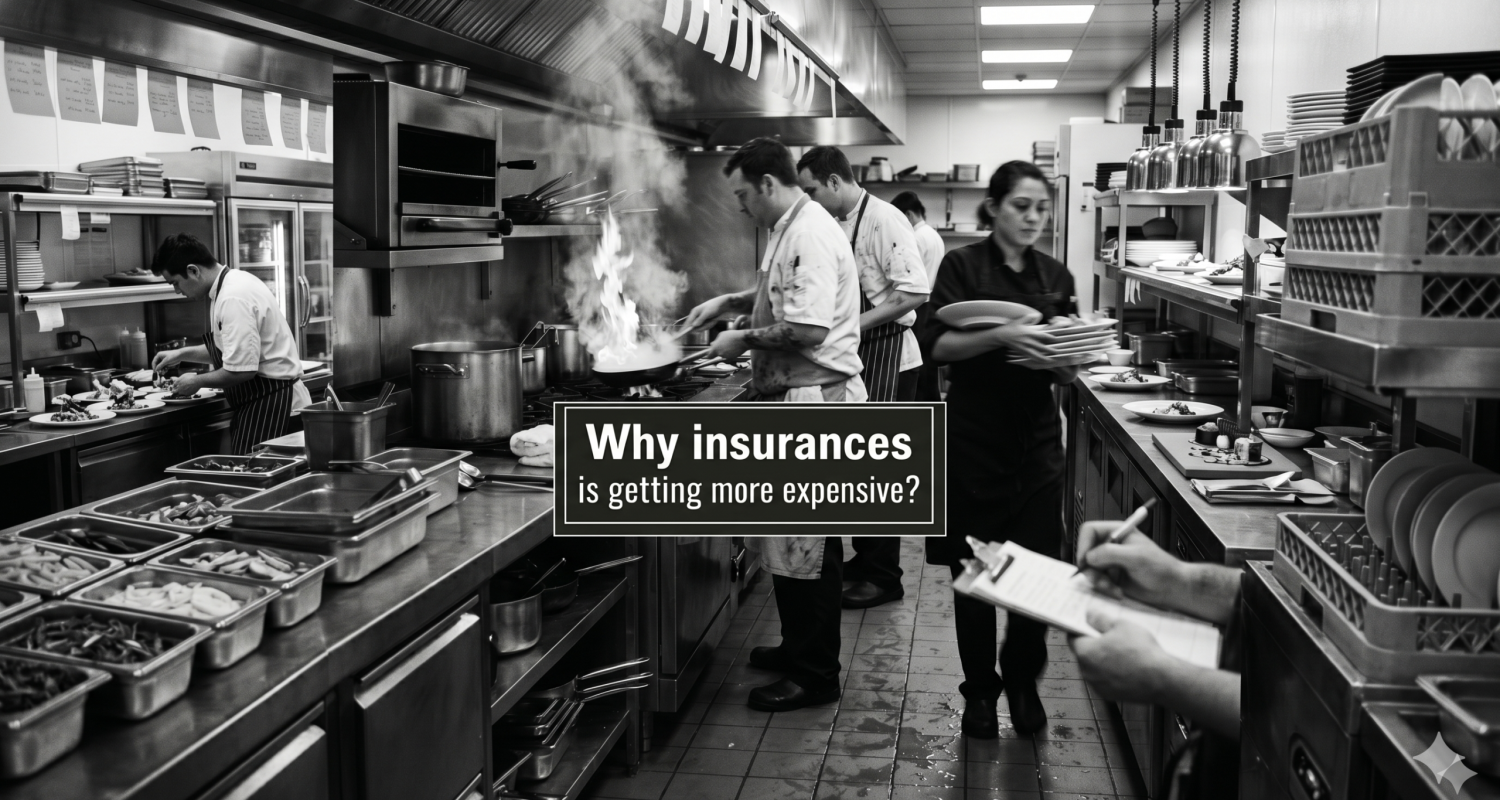
If you own a restaurant in Florida, there is a good chance you have looked at a renewal, quote, or coverage review recently and thought the same thing many owners are thinking right now: why is my restaurant insurance getting so expensive in Florida?
It is a fair question, and it is becoming a more urgent one.
Restaurants are already operating under pressure. The National Restaurant Association’s 2026 State of the Restaurant Industry says rising costs remain the industry’s key stressor, with more than 9 in 10 operators identifying food, labor, insurance, energy, and swipe fees as significant challenges. The same report says 42 percent of operators reported their restaurant was not profitable last year.
So when insurance costs rise, they do not rise in isolation. They land on top of payroll pressure, food costs, margin compression, vendor instability, and the daily unpredictability that already defines restaurant operations. In Florida, that pain can feel even sharper because restaurant risk is not generic small business risk. It is highly physical, highly public, weather-sensitive, staff-dependent, and time-sensitive. CIS’s own restaurant and entertainment insurance page reflects that reality by listing exposures such as property, workers’ compensation, commercial auto, cyber liability, and equipment breakdown as part of the coverage mix restaurants often need.
That is the bigger truth behind the pricing question. In many cases, your insurance is not getting more expensive because someone flipped a random switch. It is getting more expensive because restaurants combine multiple layers of risk in one business model, and Florida adds extra pressure on top of that.
The short answer
The short answer is this: restaurant insurance is getting more expensive in Florida because restaurants are expensive to insure.
That may sound too simple, but it is the right starting point.
A restaurant has customers coming in and out all day. It has employees working fast, often around heat, sharp tools, wet floors, heavy lifting, and time pressure. It may serve alcohol. It may rely on refrigeration, cooking equipment, POS systems, online ordering, delivery, and off-premises fulfillment. It may lose money quickly if it closes even for a short time. And in Florida, it operates in a state where weather preparation is a standing operational issue, not a rare exception. Florida emergency guidance explicitly encourages businesses to build a plan and prepare before storms escalate, which tells you something important: disruption is not hypothetical here.
When all of that risk stacks together, insurance pricing usually reflects it.
Restaurants carry more moving parts than many owners realize
One reason pricing feels frustrating is that many owners compare their restaurant to a simpler business model without realizing how much more operational exposure they carry.
A small office may have limited public traffic, a lower injury profile, fewer sanitation issues, no hot kitchen, no perishables, and less dependence on uninterrupted on-site operations. A restaurant is different. CIS highlights that restaurants often need property insurance, workers’ compensation insurance, cyber liability insurance, equipment breakdown insurance, and in some cases liquor liability insurance because the business itself creates several overlapping risk layers.
That matters because premiums are not just about whether you have ever filed a claim. They are also about what kind of business you run and how many things can go wrong.
Restaurants combine:
- customer injury exposure
- employee injury exposure
- food-related risk
- alcohol-related risk in some concepts
- property and equipment exposure
- spoilage exposure
- cyber and payment-system exposure
- shutdown risk after storms or outages
- delivery and off-premises complications in many operations
When owners ask why the quote feels heavy, this is often the missing piece. The business is more complex from an insurance perspective than it looks from the dining room.
Florida makes the exposure harder, not easier
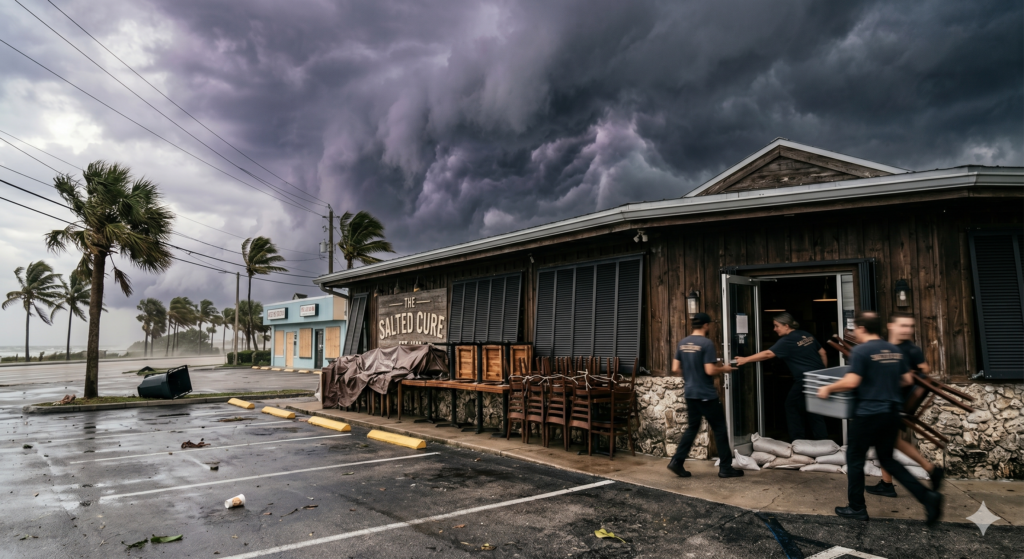
A restaurant in Florida is not being priced in a vacuum. It is being priced in a state where weather, power loss, storm damage, humidity, and business interruption concerns carry much more weight than they might in a lower-exposure state.
Florida preparedness guidance repeatedly tells businesses to make a plan, secure communications, organize supplies, and prepare before the season intensifies. The Florida Division of Emergency Management also points businesses to planning tools specifically designed to help them build a business plan for disruptions.
That lines up with what restaurant owners already know from experience: one storm does not just threaten the roof. It can threaten refrigeration, perishables, staffing, access, vendor deliveries, customer traffic, and reopening speed. CIS’s recent article on storm closures makes that exact point. A closure is not just a repair issue; it is an operational interruption that affects revenue, inventory, labor, and recovery timing.
So when a Florida restaurant owner says, “My insurance keeps getting more expensive,” part of the answer is that the operating environment itself is harsh on continuity. Insurers price for that reality.
Insurance is rising at the same time restaurant margins are being squeezed
This is what makes the issue feel so personal.
If insurance were rising in a strong-margin environment, owners would still dislike it, but they might absorb it more easily. That is not the environment most operators are in.
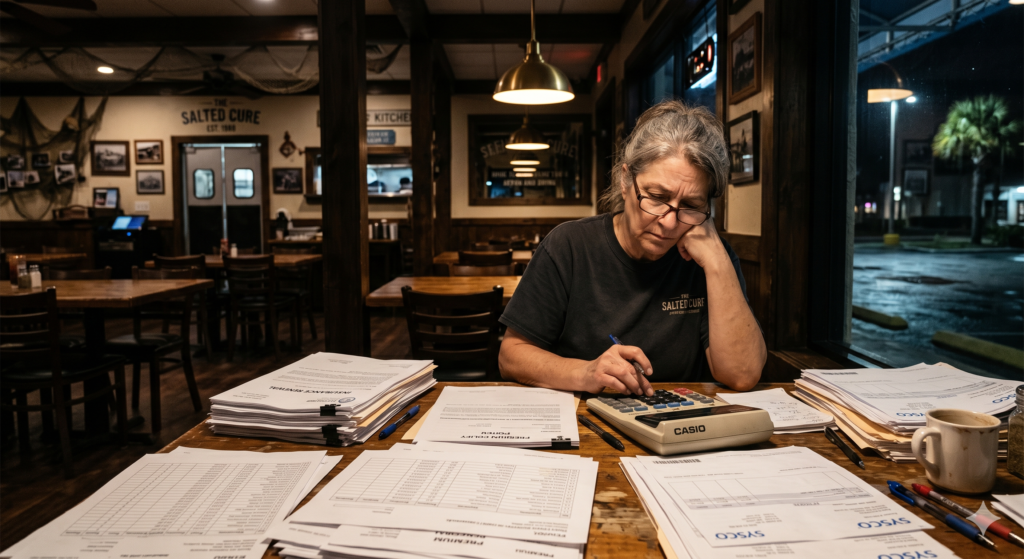
The National Restaurant Association says the 2026 environment is still defined by persistent cost pressure. More than 9 in 10 operators cite food, labor, insurance, energy, and swipe fees as major challenges, and nearly three quarters plan to hire while expecting difficulty finding experienced managers and chefs. Florida employers also know that the state minimum wage is scheduled to reach $15.00 per hour on September 30, 2026, continuing the cost climb for labor-intensive businesses.
That does not mean wage increases cause your insurance quote directly. It means your insurance bill is hitting a business that is already absorbing multiple cost increases at once. That is why it feels so much worse than a line-item increase on paper.
Property exposure is a major cost driver
Many restaurant owners think first about liability when they think about insurance costs, but property insurance is often a major part of the conversation.
CIS describes property insurance as protection for damage to business property, including equipment, fixtures, and furniture. In a restaurant, those assets are not minor. A kitchen can contain high-value equipment, refrigeration systems, electrical systems, furniture, POS hardware, décor, inventory-supporting systems, and buildout features that are expensive to replace or repair.
And in Florida, property-related exposure is not only about fire or theft. It is also about wind, storm impact, water intrusion, and operational downtime after physical damage. The state’s insurance regulator notes that wind mitigation measures can help consumers qualify for premium savings by reducing windstorm damage exposure. That is a useful clue about the broader market logic: if mitigating wind risk can reduce premium pressure, then unmitigated or high-exposure property risk is clearly part of what drives pricing higher.
For a restaurant, that means the physical setup of the business matters. Roof condition, location, storm vulnerability, maintenance, building characteristics, equipment concentration, and even how much a shutdown would cost can all affect how coverage is viewed.
Liability is not one thing in a restaurant
Another reason pricing can feel high is that liability in a restaurant is rarely simple.
CIS describes general liability insurance as protection for damages and injuries to third parties that occur on your premises. That already matters for restaurants because they involve customer traffic, movement, wet surfaces, seating issues, crowded service areas, and fast-paced environments. But restaurant liability does not stop there.
A restaurant may also face:
- food-related claims
- alcohol-related incidents
- vendor and visitor injuries
- claims tied to conditions on the premises
- delivery-related allegations depending on operations
- reopening or post-disruption issues after damage or closure
That is one reason CIS recently published why restaurant insurance costs more than many owners expect. The article points out that restaurants face more everyday liability exposure than many small businesses and that customers can get hurt more easily in restaurant environments than in many lower-traffic operations.
So if a quote feels expensive, one honest answer is that insurers are not only pricing a building. They are pricing the reality that your business interacts with the public constantly and carries multiple ways a claim can happen.}
Labor risk still affects the overall picture
Restaurants are labor-heavy businesses. Even if you are not thinking specifically about workers’ compensation insurance when you look at the total bill, labor-related exposure is part of why restaurant coverage does not price like a low-touch office business.
CIS includes workers’ compensation insurance among the core coverages in its restaurant program. That makes sense. Restaurants depend on staff working around heat, knives, lifting, slippery floors, repetitive motion, and high-speed service demands.
At the same time, the broader industry is dealing with sustained labor pressure. The National Restaurant Association says restaurant employment is projected to reach 15.8 million jobs in 2026, but operators still expect difficulty filling open positions. That often means more training pressure, more operational strain, and in some businesses more risk created by turnover or staffing instability.
Again, this does not mean every staffing problem becomes an insurance claim. It means restaurants are people-intensive businesses, and people-intensive businesses often carry heavier insurance complexity.
Technology and cyber risk are now part of restaurant insurance too
A lot of owners still think of restaurant insurance in old categories: slips, fires, storms, and maybe workers’ comp.
But modern restaurant operations also rely heavily on digital tools. Payment systems, POS software, scheduling tools, reservation platforms, loyalty systems, delivery integrations, inventory platforms, and customer data all create another layer of exposure.
That is why CIS includes cyber liability insurance as part of restaurant and entertainment coverage and describes it as protection against losses from cyberattacks, data breaches, and other technology-related incidents. The National Restaurant Association also says operators are investing more in ordering, AI, and data analytics to manage costs and improve efficiency. That trend may help operations, but it also means restaurants are becoming more digitally dependent.
When your operations become more digital, your risk profile changes. And when your risk profile changes, insurance pricing can change with it.
Equipment dependence quietly drives exposure higher
Restaurants do not just use equipment. They depend on it in a way many businesses do not.
That is why equipment breakdown insurance appears directly in CIS’s restaurant coverage list. If refrigeration, cooking systems, ventilation, or other critical equipment fails, the damage is not always limited to the machine itself. It can trigger spoilage, downtime, canceled service, service delays, repair costs, and revenue loss.
This is one of the more overlooked reasons restaurant insurance can feel expensive. Restaurants are mechanical businesses disguised as hospitality businesses. Customers see service and food. Insurers also see refrigeration, exhaust, electrical loads, heat, spoilage exposure, and time-sensitive operations that can unravel quickly when a critical system goes down.
Alcohol can change the pricing conversation fast
If your restaurant serves alcohol, the pricing discussion can shift further.
CIS includes liquor liability insurance in its restaurant offerings and has published separate content explaining why alcohol-related exposure can be financially serious for restaurants with full bars. If alcohol service is part of the operation, that can expand the risk profile because claims can involve injuries, property damage, and incidents linked to intoxicated patrons.
That does not mean every restaurant that serves alcohol is automatically mispriced. It means the operational model matters. A casual lunch concept without alcohol, a full-bar nightlife-adjacent concept, and a family restaurant with occasional drink service may not present the same level of exposure.

Owners often feel overcharged because they are seeing the total stack, not one cause
This is where many restaurant owners get frustrated.
They want a single reason: hurricanes, lawsuits, labor, theft, alcohol, food poisoning, payroll, delivery, crime, cyber risk. But often there is no single reason. There is a stack.
Insurance gets expensive in Florida restaurants because multiple pressures are converging at the same time:
- restaurant margins are already tight
- labor costs remain elevated
- Florida weather exposure is real
- physical property values and equipment matter
- customer injury exposure is constant
- digital systems create cyber exposure
- equipment failure can stop operations
- alcohol can widen liability in some concepts
- downtime can hurt harder than owners first expect
That stacked-risk reality is exactly why restaurant and entertainment insurance is rarely just one small policy. It is usually a structure.
What owners should do instead of just getting angry at the renewal
Getting angry is understandable. But it is not enough.
A better move is to treat rising premium pressure as a signal to review the business honestly.
That review should include questions like:
- Has the concept changed since the policy was last reviewed?
- Are we doing more delivery, events, catering, or alcohol service now?
- Are our property values and equipment values still realistic?
- Have we added technology dependence without thinking about cyber exposure?
- Would a short closure hurt us more than it would have a year ago?
- Are we carrying assumptions, or are we carrying reviewed coverage?
CIS has already pushed that mindset in why restaurant insurance costs more than many owners expect and in its broader restaurant content. The smartest review is not only about asking for a cheaper number. It is about asking whether the current structure actually reflects the business you run today.
Where owners may have some leverage
Not every pricing pressure can be negotiated away, but not every increase should be accepted passively either.
For example, Florida’s insurance regulator says wind mitigation improvements can lead to premium savings by reducing windstorm damage exposure. That does not mean every restaurant can easily unlock a discount, but it does show that risk reduction can matter in pricing conversations.
More broadly, owners usually have better odds of improving outcomes when they:
- keep valuations current instead of guessing
- document operational changes clearly
- review alcohol, delivery, and digital exposures honestly
- prepare before hurricane season instead of after
- think about downtime, not only physical damage
- avoid one-size-fits-all small business assumptions
The point is not that every premium increase is wrong. The point is that some owners are paying for outdated, mismatched, or poorly reviewed insurance structures without realizing it.
The real answer to the question
So why is your restaurant insurance getting so expensive in Florida?
Because your restaurant is not being priced as a simple business.
It is being priced as a public-facing, labor-intensive, property-heavy, interruption-sensitive operation in a state where storm readiness is part of reality, not theory. It is being priced in an industry where operators are already under heavy pressure from food, labor, insurance, energy, and transaction costs. And it is being priced in a business model where one incident can affect customers, staff, property, equipment, and cash flow all at once.
That does not make every premium increase pleasant. But it does make the logic easier to understand.
And once you understand the logic, you can make better decisions.
The right question is not only “Why is this expensive?”
It is also “Does my current coverage actually fit the risks my restaurant carries now?”
That is the question that tends to lead to smarter action. Key Questions for Reviewing Your Restaurant Insurance Plan