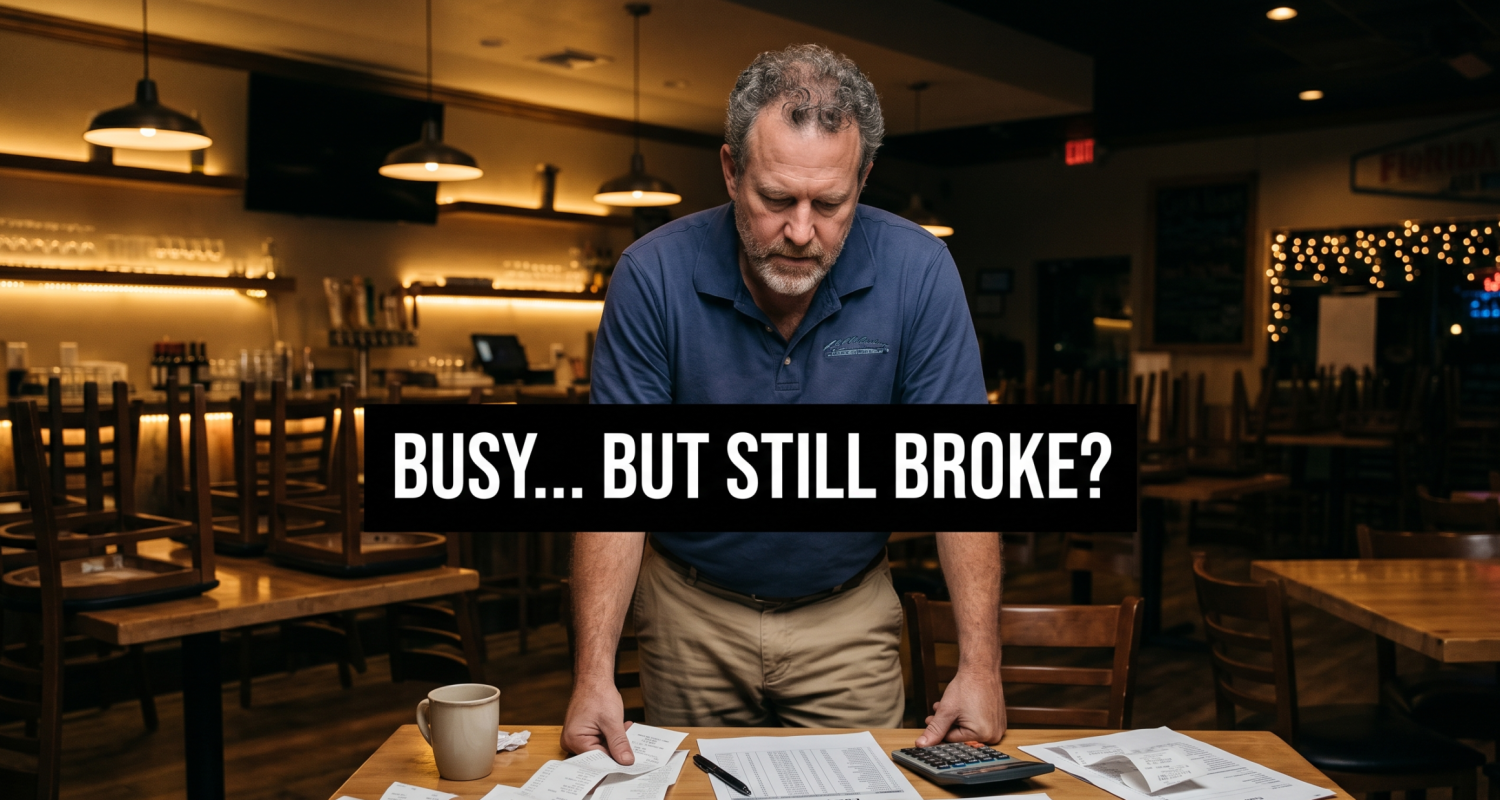
We were busy every night, but still losing money.
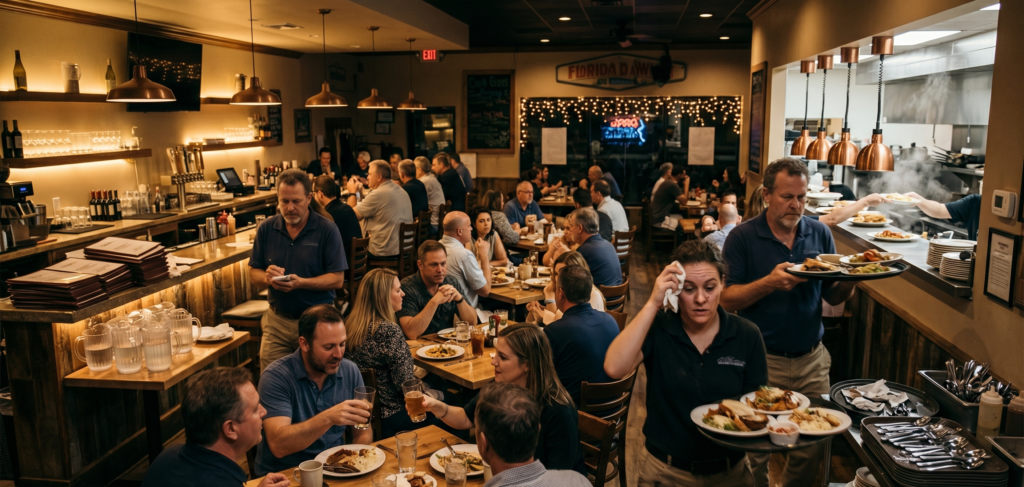
That sentence sounds contradictory until you have lived it. From outside, the restaurant looked alive. Tables were full. Orders were moving. Staff were rushing. We had the kind of visible activity that makes people assume a restaurant is doing well.
Inside, it felt very different.
The State of the Restaurant Industry 2026 says the restaurant industry expects growth, but it also says rising costs remain the industry’s key stressor, and 42 percent of operators reported their restaurant was not profitable last year. That is the real reason this story matters. A busy restaurant is not automatically a healthy restaurant. In 2026, a lot of owners are learning that volume can hide weakness for a long time.
If I tell this as a first-person restaurant story, it begins with a mistake that is easy to make: I thought activity was the same thing as stability. I thought if the dining room kept moving, the business was still fundamentally safe. What I did not understand soon enough was that sales pressure, labor pressure, food costs, fees, insurance costs, and small operational failures can eat away at a restaurant even when it looks successful from the street. CIS’s why is my restaurant insurance getting so expensive in Florida? makes a related point directly: restaurant risk is layered, and costs do not rise in isolation.
That is why the title is not dramatic for the sake of drama. It is a real owner experience.
The dining room looked healthy, but the business was getting weaker
The most dangerous stage in restaurant decline is often not emptiness. It is false reassurance.
A slow restaurant scares you immediately. A busy restaurant can fool you. You see guests, hear noise, watch food leave the kitchen, and tell yourself the fundamentals must still be intact. But that is not always true. The James Beard Foundation industry findings, summarized by Axios in February 2026, say many restaurants have hit a price ceiling, and more than 40% of operators who added online ordering and delivery reported lower profits.
That detail matters because it shows the broader pattern: restaurants can add activity without improving financial health.
If I describe the week honestly, it felt something like this:
We were selling.
We were moving.
We were tired.
But the money never seemed to stretch far enough.
Payroll hit harder than expected. Ingredient costs were still high. Small mistakes created expensive waste. Fees took more than I wanted to admit. Repairs never arrived at a convenient time. And because the restaurant still looked alive, I kept postponing the harder conclusion.
The harder conclusion was that being busy was no longer enough.
The numbers felt wrong before the story made sense
Many restaurant owners do not get the warning in one clean sentence. They feel it in fragments.
One week the sales are decent, but the cash flow still feels tight.
Another week the team works nonstop, but the margin still feels thin.
Another week there is a minor equipment problem, a labor gap, a couple of comped meals, and suddenly the whole operation feels heavier than it should.
That is usually how the story begins.
Not with collapse.
With a nagging mismatch between effort and outcome.
The State of the Restaurant Industry 2026 supports that feeling. It says operators are still dealing with pressure from food, labor, insurance, energy, and swipe fees. When several of those pressures hit at once, a restaurant can be visibly active and financially weaker at the same time.
This is one reason what should a restaurant do to avoid bankruptcy is such an important internal CIS article for this topic. The core idea there is not that restaurants fail because owners do nothing. It is that they often fail because too many problems stack quietly while the business is still technically operating. That is exactly what a “busy but still losing money” story reveals.
Volume can hide weak margins
This may be the simplest business truth in the whole article.
More sales do not automatically mean stronger profit.
That sounds obvious when written down, but it is emotionally hard for owners to accept when they are living it. A full dining room feels like evidence. It feels like the market is validating the concept. It feels like the hard part is already solved.
But a restaurant can be busy and still suffer from:
- weak margins on core menu items
- labor strain that makes every shift expensive
- delivery or app-related friction that eats into profits
- waste and spoilage that never fully show up in the vibe of the room
- rising insurance and operating costs
- too many small compounding inefficiencies
Axios’s summary of the James Beard Foundation report is helpful here because it captures the new mood well: many independent restaurants say they have reached the limit on how much they can raise prices, and prior strategies like price hikes and delivery growth are no longer solving profitability by themselves.
So the story is not “we were doing badly and did not know it.”
It is “we were doing something that looked good, but the math underneath had changed.”
Labor pressure changes the meaning of a busy night
A packed shift can feel impressive. It can also be expensive in ways owners stop seeing clearly.
If labor is already strained, every busy night can carry extra hidden cost:
- overtime or near-overtime pressure
- rushed training
- higher error rates
- more stress-related mistakes
- more manager intervention
- faster burnout
- lower consistency
- greater exposure to employee injuries or customer incidents
That is why a story about weak profit should not be treated like a pure finance story. It is also an operations and risk story.
CIS has already been moving in that direction. Its recent restaurant articles consistently frame the business as a layered risk environment, not just a sales machine. The restaurant and entertainment insurance page does this very directly by grouping together general liability, property insurance, workers’ compensation insurance, cyber liability insurance, and equipment breakdown insurance in one protection structure.
That is useful because it reminds the owner that the business is not only trying to sell. It is trying to absorb complexity.
And when margins are weak, complexity gets more dangerous.
It is easy to confuse momentum with control
This is one of the deepest psychological mistakes in restaurant ownership.
When the restaurant is busy, everyone is moving. That movement feels like control. It feels like proof that the machine is alive.
But movement is not the same thing as control.
A restaurant can have momentum while losing control of:
- actual margin on high-volume items
- labor efficiency
- cleanup discipline
- incident prevention
- waste tracking
- maintenance timing
- review of coverage gaps
- how much each “busy night” is really worth
This is where the storytelling frame helps more than a cold explainer. The owner is not only describing bad accounting. The owner is describing the moment they realized they had been emotionally reassured by activity.
That realization is painful because it forces a different question:
not “Are we open and busy?”
but “Is this business actually getting stronger?”
Small operational problems get much more expensive when margins are thin
One reason owners feel blindsided is that ordinary restaurant problems become much more threatening once profit weakens.
A refrigeration hiccup is no longer just annoying.
A staffing gap is no longer just stressful.
A customer complaint is no longer just part of hospitality.
A claim, repair, or service disruption is no longer just “one of those things.”
It all hits harder when the financial cushion is small.
That is why restaurant business insurance: essential coverage for startup restaurants is relevant even for businesses that are no longer new. CIS makes the point there that restaurants in Florida face multiple exposures before they become strong enough to absorb them comfortably. The same logic applies later too: a restaurant can look mature and still be financially too thin to absorb stacked disruption well. (usa-cis.com)
This is also where insurance becomes part of the profitability conversation whether the owner likes it or not. If the business has little room for error, then coverage is not just a compliance purchase. It is part of how the restaurant survives a bad run of events.
Delivery, fees, and modern restaurant growth do not always help the way owners expect
Another reason this topic resonates now is that restaurant owners have tried many logical survival moves over the last few years: increase prices, add delivery, streamline service, push volume harder, rely more on digital ordering.
Those choices are understandable. But they have not always translated into healthier businesses.
The Axios summary of the James Beard Foundation report says many operators who added online ordering and delivery still ended up with lower profits. That matters because it breaks a common assumption: more channels, more orders, more movement does not necessarily mean more financial strength.
If I tell the story honestly, that was part of the psychological trap too. It was easy to keep saying:
“We’re adapting.”
“We’re selling.”
“We’re getting orders.”
“We’re still here.”
But the deeper question was whether adaptation was actually improving the business or just increasing the amount of complexity the team had to manage.
A busy restaurant can still be one bad week away from panic
This is where the story becomes uncomfortable.
When margins are already weak, one bad week can feel existential fast.
Not because every owner is reckless.
Not because every restaurant is failing.
Because a thin-margin business does not need one cinematic catastrophe to feel real danger.
It may only need:
- a repair that lands at the wrong time
- a payroll week that hits harder than expected
- a few lower-margin days in a row
- a slip in service quality that causes comps or refunds
- one customer issue that absorbs management attention
- one claim, one disruption, or one system problem layered onto existing pressure
That is why the internal CIS article what should a restaurant do to avoid bankruptcy works so well beside this story. The lesson is not abstract. It is practical: bankruptcy risk often starts long before the legal endpoint, when the business no longer has enough room to absorb friction.

This is where insurance stops feeling theoretical
A lot of owners think about insurance as something separate from profitability until they hit a week like this.
Then the questions change.
If the business is already thin, insurance suddenly matters in a more immediate way:
- Are we carrying the right structure?
- Are we underinsured where it matters?
- Are we treating real exposure like background noise?
- If something goes wrong right now, do we have enough support to absorb it?
- Have we reviewed the business honestly, or only renewed paperwork?
That is why key questions for reviewing your restaurant insurance plan belongs naturally in this article. It speaks to the exact mistake behind the story: the owner kept assuming the current setup was “fine” because nothing had forced a deeper review yet.
And that is also why why is my restaurant insurance getting so expensive in Florida? matters here too. That article explains the layered nature of restaurant exposure in Florida. A restaurant that is already weak on margin usually feels those layered risks more sharply, not less.
The emotional truth is that owners can stay in denial longer when the restaurant is busy
This may be the sharpest insight in the whole piece.
Owners can stay in denial longer when the restaurant is busy.
An empty restaurant forces clarity.
A busy one lets you postpone it.
That is why this story should exist on the CIS site. It captures a kind of danger owners do not always see in normal insurance content: the danger of activity masking fragility.
The owner is not ignoring reality because they are lazy. They are ignoring it because the restaurant still gives them enough visual reassurance to keep hoping the numbers will eventually catch up.
Sometimes they do not.
What I should have asked sooner
If this were the lesson section of the story, it would sound something like this:
I should have asked earlier whether the business was really getting healthier or just getting louder. I should have asked whether our current cost structure still made sense. I should have asked whether our restaurant and entertainment insurance setup matched the operation we were actually running. I should have asked whether being busy had made me less honest, not more honest, about the business.
Those are the questions that matter.
Because once a restaurant is too thin, even ordinary disruption starts feeling dangerous.
The sharper ending
So what is the real point of this story?
It is not that a busy restaurant is secretly doomed.
It is not that strong sales never matter.
It is this:
A restaurant can look alive and still be financially weak.
And when an owner finally realizes that, it usually means the warning signs have been there for a while.
The smartest move is not to wait for the numbers to become impossible before facing the truth. The smarter move is to review the business while it still has enough strength to change course.
Because a full dining room is not the same thing as a safe business.
And being busy every night is not the same thing as making money.