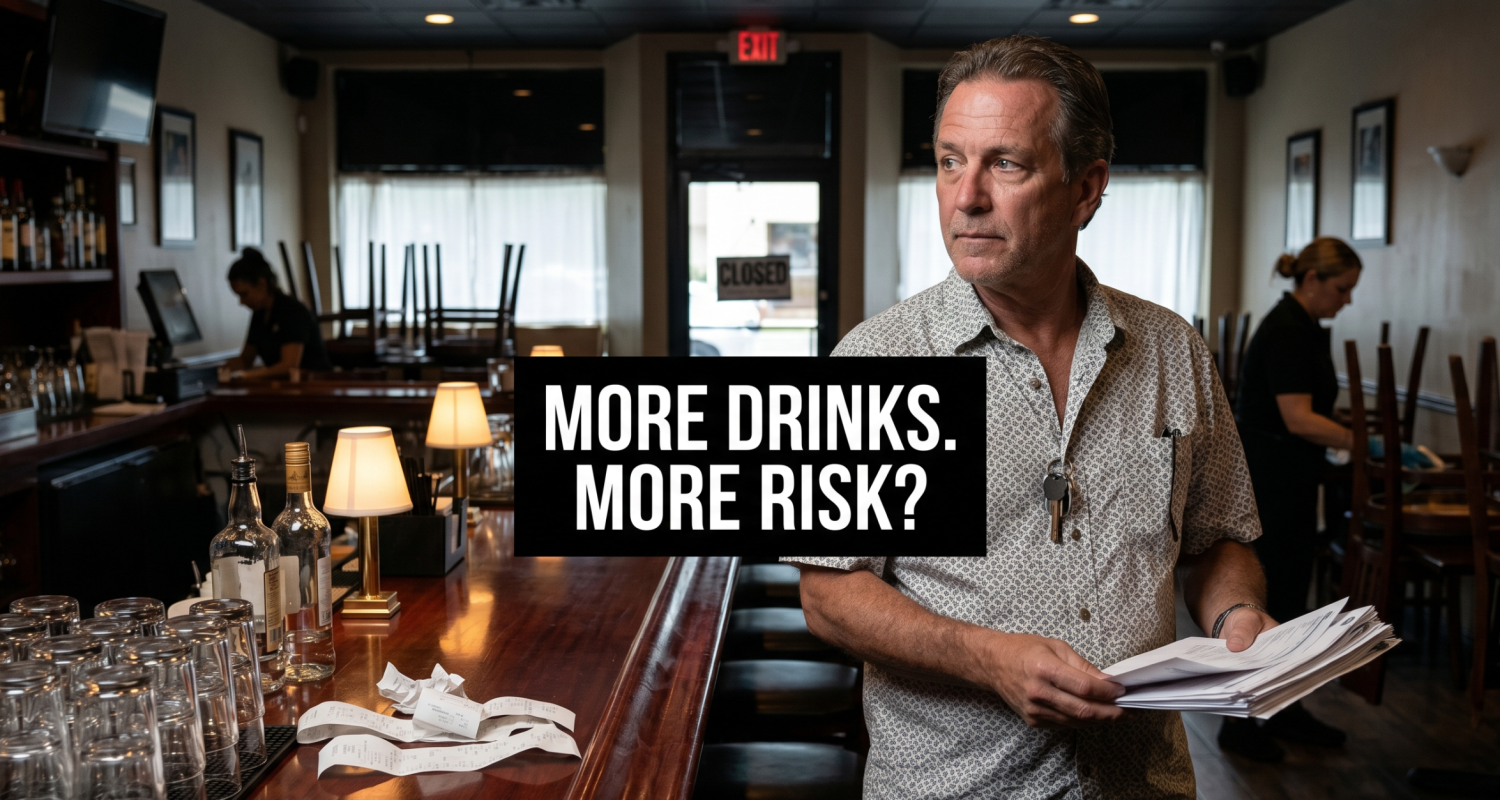
We started selling more drinks, then risk changed.
At first, it felt like good news.
The beverage numbers were improving. Checks were stronger. Guests were staying longer. The room felt more alive at night. From a business point of view, it looked like we had found one of the few parts of the restaurant that could still help margins breathe.
That is exactly why this story matters.
The same thing that can help a restaurant feel stronger financially can also make the operation more exposed in ways the owner does not fully register at first. CIS already frames this clearly in restaurant and entertainment insurance, where liquor liability insurance appears alongside general liability, property insurance, workers’ compensation insurance, cyber liability insurance, and equipment breakdown insurance. (usa-cis.com) That matters because alcohol is not just another menu category. When alcohol becomes more important, the business itself can start behaving differently.
And from a market standpoint, the timing makes sense. The State of the Restaurant Industry 2026 says the industry expects growth but is still operating under heavy cost pressure. (restaurant.org) In that kind of environment, many owners naturally lean harder into beverages because drinks can improve the economics of a check more easily than food alone.
The problem is that alcohol can improve revenue and increase risk at the same time.
At first, I only saw the upside
If I tell this like a real owner would tell it, the beginning is simple.
We were looking for ways to make the business work better. Costs were high. Margin pressure was constant. Guests were still coming, but every dollar mattered more than it used to. So when the drinks started moving more consistently, it felt like a smart shift. Better cocktails, stronger evening traffic, a bar area that finally felt worth the effort. It looked like progress.
And it was progress, at least in one sense.
The National Restaurant Association’s beverage-alcohol research says alcohol remains a meaningful revenue category, and Trends in On- and Off-Premises Beverage Alcohol shows how important beverage sales still are in restaurant economics. (restaurant.org) There is nothing irrational about wanting to improve drink sales.
But what I was slow to understand was that I was not only growing a revenue stream. I was changing the operating environment.
The room started feeling different before I could explain why
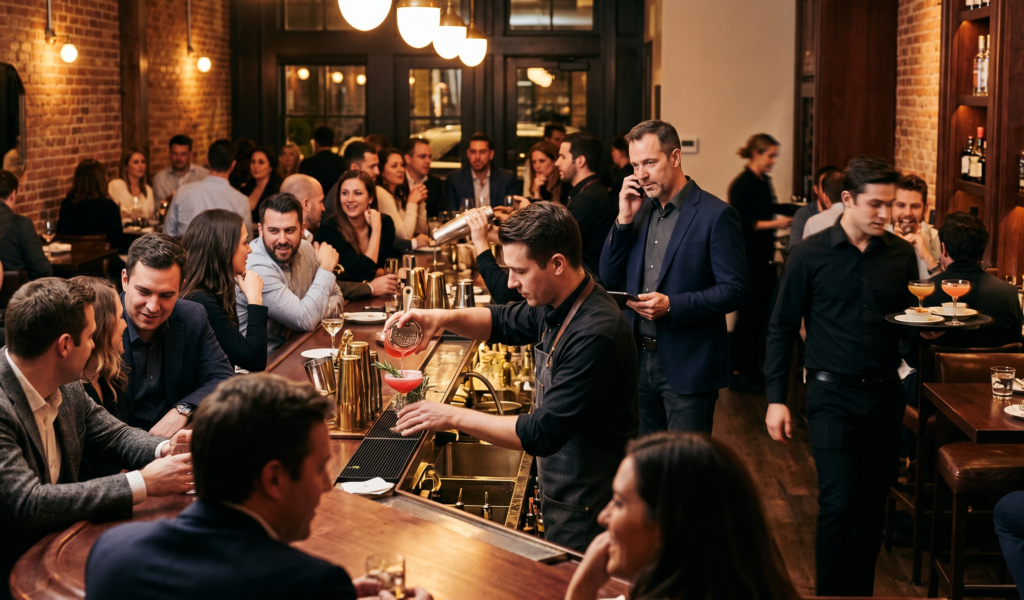
One of the earliest warning signs was not in the insurance conversation. It was in the feeling of the restaurant.
Guests were staying longer. The bar side of the room was louder. Service judgment mattered more. Managers had to step in more often. Some nights felt less like dinner service and more like crowd management with food attached.
That shift matters.
A restaurant can technically remain the same concept while its real exposure changes underneath. More alcohol can bring more celebrations, later linger time, louder tables, more pressure on servers, and more opportunities for situations that require judgment instead of routine hospitality.
This is one reason key questions for reviewing your restaurant insurance plan is such an important CIS article for this topic. It says directly that if your restaurant, bar, or café serves alcohol, liquor liability insurance is absolutely non-negotiable. (usa-cis.com) The key word there is not only insurance. It is review. The article is really telling owners to recognize when the operation has changed enough that the old assumptions no longer fit.
That was the real lesson for me.
The drinks were not just improving the check.
They were changing the room.
More drinks usually means more staff judgment
This is where the issue stops being abstract.
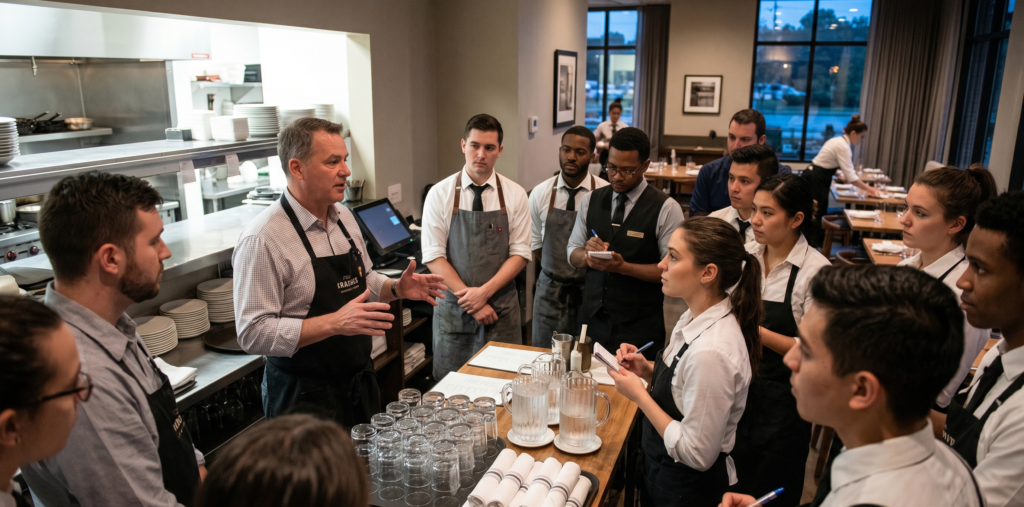
When alcohol becomes more central to the business, your staff has to make more decisions that are not purely service decisions. They become judgment decisions.
They have to think about:
- when to check identification
- when to slow service
- when to stop service
- when a guest is becoming a problem
- when a bartender needs management support
- when the room is still lively and when it is starting to shift into something riskier
That matters because alcohol-related exposure is rarely created by one cartoonishly reckless moment. More often, it grows out of ordinary service pressure: busy room, loud environment, tired staff, weak communication, inconsistent cutoff decisions, or managers who are already trying to solve five other problems.
CIS makes that point from another angle in liquor liability insurance for restaurants with full bars, where it says liquor liability insurance for restaurants Florida is designed to protect a business from claims tied to the actions of intoxicated patrons. (usa-cis.com)
That is why the real risk increase is not just legal. It is operational. The more alcohol matters, the more your team’s judgment matters too.
Florida law matters, but it does not erase alcohol risk
Some owners get too relaxed here because they hear that Florida is not an unlimited dram shop state.
That is not the same thing as being safe.
The controlling statute is 768.125 Liability for injury or damage resulting from intoxication. It says a person who sells or furnishes alcohol to a person of lawful drinking age is generally not liable for resulting injury or damage, except when someone willfully and unlawfully serves a minor or knowingly serves a person habitually addicted to alcohol. (leg.state.fl.us)
That legal boundary is important, but it does not solve the broader business problem.
Even without unlimited liability, alcohol can still create:
- on-premises incidents
- guest-management problems
- legal expense and disruption
- reputational damage
- management distraction
- difficult fact patterns after a bad night
So the mature reading of Florida law is not “we are protected from everything.”
The mature reading is “the legal structure has boundaries, but alcohol still creates meaningful exposure.”
The crowd can change before the owner fully notices it
This may be one of the most useful insights in the whole article.
As drink sales rise, the customer mix and the energy of the room can shift gradually. No grand rebrand is needed. No formal decision to become a nightlife concept is required. It just happens slowly.
The restaurant starts attracting:
- larger evening groups
- more celebration traffic
- more guests who arrive mainly for drinks
- more people who linger
- more emotionally charged interactions late in the shift
- more situations where staff need backup from management
That is why bar and pub insurance: managing liquor liability is such a helpful internal reference even for restaurants that do not think of themselves as bars. CIS explains there that liquor liability insurance is a critical component of risk management when alcohol service becomes part of how the business truly operates. (usa-cis.com)
The point is not that every restaurant selling more drinks is becoming a bar.
The point is that some restaurants begin carrying bar-adjacent exposure before the owner names it that way.
Better margins can create a false sense of safety
This is one of the more dangerous psychological traps.
When beverage sales improve, the owner finally feels a little relief. The numbers look a bit better. The room feels more attractive. There is a sense that the business has found something that works.
That relief can make the owner less critical at exactly the wrong time.
Instead of asking, “What else changed when alcohol became more central?” the owner may just think, “At least this part is helping.” That is understandable, but incomplete.
The National Restaurant Association article alcohol beverage services overflowing with potential to draw customers, drive sales reinforces the upside side of the story. (restaurant.org) And that upside is real. But when owners focus only on the upside, they can miss the fact that stronger beverage sales may also mean more exposure per night, more staff pressure, and a more volatile operating environment.
So yes, the drinks may be helping.
But the safety of the business may still be changing underneath.
The insurance question is really a business-model question
This is where owners often think too narrowly.
They ask, “Do I need liquor liability?”
That is a good question, but it is not the whole question.
The better question is: has the business changed enough that the whole protection structure should be reviewed?
That includes questions like:
- Has alcohol become a larger share of revenue?
- Are guests staying later than before?
- Are managers dealing with more alcohol-related situations?
- Has the room become more crowded or more socially intense at night?
- Are we assuming we are protected, or have we actually reviewed the current operation honestly?
That is where what if my restaurant serves more alcohol than it used to? becomes especially useful. CIS already built an article around the idea that stronger alcohol sales should trigger a closer insurance review. (usa-cis.com) This article deepens that idea in story form: the real lesson is not only that coverage may need to change. It is that the owner may not realize how much the business itself has changed.
General liability and premises risk do not disappear
Another mistake owners make is thinking the alcohol question belongs only to liquor liability insurance.
Not quite.
If stronger drink sales change how the room behaves, then other coverage issues may deserve attention too. More crowding, later stays, busier bar sections, more glasses in circulation, more guest movement, and more emotional energy can all put pressure on the premises itself.
That is one reason restaurant and entertainment insurance remains the best broader internal page for this subject. CIS does not isolate alcohol in a vacuum. It places liquor liability insurance inside a wider structure that includes general liability, property, workers’ compensation, cyber issues, and equipment breakdown. (usa-cis.com)
That is the right frame. When alcohol changes the rhythm of the business, it usually changes more than one exposure category.
The real danger is usually gradual, not dramatic
The strongest reason to publish this article is that it captures how owners actually drift into more risk.
Nobody usually says, “Let’s make the restaurant riskier.”
What they say is:
- “The cocktails are working.”
- “Evenings are stronger.”
- “Guests are spending more.”
- “The bar finally feels worth it.”
Then, over time:
- staff judgment matters more
- manager interventions happen more often
- guest behavior changes
- the concept feels different at night
- the original insurance assumptions feel less current
That is exactly why this story works better than a dry technical explainer. The emotional truth is that many owners only notice the shift after they are already operating inside it.

This is where profitability and risk collide
There is a reason this topic fits so well after the article about being busy and still losing money.
Both pieces are about the same deeper issue: owners make survival moves under margin pressure, and those moves can solve one problem while creating another.
Selling more drinks can absolutely help.
But helping the numbers and changing the risk profile can happen at the same time.
That is why this topic belongs next to why is my restaurant insurance getting so expensive in Florida? too. CIS’s article there explains that restaurants are expensive to insure because they combine several layers of exposure in one operation. Alcohol can make that layering more intense, not less. (usa-cis.com)
What I should have asked sooner
If I had to reduce the story to one honest lesson, it would be this:
I should have asked sooner whether stronger alcohol sales were making the business more complex, not just more profitable.
I should have asked whether our current policy still matched the room we were actually running at night. I should have asked whether the staff had enough support for the judgment calls we were asking them to make. I should have asked whether the concept had become more exposed before a bad incident forced that question on us.
That is the value of key questions for reviewing your restaurant insurance plan. It pushes owners to ask those uncomfortable questions before the claim does it for them. (usa-cis.com)
The sharper ending
So what is the real point of the story?
It is not that selling more drinks is a mistake.
It is not that every restaurant with stronger beverage sales is suddenly in danger.
It is this:
When we started selling more drinks, risk changed.
It changed in the room.
It changed in the demands on staff.
It changed in the type of incidents that became more plausible.
And it changed in the kind of insurance review the business deserved.
The smartest move is not to ask only whether alcohol is helping the check.
The smarter move is to ask whether the operation you are running now is still the operation your coverage was built for.
Because when alcohol becomes more central to the business, risk usually becomes more central too.