Katrina taught them what survival really means.
That may sound dramatic, but in this case it is the cleanest possible description of what happened.
After Hurricane Katrina hit in 2005, Gillis, Ellis & Baker, a New Orleans insurance company, had to relocate from the flooded city to Baton Rouge so it could keep serving its 4,000 clients, and Reuters reported that those clients all had at least one claim after the storm. Reuters also quoted the firm’s president, Anderson Baker, saying that if they had not been able to keep operating after the disaster, “we would have been out of business today.”
That is the real story.
Not only that Katrina was devastating.
Not only that claims were massive.
But that the businesses that stayed operational were not just the strongest emotionally. They were often the ones that had enough continuity, enough backup thinking, and enough protection to keep functioning when everything around them broke.
That is why this article matters for CIS.
Because the lesson is bigger than one insurance firm in New Orleans. It applies directly to restaurants, especially in places like Florida, where storm exposure is not theoretical. A business does not need to be destroyed physically to be placed in danger. Sometimes the more immediate threat is that the phones stop being answered, the systems stop working, the staff scatters, the cash flow freezes, and the owner realizes the business is no longer really operating.
The real danger was not only the storm. It was operational silence.
If I tell this story the right way, it does not begin with a generic message about hurricanes.
It begins with a much harder truth: after a disaster, businesses do not fail only because they take damage. They fail because they cannot continue.
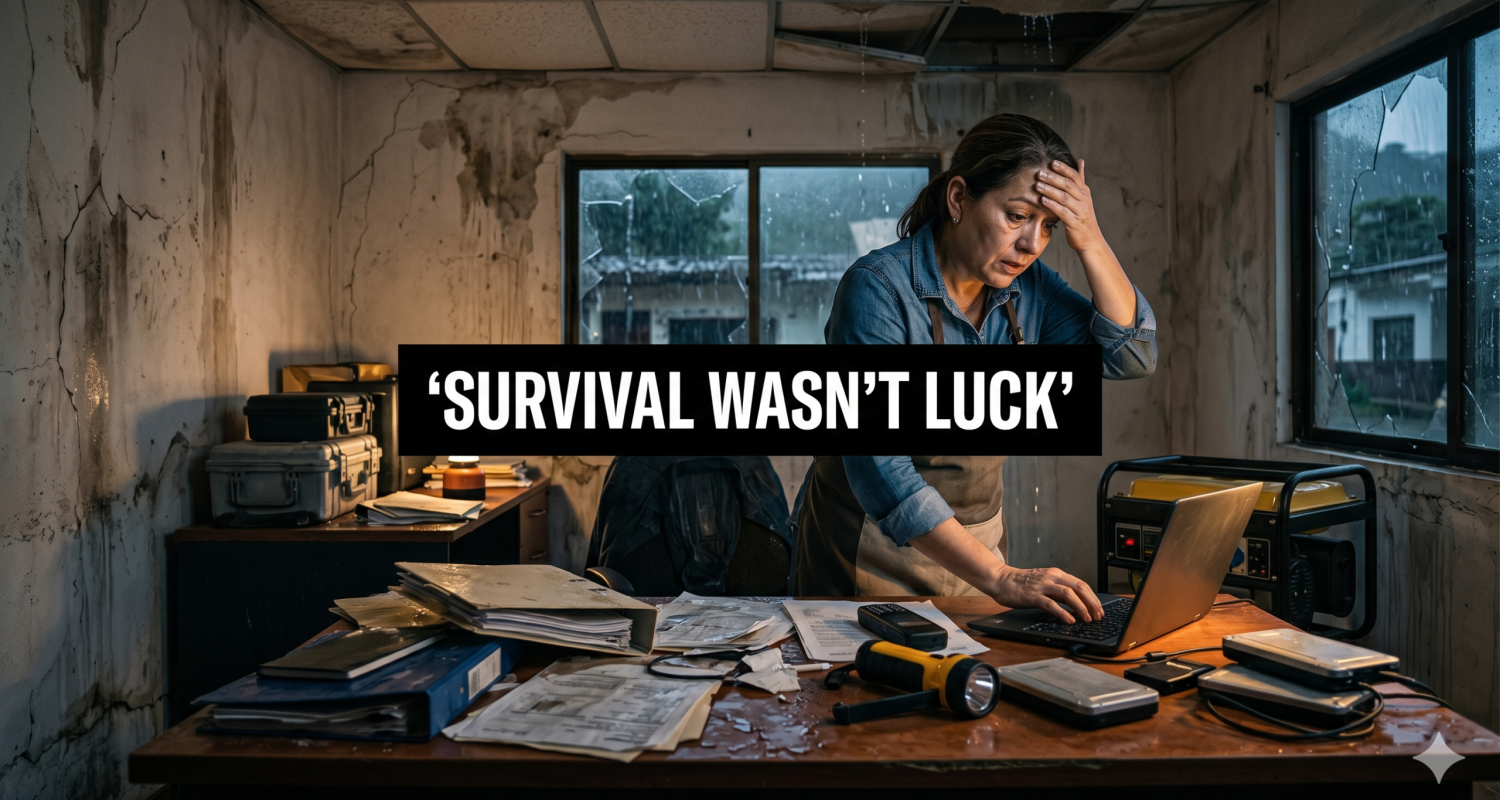
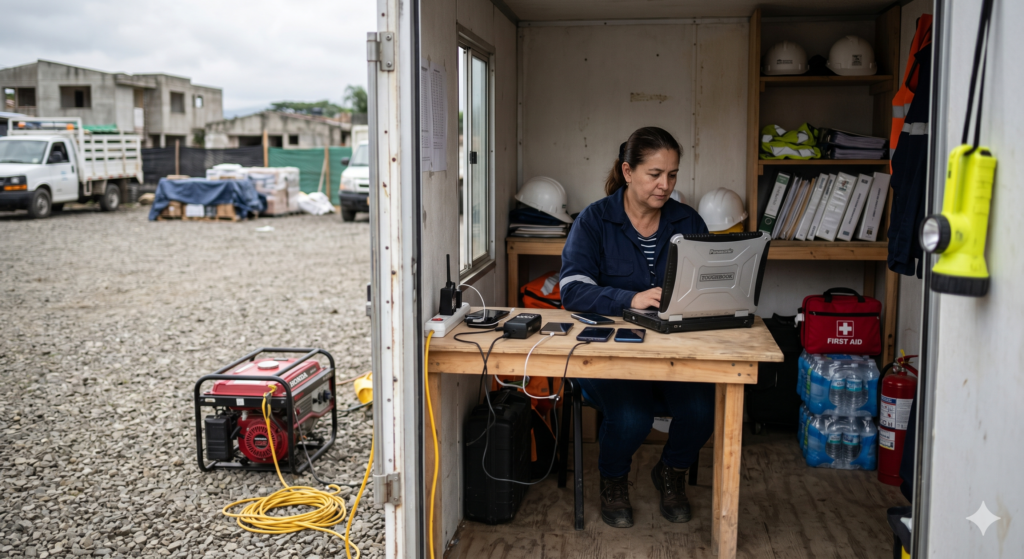
That is exactly what makes the Reuters case so strong. Reuters said Gillis, Ellis & Baker was able to use a generator-powered trailer with office equipment and satellite phones supplied by Agility Recovery, and that the company had intensified its disaster plan just weeks before Katrina struck.
That detail matters because it changes the entire moral of the story.
The company did not survive only because it had grit.
It survived because it could still function.
That is the kind of lesson restaurant owners need to hear.
A restaurant after a hurricane may still have a brand, a menu, loyal customers, and a lease. But if it cannot communicate, cannot process transactions, cannot coordinate staff, cannot protect inventory, or cannot reopen in an organized way, those assets lose value very quickly.
This is why continuity planning matters more than owners think
A lot of business owners think about disasters in physical terms first.
Will the roof survive?
Will the windows hold?
Will the equipment be damaged?
Will the power fail?
Those questions matter. But the Reuters story shows that continuity is often the deeper issue. Anderson Baker told Reuters, “It’s part of being in business. For us, it’s mission critical.”
That phrase — mission critical — is the heart of the whole article.
Because for many owners, continuity planning still feels optional, bureaucratic, or excessive until the wrong event makes it the one thing that determines whether the business stays real or becomes a memory.
That is why the federal preparedness language matters too. Ready.gov says the Ready Business Toolkit includes hazard-specific versions for hurricane, power outage, flooding, and severe wind, which is another way of saying the government’s own business-preparedness framework assumes continuity planning should be tailored and concrete, not generic.
For a Florida restaurant owner, that is not abstract advice. It is the operating environment.
The story is about insurance, but not only about insurance
This is where the article needs to stay honest.
The Reuters case is not a simple “they had a policy, so everything was fine” story. It is more interesting than that.
It is a story about insurance plus continuity. Insurance plus backup systems. Insurance plus relocation capacity. Insurance plus the ability to keep the promise the business had made to its customers.
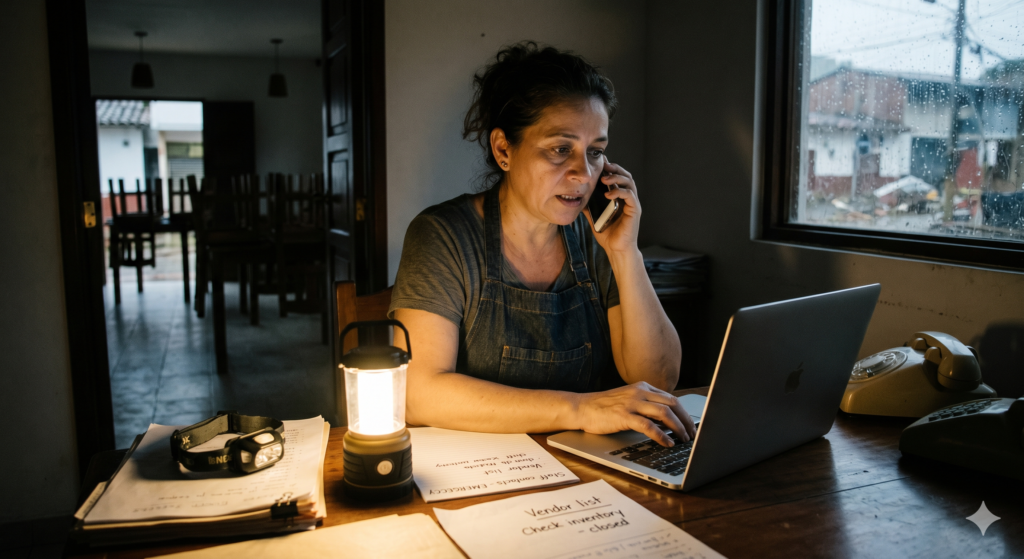
Reuters quoted Baker saying, “We’ve got to be there or those clients… have no reason to stay with us any further if we’re not there to answer the phones and do what they need us to do.”
That sentence is devastating in the best way.
Because it reminds owners that the loss after a disaster is not only physical. It is also relational. If the business disappears when clients need it most, the damage can outlast the storm itself.
This is one reason restaurant and entertainment insurance is the right broader CIS framework for this story. Restaurants need layered protection not only because things can break, but because operations, guest trust, staffing, equipment, and cash flow all depend on continuity. A restaurant can survive visible damage more easily than prolonged silence. (usa-cis.com)
For restaurants, the equivalent danger is obvious
A restaurant owner reading this should not think, “That was an insurance brokerage. Different world.”
The parallels are actually very strong.
After a major hurricane or flooding event, a restaurant may face all of these problems at once:
- loss of power
- spoiled inventory
- damaged equipment
- staff displacement
- inability to communicate with customers
- delayed vendor deliveries
- POS or technology outages
- reopening confusion
- immediate cash flow pressure
That is why this article belongs naturally beside what happens if your restaurant has to close after a storm? CIS already explains there that storm closures are not only repair issues. They are operational interruptions that affect revenue, inventory, labor, and reopening speed. (usa-cis.com)
The Katrina story gives that lesson a real face.
It shows what continuity means when the event is not hypothetical anymore.
A disaster plan often looks unnecessary right before it becomes priceless
This is one of the most useful ideas in the whole story.
According to Reuters, Gillis, Ellis & Baker had decided to ramp up its disaster plan only weeks before Katrina. It was able to use the backup trailer, office equipment, and satellite phones once the storm hit.
That detail matters because it exposes a familiar human tendency: owners postpone preparedness because the disaster has not arrived yet. Then the disaster arrives, and suddenly the things that felt excessive become the only reason the business is still functional.
For restaurant owners, that may mean:
- backup communication plans
- remote access to records
- off-site copies of key documents
- supplier contingencies
- payroll continuity thinking
- generator planning
- reopen procedures
- clarity on what coverage actually supports recovery
Ready.gov’s Ready Business HURRICANE TOOLKIT explicitly presents hurricane preparedness as something organizations should build before a storm, not improvise during one.
That sounds obvious when written down. It feels much less obvious when the business is busy and the weather is normal
Katrina also exposed how much recovery depends on being reachable
This part is easy to overlook, but it is one of the deepest lessons.
Reuters emphasized that the firm needed to keep serving its 4,000 clients, all of whom had at least one claim after the storm. That means the company did not only need a building. It needed continuity of contact.
Restaurants need the same thing, even if in a different form.
After a disaster, a restaurant may need to be reachable by:
- staff
- vendors
- landlords
- customers
- insurers
- adjusters
- local authorities
- service providers
If the owner cannot coordinate those relationships quickly, recovery slows down.
This is why continuity is not a luxury topic. It is a speed-of-recovery topic. And in a business with tight margins, speed matters.
The deeper lesson is that resilience is operational, not emotional
A lot of people use the word resilience in a vague way.
This story makes it specific.
Resilience is not only being brave.
It is not only refusing to quit.
It is not only saying, “we’ll figure it out.”
In the Reuters case, resilience meant having a trailer, equipment, satellite phones, relocation ability, and a plan strong enough to keep the company working after Katrina.
That is a much more useful definition for CIS content, because it turns resilience into something a business can actually build.
And that is exactly where this article should connect to business interruption insurance: a must for restaurants. CIS makes the point there that interruption coverage helps restaurants survive periods when normal operations are disrupted. (usa-cis.com) The Katrina lesson adds something important: interruption coverage matters more when the business also has a real continuity mindset.
Coverage without continuity can still leave a business slow, confused, and fragile.
Continuity without coverage can still leave it financially exposed.
The stronger position is both.
This is also a customer-retention story
One of the sharpest lines in the Reuters piece is Baker’s comment that if the company had not been there for clients, those clients would have had no reason to stay.
That line should hit restaurant owners hard.
Because after a storm, customers may forgive closure for a while. But they do not forgive confusion forever. If communication is absent, reopening is messy, promises are inconsistent, and the business feels unreliable, the storm damage becomes brand damage too.
That is why continuity planning is not only operational. It is commercial.
A restaurant that disappears too completely after a disaster may lose more than one week of sales. It may lose confidence.
This is where Florida owners should take the lesson personally
Florida businesses do not need to imagine storm risk. They live inside it.
Ready.gov says the Ready Business Toolkit includes hurricane-specific planning resources, which is another way of acknowledging that some businesses operate in environments where weather readiness is part of responsible management, not an optional extra.
For a Florida restaurant, the Katrina story should not be read as a historical anecdote from another region.
It should be read as a warning and a model:
- a warning, because operational collapse can happen faster than owners think
- a model, because continuity can be built before the storm arrives
That is why this article belongs next to key questions for reviewing your restaurant insurance plan as well. The whole lesson of the Katrina case is that owners should review the business before the event forces a brutal audit. (usa-cis.com)
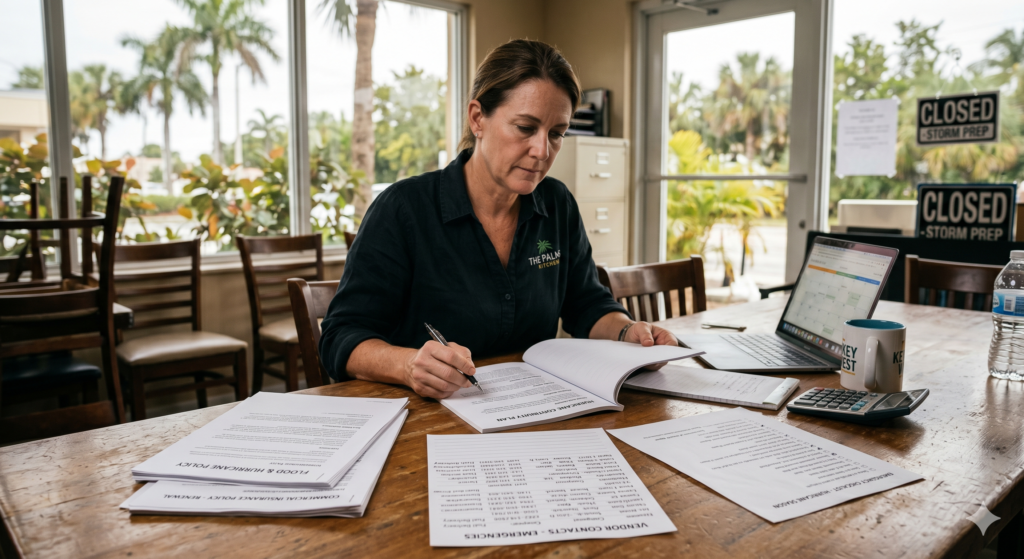
What a restaurant owner should ask after reading this story
If the story does its job, it should leave the owner with more serious questions, not just admiration.
For example:
- If a major storm disrupted our area next week, how long could we still function as a business?
- Could we communicate with staff, vendors, and customers quickly?
- Do we know what our policy actually helps with after a shutdown?
- Are our records, systems, and contacts reachable if the building is not?
- Have we built a continuity plan, or are we still relying on hope and improvisation?
Those are the questions that move the story from inspiration to action.
The sharper conclusion
So why does the Katrina story matter so much?
Because it proves that survival after a disaster is not only about what gets damaged. It is about whether the business can keep operating in some meaningful way.
Reuters reported that Gillis, Ellis & Baker relocated, served its 4,000 clients, and avoided disappearing because it had built enough continuity to function after the storm. Reuters also quoted Anderson Baker saying that without that continuity, “we would have been out of business today.”
That is the line restaurant owners should remember.
Not because every business needs the exact same plan.
But because every business needs to take continuity seriously before the next disaster decides whether it still exists.
Katrina taught them what survival really means.
For restaurants in storm-prone places, that lesson is still waiting to be learned the easy way or the hard way.