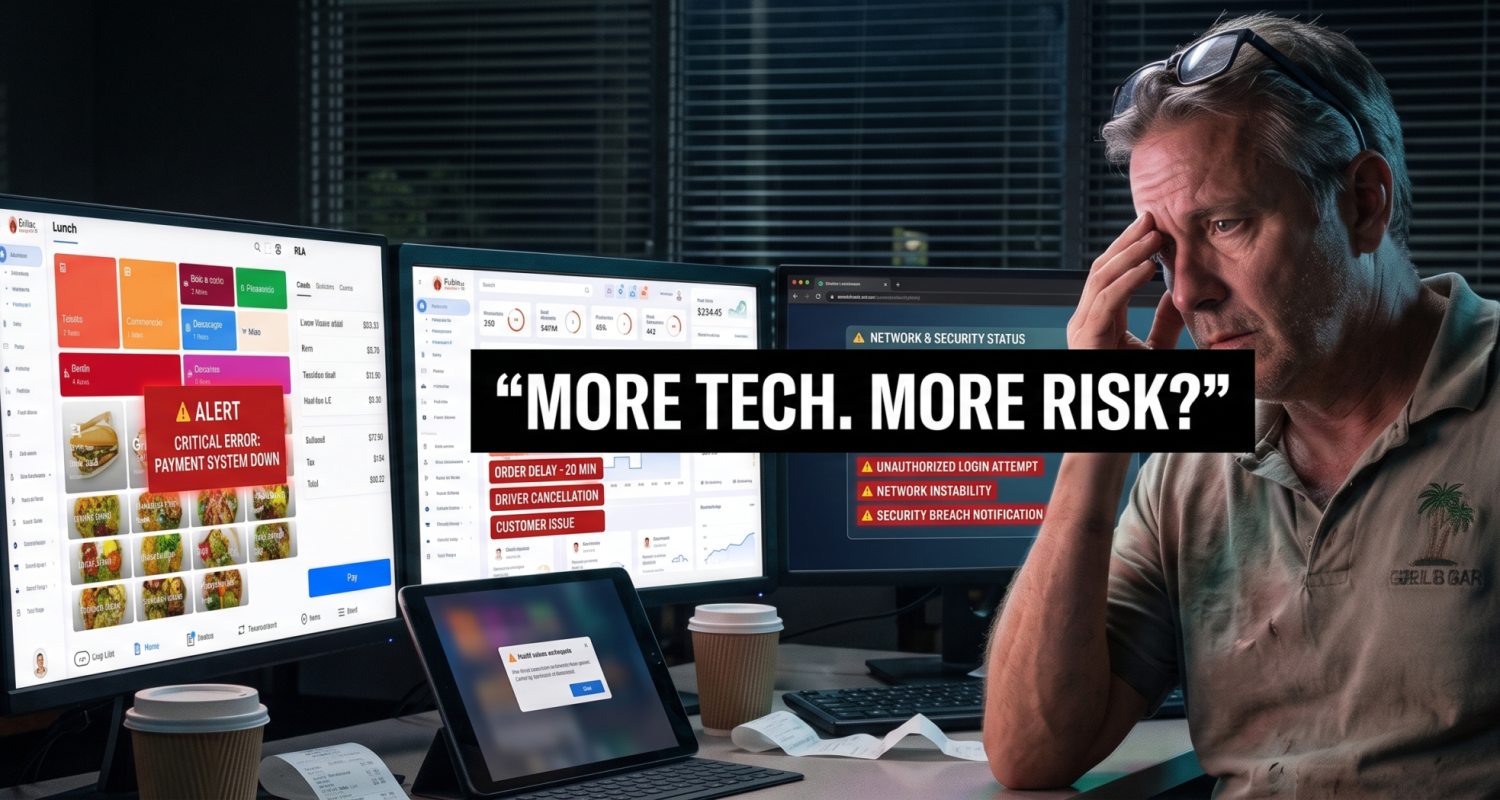
We started using more tech, then we created new risks we did not see.
At first, the technology felt like progress.
New ordering tools. Better data. More digital visibility. Smarter systems. Better customer insights. More connected operations. In a difficult market, that kind of upgrade can feel like exactly what a restaurant needs.
And sometimes it is.
But the problem is that restaurants often add technology for growth and efficiency without fully noticing that they are also adding new kinds of fragility. In 2026, Nation’s Restaurant News identified cyber incidents and AI-enabled fraud as one of the top five risks restaurants cannot afford to overlook, warning that POS systems, employee email accounts, ransomware, and system outages can bring operations to a halt and trigger lost revenue and business interruption issues.
That is why this story matters.
The same systems that make a restaurant feel more advanced can also make it more dependent, more exposed, and less resilient when something breaks.
At first, the technology looked like control
If I tell this as a real owner story, it starts with optimism.
We were trying to tighten the operation. Better ordering flow. Better guest data. Better forecasting. Better systems for the front and back of house. More clarity on what was selling. More visibility into the customer journey.
That mindset is not foolish. The National Restaurant Association has been encouraging operators to think seriously about restaurant AI and tech adoption, including in choosing the right AI tools for your restaurant and a restaurateur’s intro to AI. It presents AI as something that can improve operations and customer engagement when used thoughtfully.
The problem is not that the technology was useless.
The problem is that we saw the upside first and the dependency second.
The systems started mattering more than we realized
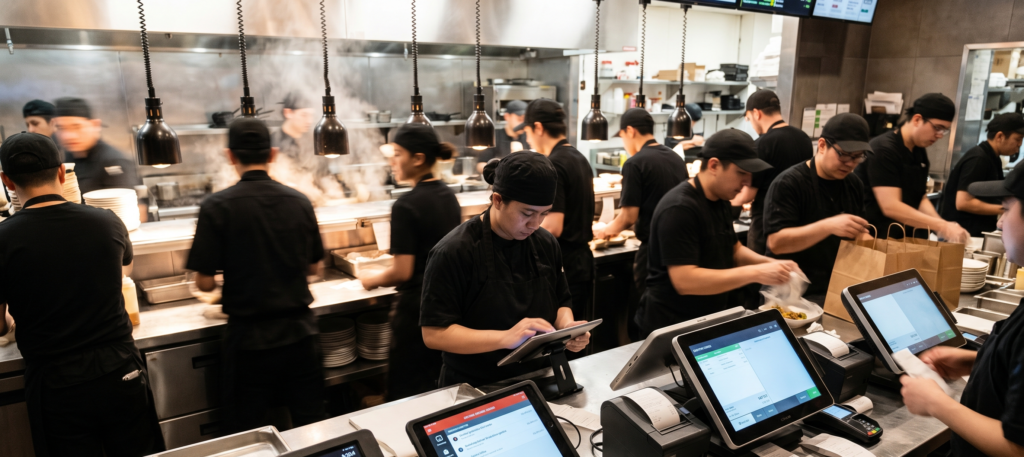
One of the biggest shifts in modern restaurants is not just that they use more technology. It is that they depend on it more deeply than they admit.
A restaurant today may depend on technology for:
- online ordering
- point-of-sale transactions
- loyalty tracking
- reservations
- staffing workflows
- guest data
- analytics
- third-party integrations
- email access tied to vendors or finance
- communication across the operation
That is why the risk profile changes.
When the systems are lightly supportive, failure is annoying.
When the systems become operational infrastructure, failure becomes dangerous.
Ready.gov’s Business Impact Analysis says a disruption analysis should identify the consequences of interruption and gather the information needed to develop recovery strategies. That is exactly the right frame here. Once technology becomes central to operations, a system failure is no longer just an IT problem. It is a business interruption problem.
The restaurant felt smarter, but it was becoming more fragile
This is the emotional contradiction at the heart of the article.
The more systems we added, the more sophisticated the restaurant felt. Dashboards. Ordering channels. Integrations. Automated flows. Better marketing data. Stronger visibility into the customer base. That felt like maturity.
But sophistication can hide fragility.
NRN’s 2026 risk roundup says restaurants are becoming more digitally connected and therefore more vulnerable to cyberattacks, especially attacks targeting POS systems and employee email accounts linked to back-office platforms. It also says a ransomware attack or system outage can stop operations and create lost revenue and business interruption exposure that some policies may not fully cover.
That is the lesson:
the technology can make the business stronger and more brittle at the same time.
AI-enabled fraud is not a futuristic problem anymore
This is where the story gets more current.
A lot of restaurant owners still hear “AI risk” and think about futuristic hype. But the more immediate problem is often simpler and uglier: fraud, impersonation, system misuse, or convincing digital manipulation that catches staff off guard.
NRN explicitly included cyber incidents and AI-enabled fraud among the top restaurant risks in 2026.
That matters because restaurant teams are not usually built like cybersecurity teams. They are built to serve guests, manage shifts, move fast, and keep the operation working. That makes them vulnerable to the kind of digital deception that exploits hurry, trust, and routine.
And the more your restaurant leans into connected systems, the more surfaces you create for that kind of manipulation.
The real problem is not only theft. It is interruption.
This is one of the most useful ways to frame the issue for CIS.
Owners often hear cyber risk and think about stolen data. That matters, but the operational consequence may be even more painful. If a restaurant loses access to core systems, or staff cannot use a POS environment correctly, or email-linked vendor workflows are compromised, the real pain may show up as service failure, lost orders, delayed responses, and revenue disruption.
That is why restaurant and entertainment insurance is such a natural internal link here. CIS’s restaurant coverage framework already includes cyber liability insurance, which makes sense because restaurant operations are now much more digitally dependent than they used to be. (usa-cis.com)
A system outage in a digitally dependent restaurant is not just a tech inconvenience. It is a live operating problem.

Technology creates concentration risk
One hidden problem with modern restaurant systems is concentration.
When too many parts of the business run through a small set of tools, one failure can spread farther than the owner expects. A POS issue can become a revenue issue. An email compromise can become a vendor issue. A reservation system failure can become a staffing and guest-service issue. A broken integration can create customer confusion at scale.
Ready.gov’s Business Impact Analysis is useful here again because it focuses on identifying the consequences of disruption before the disruption arrives.
That is exactly what many restaurants fail to do with technology. They adopt quickly, but they do not always map out which operational dependencies they just created.
The danger grows when tech is adopted under pressure
This is another reason the topic works now.
Restaurants are not adopting more tech in calm, luxurious conditions. They are doing it under pressure: labor pressure, cost pressure, guest-expectation pressure, data pressure, and margin pressure.
The National Restaurant Association’s choosing the right AI tools for your restaurant reflects that mood. The premise is not that AI is just interesting. It is that operators are actively trying to find practical value in new tools.
That is sensible. But hurried adoption can create risks:
- weak vendor review
- weak staff training
- overconfidence in automation
- more integration points than the team can really supervise
- security assumptions nobody has actually tested
That is why the title is not anti-tech. The point is not that technology is bad. The point is that growth-minded adoption can create risk faster than owners notice.
This is where cyber liability stops feeling optional
A lot of owners still treat cyber liability insurance like a secondary category. That mindset is getting weaker every year.
NRN’s 2026 risk analysis explicitly ties restaurant cyber incidents to operational disruption and business interruption. That is exactly why cyber liability insurance belongs inside the broader restaurant protection structure.
CIS already reflects that on the restaurant and entertainment insurance page, and this article helps explain why. Once your restaurant depends on connected digital systems, the line between “technology issue” and “business risk” gets thinner. (usa-cis.com)
The smartest restaurants do not only add tools. They review impact.
This is the operational lesson.
The best response is not to reject technology. It is to adopt it with more discipline.
That means asking:
- If this system fails, what part of the business stops?
- If staff are tricked, what damage becomes possible?
- If an integration breaks, how visible will the failure be to customers?
- If the system goes down on a busy shift, what is our fallback?
- Are we improving efficiency, or just increasing dependency without planning for interruption?
That is where key questions for reviewing your restaurant insurance plan becomes relevant again. Any meaningful change in how the restaurant operates should trigger a more honest review of the current risk structure. (usa-cis.com)

This is also a continuity story
One reason I like this angle is that it is not only about cyber headlines. It is also about continuity.
The same logic that applies to storms and physical disruption now applies to digital disruption too. If the restaurant cannot function because its systems are compromised, locked, unavailable, or unreliable, the effect is still operational paralysis.
Ready.gov’s business planning framework is useful precisely because it forces the business to ask what disruption does to core functions.
For restaurants, that question now includes digital functions as much as physical ones.
The sharper conclusion
So what is the real point of the story?
It is not that restaurant technology is a mistake.
It is not that AI is only dangerous.
It is this:
We started using more tech, then we created new risks we did not see because we were paying attention to efficiency, not dependency.
As restaurants become more connected, they also become more exposed to cyber incidents and AI-enabled fraud, system outages, and operational interruption. That is not fearmongering. It is part of the actual 2026 restaurant risk landscape.
The smarter move is not to stop adopting tools.
The smarter move is to review what the tools now control, what happens if they fail, and whether the coverage and continuity thinking have kept up.
Because more tech can absolutely make the business stronger.
But if the owner stops there, the business may also become easier to break.