I thought my restaurant insurance was fine until a customer got hurt.
That is not a dramatic hook invented for marketing. It is the kind of sentence many restaurant owners could say honestly after one bad afternoon.
The dangerous part is not that restaurant owners are reckless. The dangerous part is that many owners think “I have insurance” and “I understand my risk” mean the same thing. They do not.
A restaurant can be busy, well-liked, and apparently stable, and still be one accident away from a very different conversation. CIS’s own restaurant content repeatedly treats customer injury as one of the most common and expensive realities in the business, especially because restaurants combine public traffic, spills, crowded service areas, and fast-paced operations. Its recent article why is my restaurant insurance getting so expensive in Florida? explains that general liability insurance matters because restaurants involve customer movement, wet surfaces, seating issues, and crowded service areas where third-party injuries can happen.
And this is not just a restaurant-industry talking point. CIS also says in insurance coverage every hotel restaurant should review that slip-and-fall accidents in dining areas, hotel lobbies, or banquet halls can lead to costly medical claims.
That is why this story matters.
Because the lesson usually does not start with a huge lawsuit. It starts with something owners have seen a hundred times before: a wet floor, a distracted customer, a crowded aisle, a fast-moving employee, a misplaced chair, a tray, a spill, a rushed cleanup, or one moment nobody thought would become expensive.
The story usually starts with confidence
If I were telling this as a first-person restaurant story, it would probably start like this:
We were not the kind of place that thought of itself as “high risk.” We were just busy. We had customers coming in, staff moving fast, food going out, and the usual small messes that come with running a restaurant. I assumed that because we had a policy, the problem was handled. I did not think deeply about what that policy actually meant until a customer got hurt.
That is how this often happens.
Owners do not usually ignore risk because they do not care. They ignore it because restaurant risk feels ordinary right up until it becomes expensive. A spill gets cleaned up. A guest almost slips but catches themselves. A chair is moved back into place. A server says “watch your step.” Life moves on.
Then one day it does not.
One customer injury can force the wrong questions all at once
The moment a customer gets hurt, the owner’s questions change instantly.
Instead of thinking about labor, food cost, reviews, and staffing, the owner starts thinking:
- Are we covered for this?
- Does general liability insurance actually handle this kind of situation?
- What if the customer goes to the hospital?
- What if they say we were negligent?
- What should my team document?
- What did the cameras catch?
- What exactly does the policy say?
- Was this something we should have prevented?
That is one reason restaurant owners often feel blindsided by claims. The injury itself may not be shocking. What feels shocking is how quickly a normal day turns into a legal, financial, and documentation problem.
CIS emphasizes this kind of exposure in multiple restaurant articles. In holiday staff safety tips for Florida restaurants, it says general liability insurance protects the business if a customer is injured on your premises due to slips, trips, or other hazards.
So the idea that “a customer got hurt and now the whole tone of the day changed” is not exaggerated. It is exactly what restaurant liability looks like in real life.
The mistake is rarely “having no insurance”
This is one place where owners often misunderstand the problem.
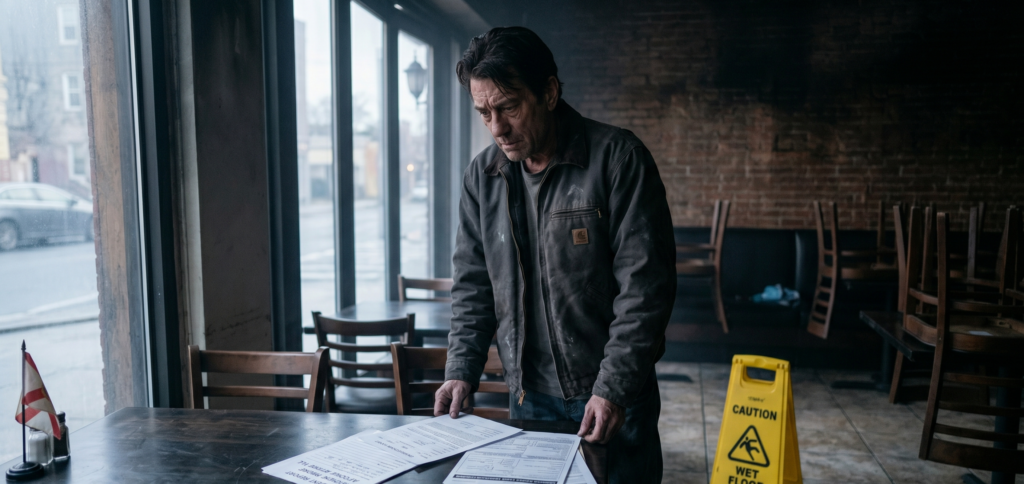
The real mistake is usually not that the restaurant had absolutely no insurance. The more common mistake is believing the phrase “we’re insured” is enough by itself.
That belief can hide several different realities:
- the owner never reviewed the policy in practical terms
- the team does not know what to do after an incident
- the restaurant has changed, but the coverage assumptions never did
- the owner does not really understand where general liability insurance begins and where other problems begin
- the business has ordinary hazards that everyone has normalized
That is why the story “I thought my restaurant insurance was fine until a customer got hurt” is stronger than a generic educational article. It captures the real psychological error. The owner was not necessarily uninsured. The owner was underinformed.
A customer injury claim can start with something very small
One reason this topic matters so much is that many customer injury incidents do not begin with spectacular negligence. They begin with ordinary restaurant conditions.
CIS’s tapas and small plates restaurant insurance article says slip-and-fall accidents are among the most frequent liability claims in the restaurant industry and often happen in busy dining rooms, near bars, or around kitchens.
That is a very sober point.
In practice, the triggering event might be:
- water tracked in from outside
- a spilled drink near a table
- food dropped in a walkway
- a polished surface that is more slippery than expected
- a crowded aisle during peak service
- a guest stepping backward near servers carrying trays
- poor lighting in one part of the room
- a floor condition that staff had stopped noticing
None of those things sounds dramatic when described casually. But once a guest falls, twists a knee, hits a shoulder, fractures a wrist, or reports a back injury, the tone changes immediately.
The story stops being about “a little spill.”
It becomes a question of documentation, blame, damages, and response.
Why the owner feels exposed even before the claim becomes formal
Another thing people outside the business often miss is that the most stressful moment is not always the final lawsuit.
Often the worst moment comes earlier, when the owner realizes the issue may not go away quickly.
A customer may leave angry.
A family member may ask for names and details.
A manager may not have documented the scene well.
An employee may describe the incident inconsistently.
The owner may suddenly discover that they never trained the team properly on incident response.
This is where the emotional part of the story becomes real. The owner thought insurance was a line item. Now it feels like the business is being judged.
CIS’s broader restaurant safety content points in this direction too. In keep your restaurant safe: a comprehensive guide for owners, CIS says restaurant owners face multiple hazards and need to create and maintain a safe environment to reduce accidents and protect the business.
That means the story is not only about the policy.
It is also about whether the restaurant had built a safer operation before the incident happened.
What general liability insurance really means in this story
This is where the article needs to stay practical.
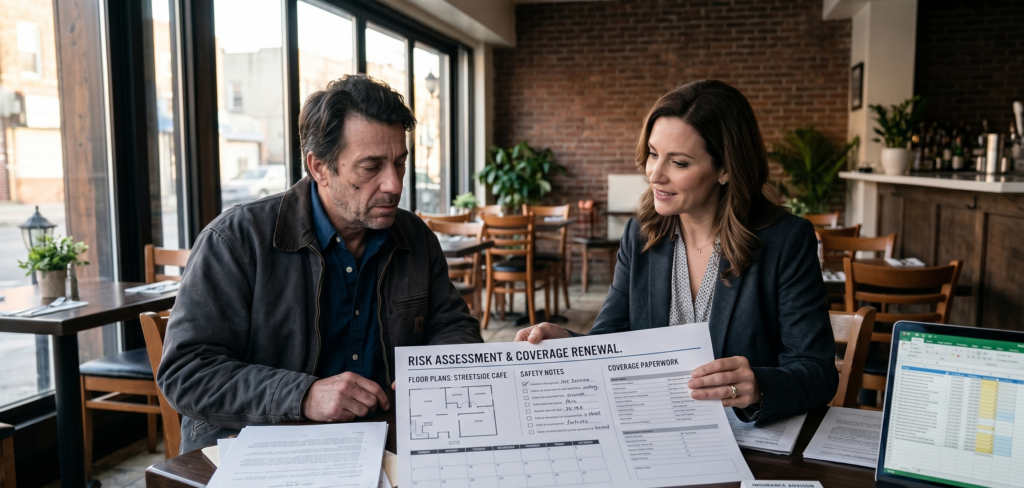
If a customer gets hurt on the premises, general liability insurance is often the first coverage owners think about, and for good reason. CIS repeatedly describes general liability insurance as protection for damages and injuries to third parties that occur on your premises. That includes exactly the kind of customer injury scenario many restaurants fear most.
But in a storytelling frame, the lesson is not merely “good, the policy exists.”
The lesson is that once a claim enters the picture, owners realize how much else matters too:
- what happened exactly
- where it happened
- what staff did before and after
- whether the hazard had been addressed
- whether the business has a pattern of similar conditions
- whether the incident was documented clearly
- whether the customer’s version and the restaurant’s version match
So even if general liability insurance is the right starting point, the claim experience still depends on how the business operated before the injury and how it responds after the injury.
The deeper fear is not the fall itself. It is the chain reaction.
For many restaurant owners, the real fear is not one injured customer in isolation. It is everything that may follow:
- medical bills
- attorney involvement
- insurer communication
- staff anxiety
- time pulled away from operations
- reputational damage
- the possibility that the incident reveals other weaknesses
That is why stories like this resonate. The owner is not only afraid of a payout. The owner is afraid of discovering that what felt “fine” was actually fragile.
CIS’s why restaurant insurance costs more than many owners expect points to exactly this broader logic. It explains that restaurant liability is not simple because restaurants interact with the public constantly and have multiple ways a claim can happen.
That is what the storytelling version makes easier to feel. The customer injury is not only one accident. It is a forced audit of the entire operation.
A Florida restaurant owner should think about this before the incident, not after
This article works best if it becomes more than a cautionary tale.
For a Florida restaurant owner, the smarter move is to ask the hard questions before someone gets hurt:
- Are we normalizing hazards because they happen often?
- Would my managers know what to document immediately?
- Have we reviewed whether our restaurant and entertainment insurance structure still reflects the actual business?
- Are our floor conditions, service flow, and cleanup discipline good enough for the traffic we handle?
- Are we assuming we are protected, or do we actually know how the protection works?
That is exactly where key questions for reviewing your restaurant insurance plan becomes useful as an internal CIS link. It frames the review process around practical realities instead of assumptions. And for a story like this, that is the whole point: assumptions are what fail first.
The story is also about prevention, not just claims
There is a temptation to read this kind of article as “be afraid of lawsuits.”
That is too narrow.
The better reading is this: the cheapest claim is often the one that never happens because the business treated ordinary hazards like real hazards before they escalated.
The National Restaurant Association’s restaurant-preparedness materials repeatedly frame risk in exactly that preventive way. Its restaurant disaster-preparation guide is built on the idea that restaurants should prepare before a crisis, not improvise after one.
The same mentality applies here.
A restaurant that takes floor safety, traffic flow, staff awareness, cleanup procedures, and insurance review seriously is not guaranteed to avoid every claim. But it is less likely to be shocked by the claim when it comes.
That matters.
Because the emotional center of this story is not “we got sued.”
It is “I realized too late that I had been trusting a feeling instead of a review.”
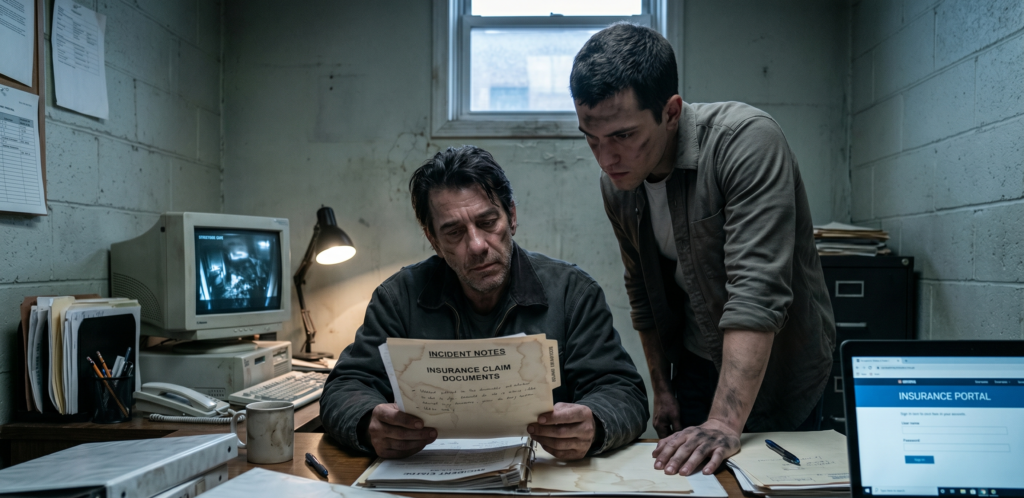
Where this story naturally connects inside CIS
From a CIS content perspective, this article should connect naturally to several internal pieces because the theme is not isolated.
It fits with restaurant and entertainment insurance because customer injury is part of the broader third-party risk restaurants face. It fits with why is my restaurant insurance getting so expensive in Florida? because that article already explains why restaurant liability is layered and public-facing. It fits with what happens if a customer gets hurt at your restaurant? because this story is almost a first-person emotional version of that practical question. And it fits with key questions for reviewing your restaurant insurance plan because the entire moral of the story is that owners should not wait for the incident to discover whether their assumptions were weak.
What the owner should have learned sooner
If this were the clean ending to the story, it would probably sound like this:
I thought my restaurant insurance was fine until a customer got hurt. What I learned after that was uncomfortable. The problem was not only the injury. The problem was that I had confused having a policy with understanding my exposure. I had treated ordinary hazards like normal restaurant chaos instead of real risk. And I had never forced myself to review the business the way a claim would review it.
That is the lesson worth publishing.
Not because every restaurant is one step from collapse.
Not because every customer injury becomes a lawsuit.
But because many owners are more exposed than they think, and they do not find out until the wrong moment.
The sharper conclusion
So what is the real point of this story?
It is not “be terrified.”
It is not “one accident will destroy you.”
It is this:
A restaurant owner can feel insured and still be unprepared.
And when a customer gets hurt, that difference becomes obvious very fast.