If your restaurant serves more alcohol than it used to, you should ask a very practical question: do I need different insurance if my restaurant serves more alcohol than it used to?
In many cases, yes.
That does not necessarily mean your current insurance is wrong. It means your business may have changed in a way that creates a different kind of exposure, and insurance should usually be reviewed when the operating model changes.
A restaurant that occasionally serves beer and wine is not exposed the same way as a restaurant where alcohol has become a major revenue driver. A quiet dining concept with limited drink service is not operating like a place with a stronger bar culture, heavier evening traffic, longer guest stays, or a bigger share of revenue tied to cocktails, spirits, and late-night service.
That difference matters because alcohol changes the risk profile of the business.
CIS already reflects that on its restaurant and entertainment insurance page, where liquor liability insurance appears directly in the restaurant coverage mix alongside property, workers’ compensation, cyber liability, and equipment breakdown. That alone tells you something important: if alcohol service is part of the operation, it is not a side detail. It is part of the insurance conversation. (usa-cis.com)
And this question matters even more in an industry where margins remain under pressure. The 2026 State of the Restaurant Industry says restaurant operators are still dealing with persistent cost increases and are looking for ways to protect profitability. When margins are tight, alcohol sales can become more important to the business model, but that also means alcohol-related exposure may become more important too. (restaurant.org)
So this is not just a beverage-program question. It is a risk question.
Serving more alcohol can change the business more than owners realize
A lot of restaurant owners think about alcohol in revenue terms first.
That makes sense. Drinks can improve ticket size, strengthen margins, and make the business more competitive. But once alcohol starts playing a bigger role in the business, it can also change customer behavior, service patterns, hours, staffing pressure, and liability exposure.
For example, a restaurant that serves more alcohol than it used to may now have:
- guests staying longer
- more late-evening traffic
- more bar-area crowding
- more interaction between staff and intoxicated patrons
- a greater chance of incidents after guests leave
- stronger dependence on bartenders or alcohol-serving staff
- more pressure on ID checks, service judgment, and drink monitoring
- a different overall risk profile than the policy originally assumed
This is one reason why key questions for reviewing your restaurant insurance plan is such a relevant internal article for this topic. CIS already makes the point that if a restaurant serves alcohol, owners should ask whether the policy includes liquor liability insurance and whether the current structure still reflects the real operation. (usa-cis.com)
The deeper point is simple: if alcohol has become a bigger part of your business, your insurance should not still be thinking about the restaurant you used to be.
More alcohol service can create a different type of liability exposure
This is where the issue gets serious.
Alcohol-related claims are not the same as ordinary customer traffic claims. If a patron drinks too much, leaves the restaurant, and later causes injury or damage, the restaurant may face scrutiny about how service was handled.
Florida law does not create unlimited liability for every alcohol-related incident. But it does recognize specific situations where liability can arise. Florida Statute 768.125 Liability for injury or damage resulting from intoxication says a person who sells or furnishes alcoholic beverages to a person of lawful drinking age is generally not liable for resulting injury or damage, except when a person willfully and unlawfully serves someone under legal drinking age or knowingly serves a person habitually addicted to alcohol. (leg.state.fl.us)
That statute matters because some restaurant owners hear that Florida is not a broad dram shop state and assume they do not need to worry much about alcohol liability. That is the wrong takeaway.
The better takeaway is this: alcohol service still creates meaningful exposure, especially when a business is serving more often, serving more volume, or operating in ways that put more judgment pressure on staff.
That is exactly why liquor liability insurance exists.
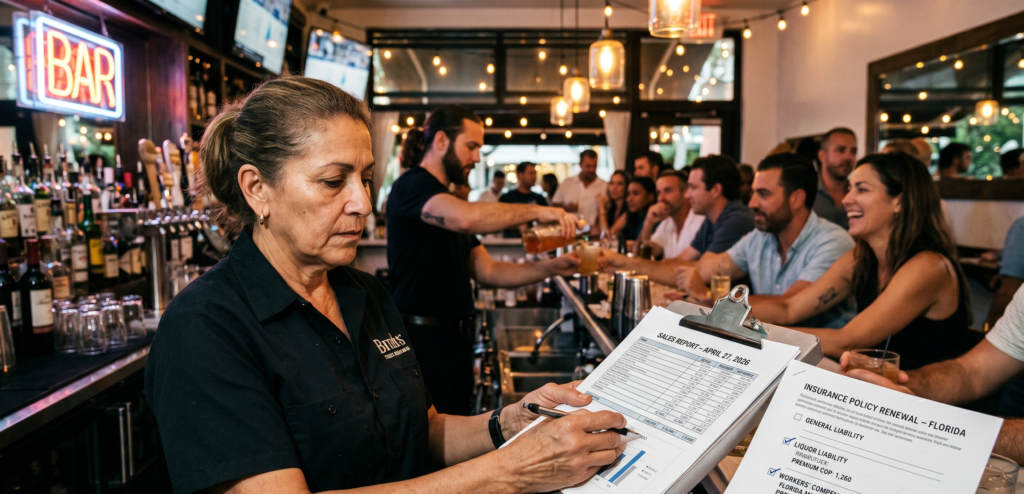
If alcohol becomes a bigger revenue driver, the insurance review should get more serious
A restaurant does not need to turn into a nightclub for this to matter.
Sometimes the shift happens quietly. A restaurant may start leaning harder into cocktails because food margins are tight. It may build happy hour traffic. It may expand bar seating. It may extend evening service. It may push beverage upsells more aggressively. It may rebrand the atmosphere around social drinking without fully rethinking the insurance implications.
Those changes may look like smart revenue decisions. Often they are. But they can also create a business that is materially different from the one the original policy assumed.
That is one of the biggest reasons owners should revisit the insurance conversation once alcohol becomes more central. The question is not only whether you serve alcohol. The question is whether alcohol now plays a bigger role in how customers experience your restaurant and how your staff operates under pressure.
If the answer is yes, then a fresh review is usually justified.
Liquor liability insurance becomes more important as alcohol service grows
This is probably the clearest point in the article.
If your restaurant is serving more alcohol than it used to, liquor liability insurance usually becomes more important, not less.
CIS already says this very directly in key questions for reviewing your restaurant insurance plan, where it states that if your restaurant, bar, or café serves alcohol, liquor liability insurance is absolutely non-negotiable. CIS also says establishments can face serious consequences if an intoxicated patron leaves and causes harm. (usa-cis.com)
A separate CIS article, essential insurance tips for bar and business owners, also highlights liquor liability insurance as a key protection for businesses serving alcohol. (usa-cis.com)
That does not mean every restaurant with a bottle of wine on the menu has the same exposure. But it does mean that as alcohol grows in importance, liquor liability insurance should move closer to the center of your insurance planning.
More alcohol usually means more pressure on staff judgment
This is one of the most overlooked parts of the issue.
Insurance is not just about what product you sell. It is also about how people behave while selling it.
When alcohol service grows, staff judgment matters more. Bartenders, servers, managers, and shift leaders may need to make more real-time decisions about ID checks, pacing, intoxication signs, cutoff decisions, guest behavior, and escalation. And those decisions are often being made in busy, noisy, high-pressure environments.
That matters because a business with more alcohol service may also have:
- more interactions with impaired guests
- more confrontations when service is refused
- more pressure on younger or less experienced staff
- more need for clear procedures and manager backup
- more risk tied to weak training or inconsistent enforcement
This is why the insurance conversation cannot be separated from operations. If the staff side of alcohol service is becoming more demanding, the risk side usually is too.
A restaurant that serves more alcohol may also be serving a different crowd at a different time
Sometimes the biggest shift is not the drinks themselves. It is what the drinks bring with them.
A restaurant that evolves toward stronger alcohol sales may begin attracting guests who stay later, order more rounds, arrive in larger groups, celebrate more often, or use the restaurant more like a social venue than a pure dining venue. Even if the brand still calls itself a restaurant, the operating reality may start moving closer to bar-adjacent exposure.
That can affect:
- crowd management
- parking lot incidents
- fights or confrontations
- falls and injuries
- glass breakage and physical hazards
- security expectations
- late-night supervision needs
- how long guests remain on the premises
This is one reason restaurant and entertainment insurance remains the right broader category for this topic. The exposure is not just “alcohol exists.” The exposure is that alcohol can change the entire atmosphere and claim profile of the business. (usa-cis.com)
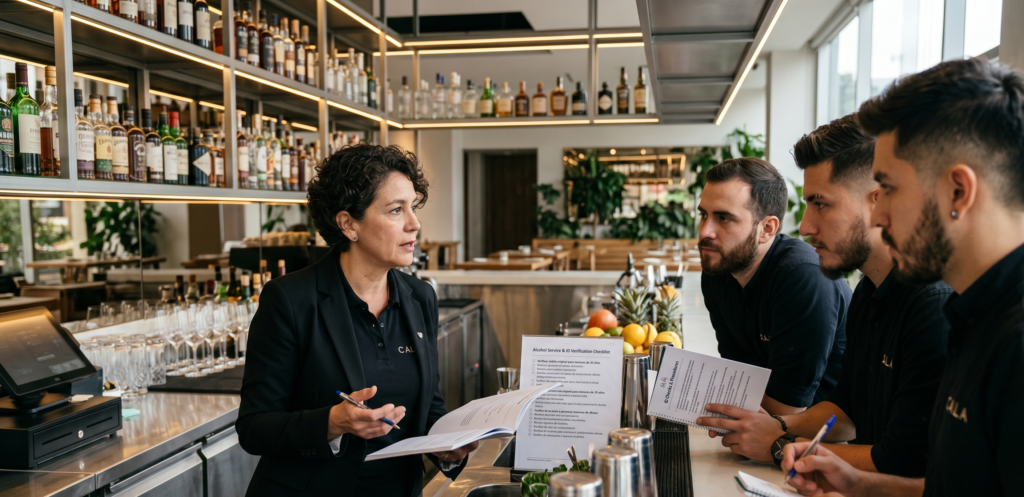
Property and general liability still matter too
Owners sometimes hear “alcohol risk” and assume the discussion is only about liquor liability insurance.
Not quite.
If a restaurant serves more alcohol than it used to, the shift may also affect the importance of other coverages because the business itself is changing. A busier bar area, more late-night traffic, more crowding, and a more active social environment can put pressure on general liability insurance, physical conditions, and how the premises are managed.
CIS makes this point indirectly in the role of commercial property insurance for restaurants, where the article includes a section on liquor liability insurance and explains that alcohol-related claims can have severe financial and legal consequences. (usa-cis.com)
So the right mindset is not “Do I have the liquor endorsement and that’s it?”
The better mindset is “Has the way my restaurant operates changed enough that my broader coverage structure should be reviewed?”
More alcohol can also mean more end-of-year review pressure
If alcohol sales have increased over the past year, this is exactly the kind of operational change that should surface during an insurance review.
CIS’s insurance policy review before the year ends for Florida restaurants says that owners should compare what the policy assumed at renewal with how the restaurant actually operated during the year. It specifically notes that alcohol service may now represent a larger portion of the business and that these changes affect risk exposure. (usa-cis.com)
That is extremely relevant here.
A lot of restaurant owners do not wake up one day and intentionally become higher-alcohol operators. It happens gradually. Beverage menus expand. Guest behavior shifts. Sales mix changes. The bar starts carrying more of the profit story. Then one day the risk profile is materially different, but the insurance file still reflects an older version of the business.
That mismatch is where problems begin.
The issue is not only legal liability. It is financial fragility.
This is where owners should think bigger.
If alcohol service grows and the restaurant does not adjust its insurance thinking, the risk is not only a lawsuit. The risk is financial instability after a single serious incident.
A claim involving an intoxicated patron can create legal costs, reputational damage, management distraction, staff stress, and cash flow pressure at the same time. In a business where margins are already tight, that kind of event can hit harder than owners expect.
The 2026 State of the Restaurant Industry makes clear that operators are still managing a difficult economic environment, even with cautious optimism about sales. That matters because when a restaurant is already under cost pressure, one poorly handled alcohol-related claim can become more destabilizing. (restaurant.org)
This is why alcohol-related insurance decisions should be treated like business survival decisions, not only policy details.
Signs your restaurant may need a different insurance review now
If your restaurant serves more alcohol than it did before, these are strong signs that the insurance conversation should be revisited:
- alcohol represents a bigger share of revenue
- you have expanded bar seating or drink promotions
- guests stay later than they used to
- you now rely more heavily on bartenders or cocktail service
- service refusal and intoxication judgment have become more common
- managers are handling more alcohol-related guest issues
- your concept feels more social or nightlife-adjacent than before
- your current policy was built before these changes happened
None of those signs automatically means your coverage is wrong. But together they strongly suggest the restaurant you operate today may not be the same restaurant your insurance originally contemplated.
This is also a staff training and management issue
Insurance cannot fix weak alcohol-service practices by itself.
If alcohol sales are rising, your procedures matter more. Your managers matter more. Your team’s consistency matters more. If the business is pushing beverage sales but not strengthening service judgment, the operation may be creating risk faster than it realizes.
That is why the most useful insurance review is usually paired with questions like:
- Are our alcohol-service expectations clear?
- Do managers support cutoff decisions consistently?
- Are staff making judgment calls under too much pressure?
- Has our service model changed faster than our internal controls?
- Are we acting like a higher-alcohol business without planning like one?
Those are operational questions, but they have insurance consequences.
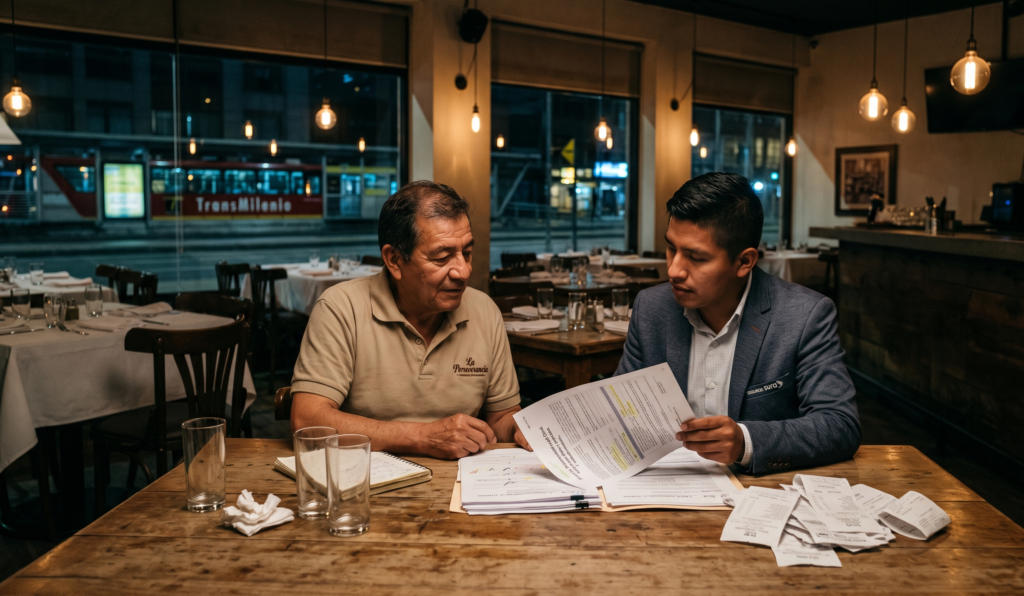
So, do you need different insurance if your restaurant serves more alcohol than it used to?
In many cases, yes.
If alcohol has become more central to your revenue, guest experience, service hours, or operating model, then your insurance should usually be reviewed with that new reality in mind. Liquor liability insurance becomes more important as alcohol service grows. The broader restaurant and entertainment insurance structure may also need a closer look if the atmosphere, timing, crowd behavior, and staff responsibilities have changed. CIS’s own restaurant content consistently reinforces that alcohol service is not a minor add-on from an insurance perspective. (usa-cis.com)
And Florida law is a reminder that alcohol service is not consequence-free. 768.125 Liability for injury or damage resulting from intoxication does not create blanket liability for every incident, but it does show that certain alcohol-service decisions can create real legal exposure. (leg.state.fl.us)
So the smartest move is not to ask only whether alcohol boosts revenue.
The smarter move is to ask whether your restaurant has become a different kind of business because of alcohol, and whether your insurance has kept up.