A tow truck can be dispatched in minutes, but a single claim can affect the business for years. A damaged vehicle in your care, a crash while hauling a disabled car, an injury at an accident scene, or a dispute over an impound can all create serious costs. The best insurance for towing companies is not one policy with a low premium. It is a coverage program built around how your trucks, drivers, storage lot, contracts, and employees actually operate.
For towing business owners, coverage needs can change quickly. Adding a truck, taking on police rotation work, opening a storage yard, or accepting more heavy-duty jobs can create exposures your current policy was not designed to handle. The right insurance structure protects the equipment and revenue your operation depends on.
What Is the Best Insurance for Towing Companies?
The best insurance for towing companies usually combines commercial auto liability, physical damage, on-hook or towing-and-labor coverage, garagekeepers legal liability, general liability, workers’ compensation, and property coverage when needed. Your exact mix depends on whether you run one light-duty rollback, a multi-truck fleet, a recovery operation, a repair shop, or an impound lot.
The key distinction is this: commercial auto insurance protects your business while your truck is operating on the road. Garagekeepers coverage addresses vehicles in your care, custody, or control, such as cars held at your secured lot. On-hook coverage is designed for damage to a customer vehicle while it is being towed. These coverages may sound similar, but they respond to different loss situations.
Buying only a standard commercial auto policy can leave a significant gap. A policy may cover the tow truck after an accident but not fully address a customer vehicle that is damaged while being loaded, transported, or stored. That is why towing insurance should be placed with the full workflow in mind.
Core Coverage for Tow Truck Operations
Commercial Auto Liability and Physical Damage
Commercial auto liability is the foundation of a towing insurance program. It can respond when your driver causes bodily injury or property damage in an accident. Towing vehicles are large, heavy, and frequently operate near traffic incidents, busy roads, private lots, and tight loading areas. The liability limits you choose need to reflect that exposure, not simply the minimum required to register a vehicle.
Physical damage coverage helps protect the tow truck itself from collision, theft, vandalism, fire, and other covered losses. If your rollback, wrecker, or heavy-duty unit is financed or leased, the lender will generally require it. Even when a truck is owned outright, consider the operational cost of losing it for weeks after a major loss. A lower deductible can reduce the immediate hit to cash flow, while a higher deductible may lower the premium. The right choice depends on your reserves and how quickly you could absorb a repair bill.
On-Hook Coverage
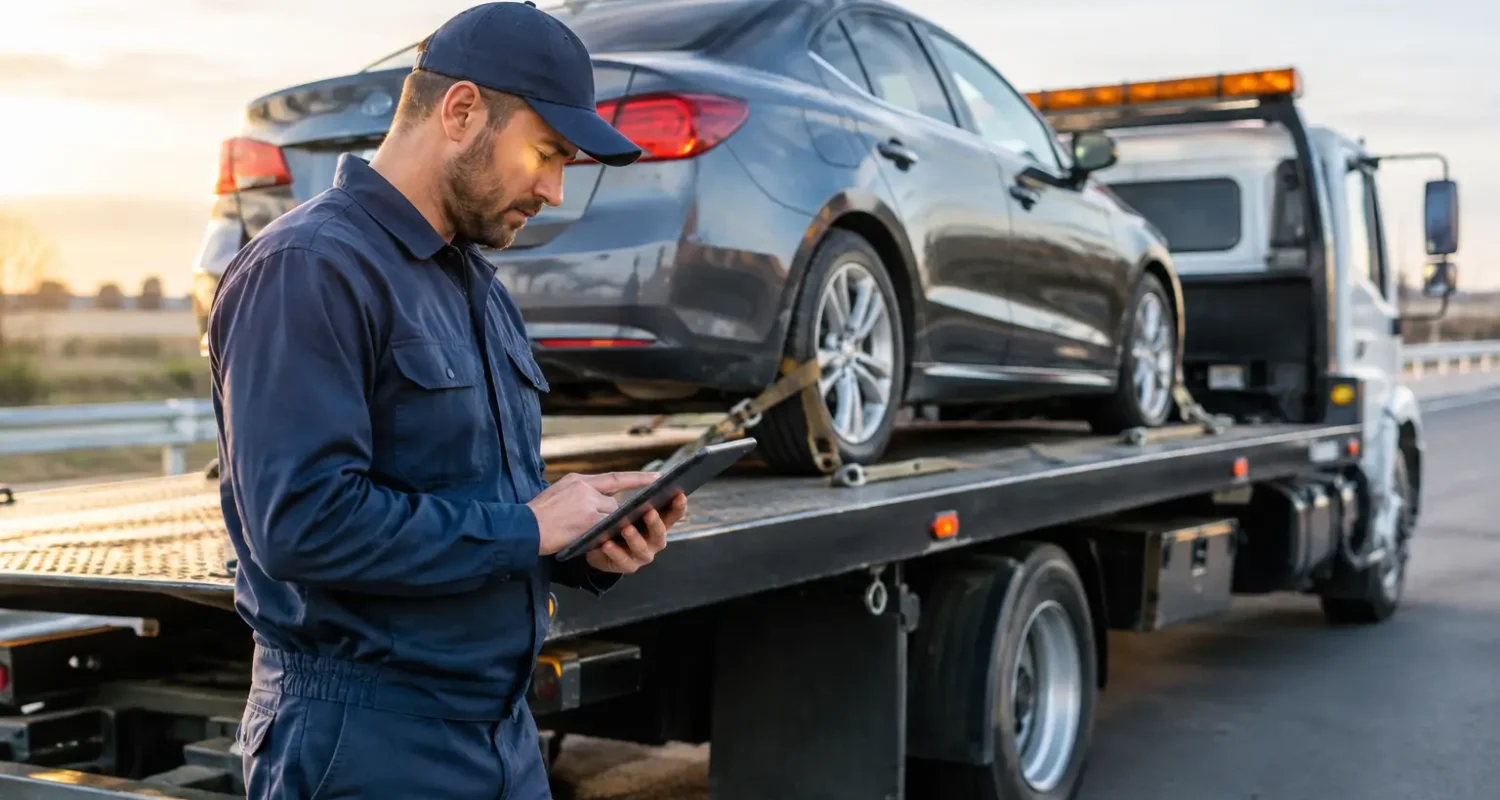
On-hook coverage is central to a towing operation. It helps cover damage to a vehicle while it is attached to or being transported by your tow truck. Examples include a vehicle shifting during transit, sustaining damage during loading, or being involved in a collision while in tow.
Do not assume your commercial auto liability automatically provides enough on-hook protection. Confirm the available limit, deductible, and covered methods of transport. A light-duty operator towing passenger vehicles may need a different limit than a business handling commercial vans, luxury vehicles, RVs, or heavy equipment.
Garagekeepers Legal Liability
Garagekeepers legal liability protects against certain losses involving customer vehicles left in your care, custody, or control. This often applies to vehicles stored at a towing yard, impound facility, or repair location. Theft, fire, vandalism, collision, and weather-related damage can all become expensive when multiple vehicles are on site.
There are important coverage choices within garagekeepers insurance. Legal liability coverage generally responds when your business is legally responsible for the loss. Direct primary coverage may provide broader protection for customer vehicles regardless of fault, subject to policy terms. The better option depends on the requirements of your contracts, the value and volume of stored vehicles, and your tolerance for uninsured disputes.
If your lot regularly holds vehicles overnight, after accidents, or pending release, review your garagekeepers limits carefully. The total value of vehicles in your yard can exceed the limit faster than many owners expect.
General Liability
General liability addresses injuries or property damage arising from your business operations that are not necessarily tied to driving the tow truck. A customer slipping in your office, damage caused while accessing a private lot, or an injury involving your premises could trigger this coverage.
General liability also matters because many property managers, municipalities, motor clubs, lenders, and contract partners require proof of coverage. Before signing a new agreement, compare its insurance requirements with your existing policies. Additional insured requirements, higher liability limits, waiver of subrogation language, and specific certificate wording can all affect how coverage should be structured.
Workers’ Compensation
Towing is physical work performed in unpredictable conditions. Drivers may be exposed to moving traffic, unstable vehicles, roadside hazards, weather, lifting injuries, and recovery equipment. Workers’ compensation helps provide benefits for covered work-related injuries and illnesses while protecting the business from many employee injury lawsuits.
Florida requirements can vary based on your business structure and workforce, but workers’ compensation should be evaluated as an operational protection, not just a compliance task. Proper payroll classification matters. A dispatcher working from an office does not present the same risk as a driver performing roadside recovery.
Coverage That May Be Necessary for Your Business Model
Not every towing company needs every policy, but several coverages deserve a close review. Consider these exposures if they apply to your operation:
- Commercial property coverage for your office, tools, fencing, signs, computers, and contents.
- Business income coverage to help replace lost income after a covered property loss interrupts operations.
- Inland marine coverage for portable tools, recovery gear, dollies, winches, and specialized equipment.
- Cyber liability coverage if your business stores customer payment information, driver data, release documents, or electronic dispatch records.
- Employment practices liability if you employ staff and want protection for certain allegations involving hiring, termination, harassment, or discrimination.
- Umbrella liability coverage when your contracts, fleet size, assets, or claim severity warrant liability limits above primary policies.
An umbrella policy can be especially valuable for businesses with multiple units on the road or contracts requiring higher limits. However, umbrella coverage is not a substitute for adequate underlying auto, general liability, and employer liability limits. The underlying policies must be set up correctly for the umbrella to respond as intended.
Factors That Affect Towing Insurance Costs
Insurance pricing is based on exposure, not just the number of trucks you own. Insurers commonly evaluate your vehicle types and values, driver records, radius of operation, claims history, annual revenue, payroll, storage lot controls, and the types of vehicles you tow.
A company that performs local light-duty towing during daytime hours does not present the same profile as a 24-hour accident-recovery business with heavy wreckers, long-distance transport, and an impound yard. Neither operation is automatically better or worse from an insurance standpoint. They simply need different underwriting information and coverage limits.
Your safety practices can also influence both pricing and claim outcomes. Document driver training, vehicle inspections, securement procedures, dispatch records, lot access controls, and incident reporting. These details show insurers that your operation has controls in place. They also provide useful evidence when a claim is disputed.
How to Build a Better Towing Insurance Program
Start with a clear inventory of your operation. List every truck, trailer, driver, location, storage lot, tool, and service type. Include whether you handle police rotations, private-property impounds, roadside assistance networks, repossessions, accident recovery, or vehicle transport.
Then review the highest-value vehicle you may tow or store, not just the average vehicle. A limit that works for standard passenger cars may be inadequate after a loss involving a luxury vehicle, commercial truck, or specialty unit. Review contract requirements before accepting new work rather than after a certificate is requested.
Finally, work with an agency that understands commercial auto and transportation exposure. Commercialize Insurance Services helps business owners organize commercial auto, liability, workers’ compensation, property, and related coverage around the way they operate. A complete submission gives insurers a clearer view of the risk and gives you a stronger basis for comparing quotes.
The right policy should do more than help you satisfy a contract or registration requirement. It should keep one difficult call from putting your trucks, employees, customer relationships, and cash flow at risk. Before your next renewal or truck purchase, take the time to match your insurance to the work you are actually doing.