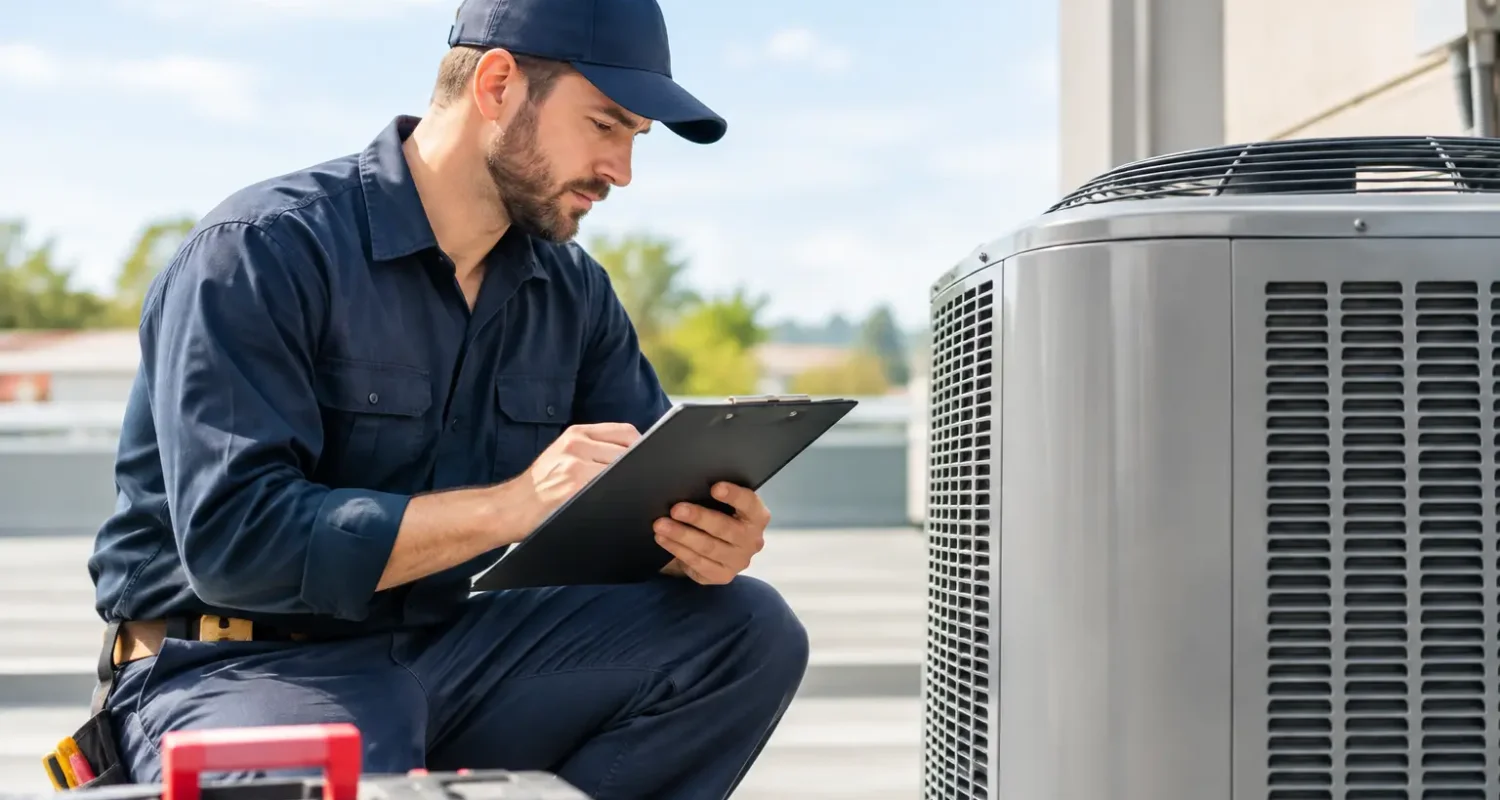
A failed condenser on a 100-degree Florida afternoon is not a simple service call. Your crew may be driving a stocked van, working on a customer’s roof, handling electrical components, and entering an occupied business – all before the day is over. The best insurance for HVAC contractors accounts for that full operation, not just a basic liability certificate.
For HVAC business owners, insurance has to work at the speed of the job. You need coverage that satisfies contract requirements, protects revenue-producing vehicles and equipment, and responds when an accident, injury, or property claim threatens the business. The right policy mix depends on your crew size, vehicles, project types, service area, and the systems you install or maintain.
What HVAC Contractors Need to Insure
An HVAC contractor faces several exposures at once. A technician can damage a customer’s flooring while moving equipment. A refrigerant leak can create a costly claim. A van accident can take a service vehicle off the road. An employee can get hurt climbing a ladder or lifting a compressor.
One policy rarely handles all of those risks. A strong contractor insurance program generally combines general liability, commercial auto, workers’ compensation, tools and equipment coverage, and property protection where needed. Depending on your work, you may also need professional liability, installation coverage, or higher limits required by a general contractor, property manager, or commercial customer.
The goal is not to buy every available endorsement. The goal is to match coverage to the way your company actually operates.
General Liability Is the Starting Point
Commercial general liability is often the first policy a customer, landlord, or general contractor asks to see. It can respond to claims involving third-party bodily injury, property damage, and certain personal or advertising injuries.
For an HVAC business, that may include a customer who slips over an extension cord, damage to a wall during equipment removal, or a claim that your work caused damage at a client location. It also provides a defense when a covered claim leads to a lawsuit.
But general liability is not a catch-all policy. It typically does not cover damage to your own vehicle, an employee’s on-the-job injury, or a mistake in your technical design or recommendation. It also may not automatically cover every completed-work scenario the way you expect. If your company installs systems, replaces ductwork, or performs larger retrofit projects, review completed operations coverage and limits carefully.
Many HVAC contractors carry a $1 million per-occurrence limit and $2 million aggregate limit because those amounts are commonly requested. That does not mean they are right for every operation. Larger commercial projects, municipal work, and contracts with property management companies may require higher limits or an umbrella policy.
Contract Requirements Can Change the Policy Structure
Certificates of insurance are common in HVAC work, but the certificate itself does not change the policy. If a contract requires additional insured status, primary and noncontributory wording, or waiver of subrogation, those provisions need to be addressed in the policy endorsements.
Read the insurance section before signing the contract. A low-priced policy that cannot meet the job requirement can delay the work or leave you paying for added coverage at the last minute.
Commercial Auto Protects the Fleet That Keeps You Working
A service van is a mobile shop. It carries technicians, parts, hand tools, ladders, recovery machines, and sometimes expensive diagnostic equipment. Personal auto insurance is not designed for business-owned vehicles or the daily driving demands of a contractor operation.
Commercial auto insurance can cover liability for accidents involving company vehicles, along with physical damage to vehicles you own or finance. Liability coverage protects against injury or property damage you cause to others. Comprehensive and collision coverage protect your own van after covered damage, subject to the deductible.
The details matter. List every business-owned vehicle correctly. Discuss who drives them, where they travel, whether technicians take vans home, and whether employees use personal vehicles for errands or jobsite travel. A company that serves only a local metro area has a different exposure than one dispatching crews across multiple counties or state lines.
Consider uninsured and underinsured motorist coverage as well. A serious crash with an inadequately insured driver can create a major financial problem for your business and your employees.
Workers’ Compensation Is More Than a Compliance Issue
HVAC work is physical. Technicians lift heavy equipment, work around electrical systems, use ladders, access rooftops, and move through active construction sites. Workers’ compensation provides benefits for covered work-related injuries or illnesses, including medical care and lost wages.
Florida requirements can vary based on your business structure, trade classification, and number of employees. Contractor licensing, project owners, and general contractors may also require proof of workers’ compensation or a valid exemption where allowed. Do not assume a subcontractor’s status protects your company. If an uninsured subcontractor is injured, the claim can become your problem.
Accurate payroll and job classifications are essential. A technician, office administrator, warehouse worker, and project manager may not belong in the same classification. Misclassification can create audit surprises, unpaid premium, or disputes when a claim occurs.
Protect Tools, Equipment, and Materials Away From the Shop
Standard property coverage may protect items at your listed business location, but HVAC equipment does not always stay there. Tools move from van to jobsite to warehouse. Equipment can be stolen from a locked vehicle, damaged in transit, or lost after a jobsite break-in.
Inland marine coverage, often called contractors equipment coverage, is designed for portable business property. It can cover scheduled or unscheduled tools, testing equipment, recovery machines, pipe-threading equipment, ladders, and other mobile items, depending on the policy.
Ask about the coverage basis and limits. A blanket limit is convenient for smaller tools, while individually scheduling high-value equipment can provide clearer protection. Also confirm whether tools inside a vehicle are covered and under what conditions. A locked van does not always mean every theft is covered the same way.
Materials deserve attention too. If you purchase an expensive unit for a specific installation and it is damaged before installation, the answer may depend on where it was stored, who had custody, and the terms of the contract. Job-specific coverage may be needed for larger projects.
When Professional Liability or Installation Coverage Makes Sense
Many HVAC contractors perform straightforward service and replacement work. Others size systems, recommend equipment, prepare load calculations, design controls, or coordinate building upgrades. The more your company provides technical advice or design-related services, the more important professional liability becomes.
Professional liability, sometimes called errors and omissions coverage, can address claims alleging financial loss from professional mistakes, faulty advice, or failure to perform specialized services. General liability may cover resulting property damage in some situations, but it is not intended to cover every allegation involving a bad recommendation or design error.
This is a coverage area where the answer depends heavily on the scope of work. A residential maintenance company has a different need than a contractor bidding commercial buildouts, healthcare facilities, restaurants, or complex refrigeration systems.
Property Coverage and Business Income Protection
If you lease or own an office, warehouse, or service yard, commercial property insurance can protect the building, contents, inventory, and business personal property after covered events such as fire, theft, or certain weather damage. Business income coverage can help replace lost income and continue certain expenses if a covered property loss interrupts operations.
This protection is especially relevant when your warehouse stores replacement units, parts inventory, or equipment needed for dispatch. A property loss can stop work even when your technicians are ready to go.
Review limits based on replacement cost, not what you originally paid years ago. Equipment prices and supply costs can change quickly. Underinsuring a shop or inventory may save premium now but create a painful gap after a major loss.
Choosing the Best Insurance for HVAC Contractors
The best insurance for HVAC contractors is not a prepackaged policy with a familiar name on it. It is a coverage plan built from accurate operating details. Start with the services you perform, then identify what could cause the most serious financial disruption.
Be ready to discuss your annual revenue, payroll, number of technicians, vehicle list, claims history, largest jobs, subcontractor use, and the value of tools and equipment. Share the insurance requirements from your major contracts. Those details help determine appropriate limits, endorsements, deductibles, and carrier options.
Price matters, but it should not be the only comparison point. Review exclusions, deductibles, completed operations protection, tool limits, hired and non-owned auto exposure, and whether the insurer can issue certificates and required endorsements quickly. Fast service matters when a property manager is waiting on proof of coverage before releasing a work order.
For Florida HVAC contractors and multistate operators, Commercialize Insurance Services can help organize coverage around your vehicles, employees, equipment, contracts, and jobsite exposure. A clear insurance review before the next large project can prevent a coverage scramble when the work is already scheduled.