A strong restaurant insurance checklist should do one thing clearly: help Florida business owners see whether their coverage actually matches the way their restaurant operates.
That sounds simple, but many restaurant owners do not review insurance that way. They think in terms of a policy, a renewal date, or a quote. The better approach is to think in layers. A restaurant is not exposed in only one direction. It has customers, employees, property, equipment, food, vendors, digital systems, and sometimes alcohol, delivery, catering, events, or business vehicles.
That is why the right restaurant insurance checklist is not just a formality. It is a practical tool for protecting the business before a claim, shutdown, injury, storm, or lawsuit exposes a gap.
CIS’s Restaurant and Entertainment Insurance page reflects this layered reality. It lists coverage areas such as General Liability Insurance, Property Insurance, Workers’ Compensation Insurance, Commercial Auto Insurance, crime insurance, Cyber Liability Insurance, and Equipment Breakdown Insurance for restaurant and entertainment businesses. It also explains that Liquor Liability Insurance protects against damages and injuries that occur because of alcohol-related incidents at the business.
That is the right starting point.
A restaurant owner in Florida should not ask only, “Do I have insurance?”
The better question is, “Does my insurance match every major risk my restaurant actually carries?”
1. Start with Restaurant and Entertainment Insurance
The first item on the checklist is Restaurant and Entertainment Insurance.
This is the broad category that should hold the rest of the structure together. A Florida restaurant is not just a small business with tables and food. It is a business with customer traffic, employee injury exposure, property risk, equipment dependence, food safety concerns, technology systems, and sometimes alcohol or delivery exposure.
CIS’s restaurant page says restaurants and entertainment businesses face unique risks and challenges, and that is why specialized protection matters. It then breaks the coverage mix into several relevant categories, including liability, property, workers’ compensation, commercial auto, cyber liability, and equipment breakdown.
That matters because a restaurant owner should not build coverage from random pieces. The coverage should fit together around the actual operation.
A good checklist begins with this question:
Does my current Restaurant and Entertainment Insurance structure reflect the restaurant I operate today, or the restaurant I operated two years ago?
That distinction matters. Restaurants change. Menus change. Staff changes. Delivery may grow. Alcohol sales may increase. Equipment may become more expensive. Digital ordering may become central. If the coverage structure does not keep up, the owner may feel protected while still carrying gaps.
2. Check General Liability Insurance
The second item is General Liability Insurance.
For most restaurants, this is one of the foundational coverages. Restaurants are public-facing businesses. Customers enter the premises, walk across floors, sit at tables, interact with staff, consume food and drinks, and move through spaces that can become crowded or slippery.
CIS’s General Liability Insurance page describes this coverage as protection against unforeseen risks and losses for businesses. Its restaurant page describes General Liability Insurance as protection for damages and injuries to third parties that occur on the business’s premises.
For restaurant owners, this can include incidents such as:
- a customer slipping on a wet floor
- a guest getting hurt in a crowded dining area
- accidental property damage tied to business operations
- third-party injury claims connected to the premises
A restaurant can be well-run and still face these situations. The goal of General Liability Insurance is not to pretend accidents never happen. It is to make sure one ordinary accident does not become a direct financial threat to the business.
Checklist question:
Would my General Liability Insurance respond appropriately if a customer injury or third-party claim happened this month?
3. Review Property Insurance
The third item is Property Insurance.
Restaurants depend on physical assets. Kitchen equipment, furniture, fixtures, refrigeration systems, signage, inventory, improvements, and interior buildouts all matter. If those assets are damaged, the loss is not only about replacement cost. It can also affect whether the restaurant can operate.
CIS’s restaurant page describes Property Insurance as coverage for damage to business property, including equipment, fixtures, and furniture.
That makes Property Insurance a core part of a restaurant insurance checklist. A restaurant may have thousands or hundreds of thousands of dollars tied up in physical assets. If the owner has not updated values after renovations, equipment purchases, or expansion, the coverage may no longer match the business.
Checklist questions:
Have I updated my Property Insurance after buying new equipment, renovating the space, or changing the value of my restaurant assets?
Would the current limit be enough to repair or replace what the business actually depends on?
4. Confirm Workers Compensation Insurance
The fourth item is Workers Compensation Insurance.
This is both a compliance issue and an operational issue. Florida’s Division of Workers’ Compensation says under Coverage Requirements that employers conducting work in Florida are required to provide workers’ compensation insurance for employees, with specific requirements based on the type of industry, number of employees, and entity organization.
Restaurants should take this seriously because restaurant work creates real employee injury exposure. Staff may work around hot surfaces, sharp tools, wet floors, heavy boxes, fast service, repetitive motion, and stressful rush periods.
Workers Compensation Insurance can matter for cooks, servers, dishwashers, bartenders, hosts, prep workers, delivery-related employees, and managers who step into physical work when the team is under pressure.
Checklist questions:
Do I meet Florida’s Coverage Requirements for workers’ compensation?
Have payroll, job duties, or staffing levels changed since my last review?
Do my classifications reflect what employees actually do inside the restaurant?
That last question matters because restaurants often evolve informally. Employees start doing broader tasks, managers cover more floor work, delivery duties increase, or prep roles become more physically demanding. If the policy does not reflect that reality, the insurance review is incomplete.
5. Add Commercial Auto if vehicles are involved
The fifth item is Commercial Auto.
Not every restaurant owns vehicles, but many restaurants still have vehicle-related exposure. Delivery, catering, errands, food transport, supply runs, and business-use driving can all create risk.
CIS’s Commercial Auto page says commercial vehicles should be covered with commercial auto insurance in Florida and presents the coverage as a way to protect business vehicles.
For restaurants, the important issue is not only whether the business owns a car or van. It is whether vehicles are being used for the business in a way that creates liability.
Checklist questions:
Does my restaurant own vehicles?
Do employees drive for deliveries, catering, supply pickups, or business errands?
Am I assuming personal auto coverage is enough when the driving is connected to the restaurant?
If vehicles are part of the operation, Commercial Auto should not be treated like a side issue.
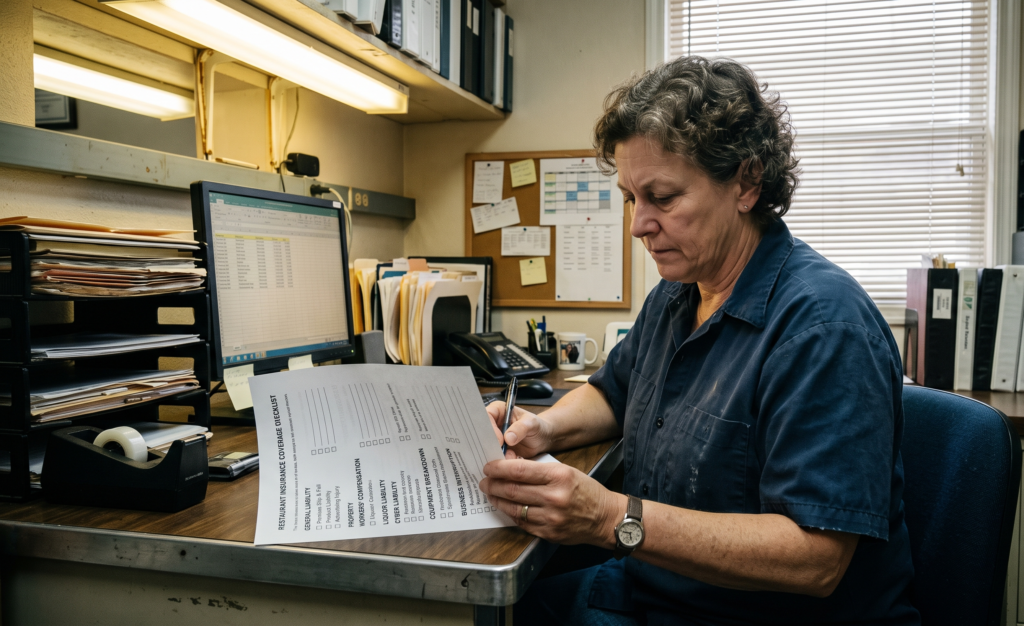
6. Include Liquor Liability Insurance if alcohol is served
The sixth item is Liquor Liability Insurance.
This is essential for restaurants that serve beer, wine, cocktails, or spirits. Alcohol changes the risk profile of a restaurant because it changes guest behavior, staff judgment, and the potential consequences of a bad service decision.
Florida law is specific here. 768.125 Liability for injury or damage resulting from intoxication says a person who sells or furnishes alcohol to someone of lawful drinking age generally does not become liable for injury or damage caused by that person’s intoxication, except when the seller willfully and unlawfully serves a person under legal drinking age or knowingly serves a person habitually addicted to alcohol.
That statute does not mean alcohol risk disappears. It means Florida has a defined legal framework with specific exceptions. Restaurants still need to take alcohol service seriously.
CIS’s restaurant page says Liquor Liability Insurance protects against damages and injuries that occur because of alcohol-related incidents at the business. CIS’s article on liquor liability insurance for restaurants Florida also frames this coverage as essential for restaurants and bars that serve alcohol.
Checklist questions:
Does my restaurant serve alcohol?
Has alcohol become a larger share of revenue?
Do managers and staff know how to handle ID checks, intoxication concerns, and service refusal?
Does my policy include Liquor Liability Insurance that matches my actual alcohol exposure?
If alcohol is part of the business, this item should not be skipped.
7. Review Cyber Liability Insurance
The seventh item is Cyber Liability Insurance.
Restaurants are more digital than many owners realize. They may depend on POS systems, online ordering, reservation platforms, customer data, payroll tools, vendor emails, loyalty programs, and delivery integrations.
CIS includes Cyber Liability Insurance in the restaurant coverage list, and its food hall article says that combining cyber liability with coverages such as general liability, workers’ compensation, property, liquor liability, and business interruption can help operators build a more comprehensive restaurant insurance plan.
That matters because cyber risk is no longer just a big-company problem. A restaurant can suffer from a payment-system issue, compromised email, customer-data exposure, system outage, or technology-related interruption.
Checklist questions:
Does my restaurant store customer or employee data?
Do we rely on online ordering, POS systems, reservations, or digital payment tools?
If our systems went down during service, how much revenue and trust would we lose?
Does our current structure include Cyber Liability Insurance?
A restaurant that depends on digital systems should not treat cyber coverage as an afterthought.
8. Check Equipment Breakdown Insurance
The eighth item is Equipment Breakdown Insurance.
Restaurants depend on equipment every day. Refrigeration, cooking systems, HVAC, electrical systems, espresso machines, ovens, freezers, dishwashing systems, and ventilation can all become critical.
CIS includes Equipment Breakdown Insurance directly on the Restaurant and Entertainment Insurance page. Its coffee shop article also explains that when equipment breaks down, it can directly affect revenue, customer satisfaction, and brand reputation.
That is why Equipment Breakdown Insurance is often more important than it first sounds. If a critical system fails, the owner may face repairs, spoiled inventory, lost sales, service disruption, and customer dissatisfaction at the same time.
Checklist questions:
Which equipment would stop the restaurant if it failed?
Have we updated equipment values after purchases or upgrades?
Would the current policy help with repair, replacement, spoilage, or interruption-related loss?
The more equipment-dependent the restaurant is, the more important this item becomes.
9. Add business interruption insurance to the review
The ninth item is business interruption insurance.
A restaurant owner should not only ask what happens if property gets damaged. They should also ask what happens if the restaurant cannot operate.
Ready.gov’s Business Impact Analysis explains that a business impact analysis predicts the consequences of a disruption and gathers information needed to develop recovery strategies. That is a useful way for restaurant owners to think about downtime. If the business is forced to close or slow down, the loss is not just physical. It can affect payroll, rent, utilities, vendor relationships, and cash flow.
CIS’s article business interruption insurance: a must for restaurants says this coverage is designed to protect restaurants from the financial fallout of unexpected operational downtime and may help with lost income, ongoing expenses, payroll, and sometimes temporary relocation costs after a covered event.
Checklist questions:
If my restaurant had to close for one week, how much income would we lose?
If the closure lasted a month, could we still pay rent, payroll, and utilities?
Does our policy include business interruption insurance tied to covered events?
For Florida restaurants, this question matters because storms, equipment failure, fire, and other disruptions can turn quickly into cash-flow problems.
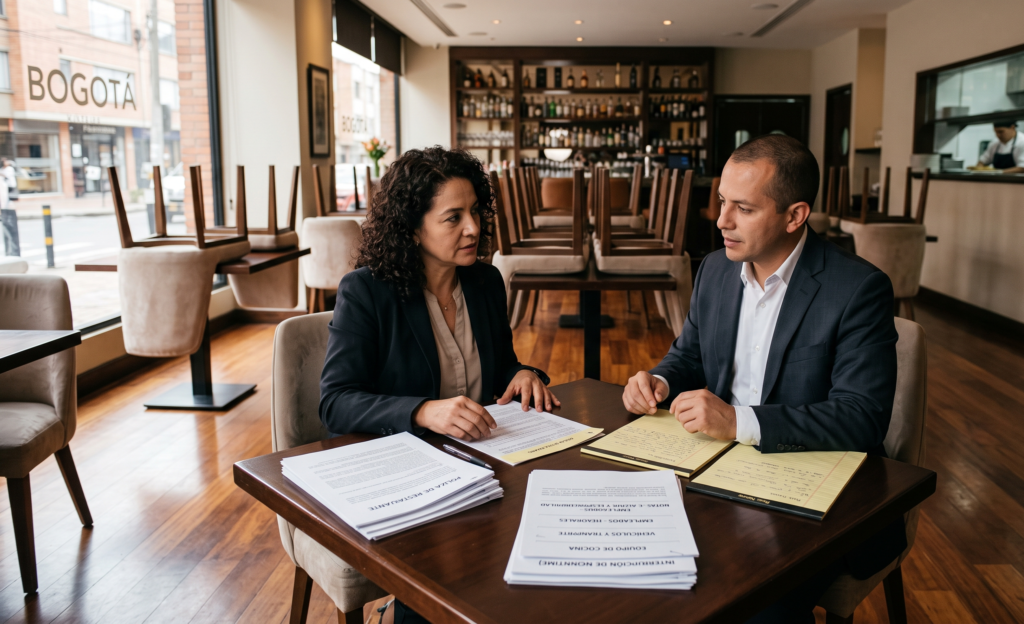
10. Review changes at least once a year
The final item is the review itself.
A checklist is only useful if it is repeated. Restaurants change too often for insurance to be treated as a once-and-forget decision.
That is why key questions for reviewing your restaurant insurance plan is one of the most useful CIS internal resources for this topic. The article says restaurant owners often overlook whether their insurance keeps pace with their risks, and it specifically points to changes in staffing, inventory, day-to-day operations, and business model as reasons to review coverage.
A restaurant owner should review insurance after:
- adding alcohol service
- expanding delivery
- hiring more staff
- renovating the space
- buying new equipment
- changing hours
- adding catering or events
- increasing online ordering
- experiencing claims or near-misses
- seeing costs or revenue change significantly
Checklist question:
Has my restaurant changed enough that my current insurance assumptions may be outdated?
That is often the question owners ask too late.
A simple restaurant insurance checklist
Here is the practical version:
- Restaurant and Entertainment Insurance to frame the overall structure
- General Liability Insurance for third-party injury and property-damage claims
- Property Insurance for physical assets, fixtures, furniture, and equipment
- Workers Compensation Insurance if required and appropriate for employees
- Commercial Auto if vehicles or business driving are involved
- Liquor Liability Insurance if alcohol is served
- Cyber Liability Insurance if digital systems, payments, or customer data matter
- Equipment Breakdown Insurance for critical mechanical or electrical failures
- business interruption insurance for covered operational downtime
- annual review through key questions for reviewing your restaurant insurance plan
That is a stronger checklist than asking for the cheapest possible policy.
The sharper conclusion
A good restaurant insurance checklist should not give every Florida restaurant the same answer.
It should help the owner ask better questions.
A small café, a full-bar restaurant, a delivery-focused pizzeria, a bakery, and a food hall operator do not all carry the same exact risk. But most restaurants should at least review Restaurant and Entertainment Insurance, General Liability Insurance, Property Insurance, Workers Compensation Insurance, Commercial Auto, Liquor Liability Insurance, Cyber Liability Insurance, Equipment Breakdown Insurance, and business interruption insurance before assuming they are properly protected.
The main point is simple: restaurant insurance should be built around how the business actually operates, not around a generic template.
That is the difference between having insurance and having a structure that can protect the restaurant when something goes wrong.