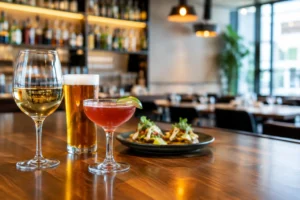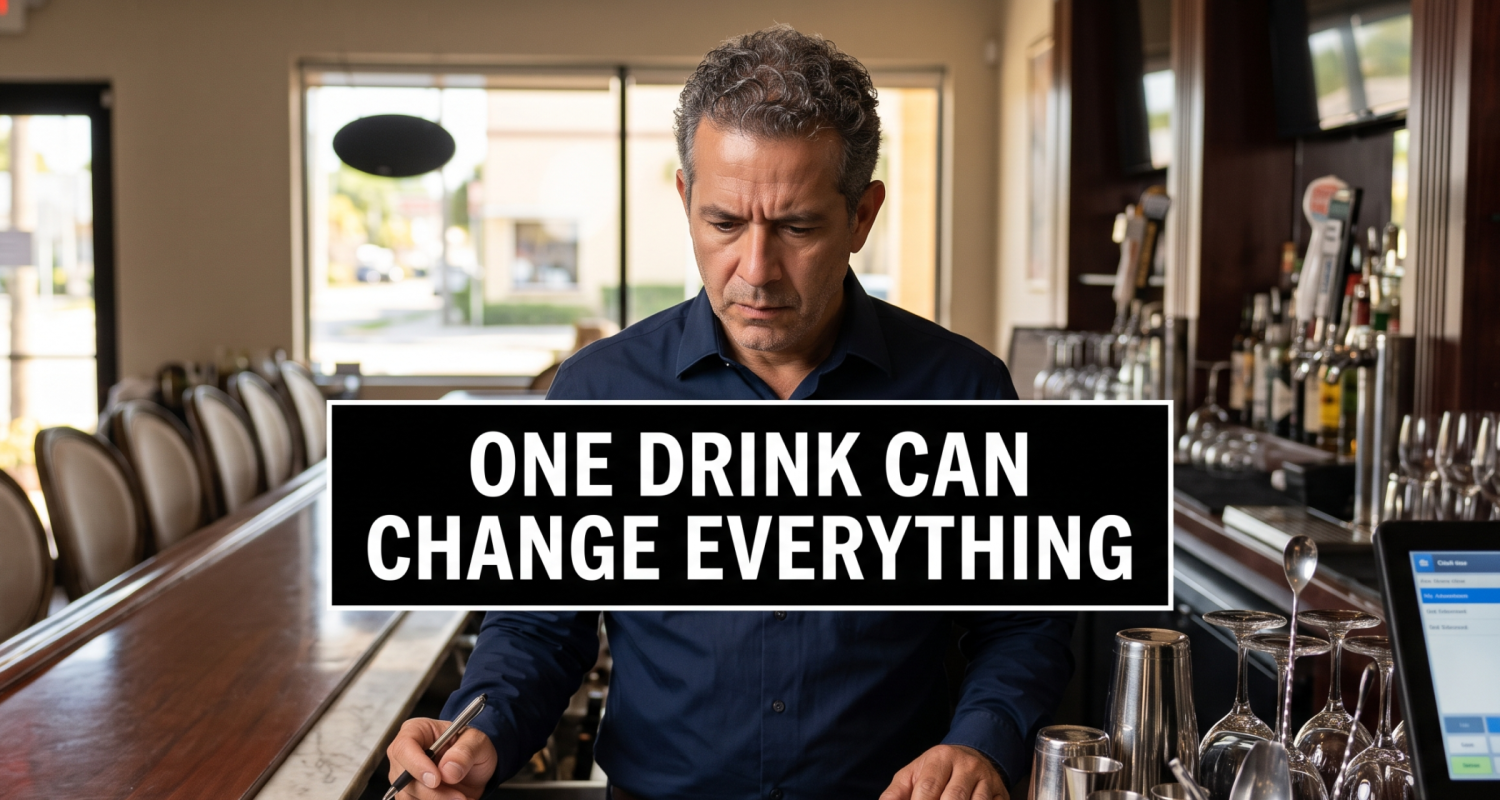
Liquor liability insurance Florida restaurants need is not just a technical insurance product. It is one of the most important protection layers for any restaurant, bar, pub, lounge, hotel restaurant, entertainment venue, or food business that serves alcohol.
The reason is simple: alcohol changes the risk profile of a restaurant.
A restaurant that serves only food already has customer traffic, employee injury exposure, property risk, equipment risk, and operational pressure. Once alcohol enters the business model, the exposure changes. Guests may drink more than expected. Staff may need to make difficult judgment calls. ID checks become important. Service refusal becomes part of operations. One bad night can become a claim, a lawsuit, a reputation problem, or a serious financial threat.
That is why liquor liability insurance Florida should not be treated as an optional afterthought.
CIS’s Restaurant and Entertainment Insurance page says Liquor Liability Insurance provides protection for damages and injuries that occur as a result of alcohol-related incidents at the business. That same restaurant coverage page also places liquor liability beside other important restaurant protections such as general liability, property insurance, workers’ compensation, commercial auto, cyber liability, and equipment breakdown coverage.
That matters because alcohol exposure does not exist by itself. It sits inside the larger restaurant operation.
What is liquor liability insurance?
Liquor liability insurance Florida restaurants use is designed to help protect a business when an alcohol-related incident leads to injury, property damage, or legal action.
In practical terms, this coverage may become important when a customer drinks at a restaurant or bar and later causes harm. That could involve a fight, a fall, a car accident, property damage, or another alcohol-related incident that creates a claim against the business.
CIS’s article Liquor Liability Insurance for Restaurants with Full Bars explains that this specialized form of commercial insurance is designed to cover alcohol-related incidents that can expose a restaurant to serious financial and legal consequences. It describes liquor liability coverage as a financial safety net when things go wrong because of customer intoxication.
That is the basic idea.
The restaurant does not buy liquor liability insurance Florida because it expects a problem. It buys it because alcohol service creates a category of risk that food service alone does not create.
Why Florida restaurants need to understand the law
Florida has a specific legal framework for alcohol-related liability.
The most important statute is 768.125 Liability for injury or damage resulting from intoxication. The statute says that a person who sells or furnishes alcoholic beverages to a person of lawful drinking age generally does not become liable for injury or damage caused by that person’s intoxication. But it also creates exceptions. A person may become liable if they willfully and unlawfully serve alcohol to someone under legal drinking age, or knowingly serve a person habitually addicted to alcohol.
That means Florida does not impose unlimited liability every time an adult customer drinks and later causes harm.
But that does not mean restaurants are safe to ignore alcohol risk.
The exceptions matter. The facts matter. Staff behavior matters. Documentation matters. ID practices matter. Training matters. And once a serious incident occurs, even defending the business can become expensive.
That is why liquor liability insurance Florida remains important even in a state with a narrower dram shop law.
Florida’s dram shop law is not a free pass
Some restaurant owners misunderstand Florida’s alcohol liability law.
They hear that Florida’s dram shop law is limited and assume that liquor liability coverage is unnecessary. That is a dangerous simplification.
The statute may limit liability in many adult-service situations, but it does not erase exposure. The exceptions for serving minors or knowingly serving a person habitually addicted to alcohol can still create serious problems. A restaurant may also face investigation, legal costs, reputational damage, licensing consequences, or business disruption after a major alcohol-related incident.
That is why liquor liability insurance Florida belongs in the conversation for any restaurant that serves beer, wine, cocktails, or spirits.
A limited statute is not the same thing as a risk-free business.
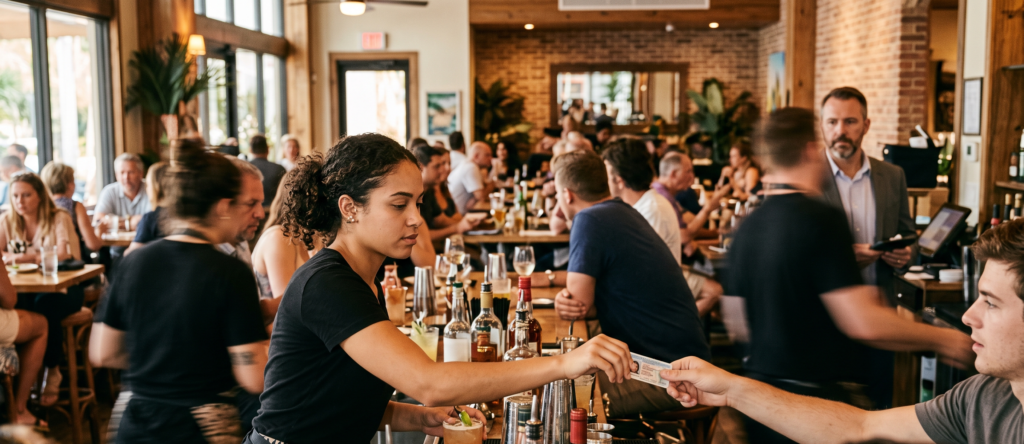
Alcohol service changes the whole restaurant
Alcohol does not only create legal exposure. It changes operations.
A restaurant that serves alcohol has to think about:
- ID checks
- fake IDs
- underage-service prevention
- staff training
- intoxicated guest behavior
- refusal of service
- late-night crowd behavior
- parking-lot incidents
- fights or confrontations
- ride-share decisions
- special events
- private parties
- happy hour promotions
- employee judgment under pressure
That is why liquor liability insurance Florida should be paired with strong operating practices.
Florida’s DBPR page on the Florida Responsible Vendor Act says responsible vendor training is offered to servers at bars and restaurants, and that vendors learn laws and policies regarding serving underage patrons and serving intoxicated patrons.
That is a useful reminder. Insurance matters, but coverage should not replace responsible alcohol service.
The strongest restaurants use both: the right insurance structure and better daily controls.
Who needs liquor liability insurance in Florida?
Any restaurant that sells or serves alcohol should at least review liquor liability insurance Florida with an advisor.
That includes:
- full-service restaurants with bars
- casual restaurants serving beer and wine
- sports bars
- pubs
- lounges
- hotels with restaurants
- entertainment venues
- catering businesses that serve alcohol
- restaurants with private events
- concepts with happy hour promotions
- restaurants where alcohol sales are growing
The exposure is not limited to nightlife businesses. A family restaurant with weekend drink specials can still face alcohol-related risk. A brunch restaurant with mimosas can still face alcohol-related risk. A tapas restaurant with wine service can still face alcohol-related risk. A beach restaurant with cocktails can definitely face alcohol-related risk.
CIS’s Bar and Pub Insurance: Managing Liquor Liability article makes this point clearly. It says liquor liability insurance for restaurants Florida is a critical part of risk management, but only one piece of a larger insurance strategy for bars and pubs.
That is the right way to think about it.
Liquor liability is not the whole protection plan.
But if alcohol is part of your business, it may be one of the most important parts.
What can liquor liability insurance help cover?
The exact terms depend on the policy, carrier, exclusions, and limits. But in general, liquor liability insurance Florida is intended to help with claims tied to alcohol service.
That may include allegations involving:
- injury caused by an intoxicated customer
- property damage caused by an intoxicated customer
- fights or assaults connected to alcohol service
- accidents after a customer leaves the premises
- claims that the restaurant served a minor
- claims that staff overserved a guest
- legal defense costs tied to alcohol-related allegations
This is why the coverage matters even when the restaurant believes it did nothing wrong.
A business can be named in a claim and still need to defend itself. Defense alone can be costly. For a restaurant with tight margins, that can become a serious burden.
CIS’s Essential Insurance Tips for Bar and Business Owners says liquor liability insurance should be non-negotiable when serving alcohol because it protects the business if a patron causes injury or property damage after being served alcohol at the establishment.
That is the practical business reason behind the coverage.
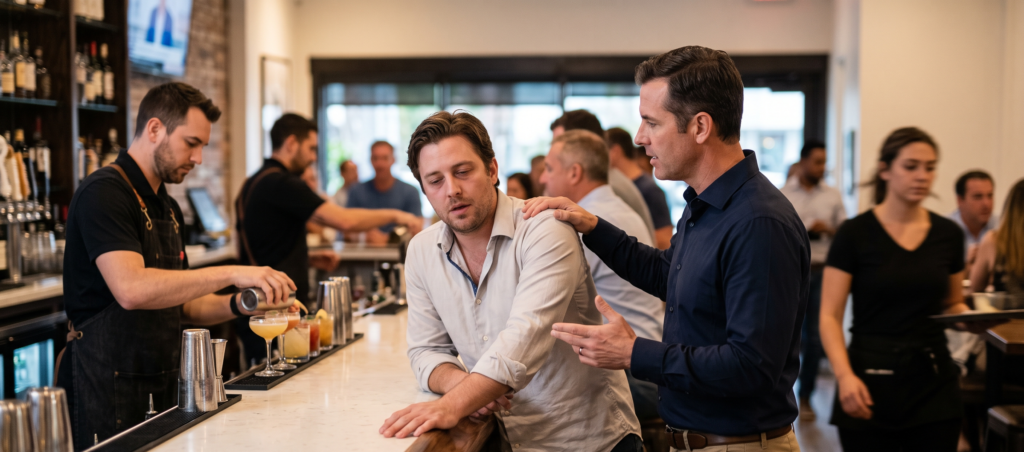
Liquor liability is different from general liability
This distinction is important.
Many owners assume their general liability policy covers everything. That is not always true.
General Liability Insurance usually focuses on common third-party claims such as bodily injury or property damage tied to ordinary business operations. But alcohol-related claims can fall into a different category. That is why restaurants that serve alcohol should not assume a general policy automatically handles liquor exposure.
CIS’s Restaurant and Entertainment Insurance page separates General Liability Insurance from Liquor Liability Insurance. It describes general liability as protection for damages and injuries to third parties on the premises, while liquor liability protects against damages and injuries that occur because of alcohol-related incidents.
That separation matters.
If your restaurant serves alcohol, liquor liability insurance Florida should be reviewed as its own coverage question, not buried inside a general liability assumption.
Alcohol sales growth should trigger an insurance review
A restaurant may start with limited alcohol sales and later become more dependent on them.
That change matters.
If alcohol moves from a small side offering to a meaningful revenue stream, the risk profile changes. More alcohol sales can mean more intoxication exposure, more staff judgment calls, more service-pressure situations, more late-night risk, and a greater chance that alcohol becomes central to a future claim.
CIS’s article What If My Restaurant Serves More Alcohol Than It Used To? says that if a restaurant is serving more alcohol than before, liquor liability insurance usually becomes more important, not less.
That is exactly the right trigger for review.
A restaurant owner should review liquor liability insurance Florida when:
- alcohol sales increase
- a full bar is added
- hours expand later into the night
- happy hour promotions become more aggressive
- private events become more common
- catering with alcohol is added
- staff turnover increases
- the customer mix changes
- the restaurant begins hosting entertainment or nightlife events
Insurance should follow the operation as it actually evolves.
Staff training matters because claims often start with human decisions
Alcohol-related risk often turns on staff decisions.
Did the server check ID?
Did the bartender notice warning signs?
Did the manager document a refusal?
Did the team know what to do when a guest became aggressive?
Did the restaurant have a clear policy on serving guests who appeared intoxicated?
These questions matter because alcohol service is not only about pouring drinks. It is about judgment under pressure.
Florida’s DBPR explains that responsible vendor training teaches laws and policies related to serving underage patrons and serving intoxicated patrons. That type of training can help restaurants build better habits around alcohol service.
But training and insurance are not substitutes for each other.
Training can reduce risk.
Liquor liability insurance Florida can help protect the business if a claim still happens.
A serious restaurant should care about both.
Liquor liability also protects the reputation of the business
A major alcohol-related incident does not only create legal or financial risk.
It can hurt reputation.
Customers may hear about the incident. Reviews may mention unsafe conditions. Local media may become interested if the facts are serious. Regulators may look more closely at the business. Staff may feel anxious. Managers may lose time dealing with the fallout.
That is why liquor liability insurance Florida should be viewed as part of business continuity and brand protection, not just claims protection.
A restaurant’s reputation can take years to build and one night to damage.
If alcohol is part of the business model, the owner should treat alcohol risk as a serious management issue.
Liquor liability should fit inside a broader restaurant insurance plan
Liquor liability is important, but it should not sit alone.
A restaurant that serves alcohol may also need:
- Restaurant and Entertainment Insurance
- General Liability Insurance
- Property Insurance
- Workers Compensation Insurance
- Commercial Auto
- Cyber Liability Insurance
- Equipment Breakdown Insurance
- business interruption insurance
CIS’s Restaurant and Entertainment Insurance page reflects that broader structure by listing multiple coverage types that restaurants and entertainment businesses may need.
This is where many owners make a mistake. They treat liquor liability as either “yes or no,” but the smarter question is whether the entire insurance plan matches the actual operation.
A full-service restaurant with a busy bar has a different exposure mix than a café serving occasional wine. A sports bar has a different profile than a fine dining restaurant. A restaurant with delivery, catering, and alcohol service may need a more layered review.
That is why liquor liability insurance Florida should be part of a broader conversation.
How CIS helps Florida restaurants think through liquor liability
CIS is useful for this topic because it does not treat alcohol exposure as a disconnected issue.
On the Restaurant and Entertainment Insurance page, CIS places Liquor Liability Insurance inside a broader restaurant coverage structure. That matters because liquor liability does not replace general liability, property coverage, workers’ compensation, or other policies. It complements them.
CIS’s dedicated Liquor Liability Insurance for Restaurants with Full Bars article also frames liquor liability as essential for restaurants and bars because alcohol-related incidents can create serious financial and legal consequences.
That is exactly the right service message:
If your restaurant serves alcohol, do not guess.
Review the exposure.
Review the policy.
Review the limits.
Review your staff practices.
Make sure the coverage fits how your business actually serves alcohol.
Common mistakes restaurant owners make
Florida restaurant owners often make several mistakes around liquor liability.
The first mistake is assuming Florida law eliminates the risk.
It does not.
The second mistake is assuming general liability is enough.
It may not be.
The third mistake is failing to update coverage after alcohol sales increase.
That can leave the policy behind the business.
The fourth mistake is ignoring staff training.
That can make alcohol service more dangerous than it needs to be.
The fifth mistake is treating liquor liability as something only bars need.
That is wrong. Restaurants, lounges, hotels, event venues, caterers, and entertainment businesses may all need to review liquor liability insurance Florida if alcohol is part of the operation.
A simple liquor liability review checklist
A restaurant owner should ask:
- Do we serve alcohol in any form?
- Do we serve beer, wine, cocktails, or liquor?
- Has alcohol become a larger part of revenue?
- Do we host private events or parties?
- Do we offer happy hour or drink promotions?
- Do we serve late at night?
- Do employees know when and how to refuse service?
- Do we document alcohol-related incidents?
- Do we train staff on ID checks and intoxication concerns?
- Does our current policy include Liquor Liability Insurance?
- Are our limits appropriate for our actual exposure?
- Are we relying too much on general liability?
If the owner cannot answer those questions clearly, it is time to review the coverage.

The sharper conclusion
Liquor liability insurance Florida restaurants need is not only for bars with loud music and late-night crowds.
It is for any restaurant where alcohol creates real business exposure.
Florida’s statute 768.125 Liability for injury or damage resulting from intoxication may limit liability in many adult-service situations, but it still creates exceptions for unlawfully serving minors and knowingly serving a person habitually addicted to alcohol. That means restaurant owners should not treat the law like a shield that makes coverage unnecessary.
The smarter approach is simple.
If your restaurant serves alcohol, review liquor liability insurance Florida as part of your broader Restaurant and Entertainment Insurance structure. Make sure your policy, staff training, service practices, and risk management habits match the way alcohol actually functions inside your business.
Because one alcohol-related incident can become much more than a bad night.
It can become a claim, a legal fight, a reputation problem, and a financial threat to the restaurant.
That is why liquor liability coverage matters.