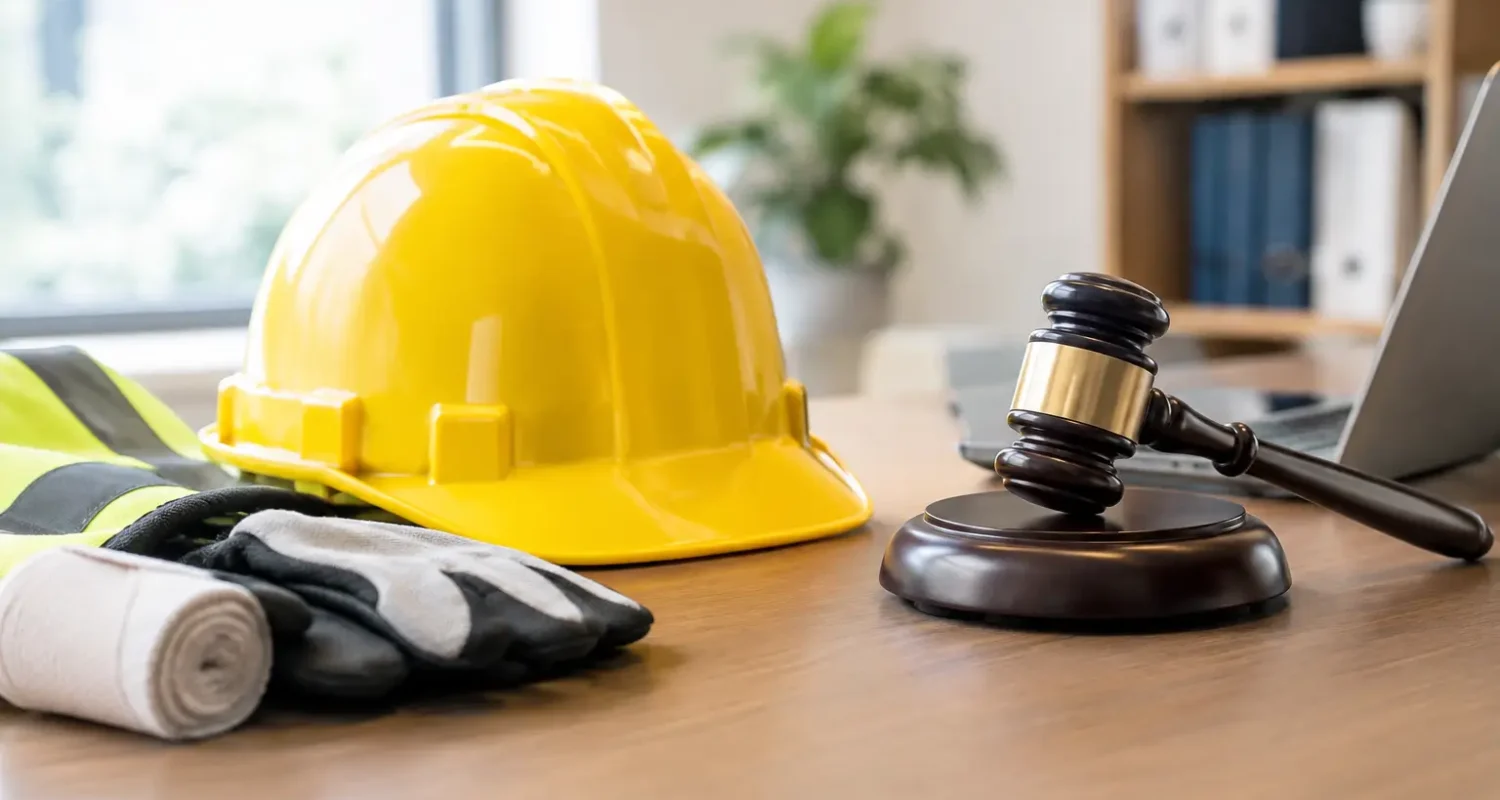
A customer slips near your restaurant entrance. A delivery driver strains a shoulder unloading supplies. Both incidents can create expensive claims, but they belong in different coverage lanes. Workers compensation versus general liability is not an either-or decision for most operating businesses. One responds to employee work injuries. The other responds when your business is accused of injuring someone else or damaging their property.
That distinction matters when you are signing a lease, bidding a contract, hiring a crew, adding vehicles, or trying to keep a single accident from disrupting cash flow. The right policy mix starts with knowing who was hurt, what happened, and where the loss occurred.
What workers compensation covers
Workers compensation helps with injuries and occupational illnesses employees sustain in the course of their work. It is designed to provide defined benefits without requiring the employee to prove that the employer was negligent in many situations.
A typical policy can pay for medical treatment, a portion of lost wages when an employee cannot work, rehabilitation expenses, and certain disability or death benefits. It also commonly includes employers liability coverage, which can help defend the business in specific employee injury lawsuits that fall outside the standard workers compensation benefit system.
Consider a contractor whose employee falls from a ladder at a job site. Or a trucking company whose dispatcher develops a repetitive stress injury after years of desk work. A restaurant employee may suffer a burn, cut, or back injury while moving inventory. These are employee injuries connected to the job. Workers compensation is the first coverage to review.
The details matter. Classification codes, payroll estimates, job duties, subcontractor arrangements, and experience modification can all affect pricing and how the policy is structured. A roofing crew, a restaurant kitchen, and an office staff do not present the same injury exposure. Accurate payroll reporting is not paperwork for paperwork’s sake. It helps place the risk correctly and reduces unpleasant audit surprises later.
Florida workers compensation requirements vary by industry and employee count. Construction businesses generally face stricter requirements than many non-construction employers. Requirements also differ in other states, so a multistate operator should not assume one state rule applies everywhere. Review your workforce, including officers, leased employees, and subcontractors, before deciding what is required.
What general liability covers
General liability protects the business against many third-party claims. A third party may be a customer, visitor, vendor, property owner, or another person who is not your employee. Coverage commonly addresses bodily injury, property damage, personal and advertising injury, legal defense costs, and certain medical payments, subject to the policy terms and limits.
For example, a customer may slip on a wet floor in your dining room. A contractor may crack a homeowner’s tile while carrying materials through the property. A warehouse visitor may be injured by merchandise that falls from a display. General liability is built for these types of claims.
It can also respond when your completed work allegedly causes damage after the job is finished. If a contractor installs a fixture incorrectly and it later damages a client’s property, completed operations coverage may be critical. The scope of that protection depends on the policy language, endorsements, exclusions, and the work your company performs.
General liability is often required by commercial leases, vendor agreements, client contracts, and licenses. A property manager may require a tenant to carry a stated per-occurrence limit and name additional insureds. A general contractor may require subcontractors to provide certificates and endorsements before stepping onto a job site. Meeting the stated limit is only the starting point. You also need to confirm that the policy actually reflects the operations you perform.
Workers compensation versus general liability: the key difference
The fastest way to separate the two is to ask one question: Was the injured person working for your company when the injury happened?
If the answer is yes, workers compensation is generally the relevant coverage. If the injured person is a customer, visitor, client, or other third party, general liability is generally the relevant coverage. That simple test will not resolve every claim, but it gives business owners the right starting point.
| Situation | Coverage to Review First | | — | — | | A cook burns a hand during a shift | Workers compensation | | A diner slips in the lobby | General liability | | A crew member is injured loading a truck | Workers compensation | | Your employee damages a client’s countertop during a repair | General liability | | A former employee alleges a wage or discrimination issue | Neither policy is likely the primary answer |
There are important gray areas. A worker may be classified as an independent contractor but treated like an employee based on the actual working relationship. A subcontractor’s injury can create contractual, workers compensation, and general liability questions at the same time. An employee driving a company vehicle may trigger workers compensation for their injury, while damage to another vehicle may fall under commercial auto liability.
That is why a certificate of insurance alone is not a coverage strategy. Certificates summarize evidence of coverage, but they do not replace the policy, endorsements, or contract review.
What neither policy is built to handle
Business owners often assume general liability is a catch-all policy. It is not. It usually does not cover damage to your own building, equipment, inventory, or tools. Commercial property coverage addresses many of those losses. It also does not replace commercial auto coverage for accidents involving company-owned or scheduled vehicles.
Workers compensation is not a substitute for employment practices liability coverage. Claims involving harassment, discrimination, wrongful termination, or wage-and-hour allegations typically require separate consideration. General liability also has exclusions and limitations for professional advice, cyber events, pollution, liquor-related exposures, and certain work-related risks.
A restaurant may need general liability, workers compensation, commercial property, liquor liability, employment practices coverage, and commercial auto for deliveries. A trucking operation may need commercial auto, motor truck cargo, physical damage, workers compensation, general liability, and possibly umbrella liability. A contractor may need tools and equipment coverage, inland marine, commercial auto, workers compensation, general liability, and an umbrella policy based on contract demands and job size.
The goal is not to buy every policy available. The goal is to identify the losses that could interrupt operations, create contractual trouble, or put business assets at risk.
How to choose the right limits and structure
Start with your actual operations, not a generic industry label. A small retail shop with two employees has a different exposure than a restaurant with late-night service, alcohol sales, delivery drivers, and a busy kitchen. A one-truck owner-operator faces different liability questions than a fleet operating across state lines.
For workers compensation, review employee count, payroll, job classifications, work locations, payroll projections, and prior claims. For general liability, review premises, customer traffic, contracts, completed work, subcontractor controls, revenue, and the limits required by landlords or clients.
Higher limits may be necessary when a contract demands them, when the public has frequent access to your location, or when your work could cause substantial property damage. An umbrella policy can add liability limits above certain underlying policies, but it must be coordinated with the policies beneath it. A low underlying limit or a coverage gap can undermine the protection you expected.
Do not wait until renewal to address a major operational change. Hiring your first employee, opening a second location, taking on a larger project, adding delivery service, or expanding into another state can change the coverage conversation immediately. Fast growth is good for business, but it can make an old insurance setup outdated quickly.
Build coverage around the work you actually do
Workers compensation and general liability protect different sides of the same operation: your workforce and the public. Most active businesses need to evaluate both, especially when contracts, employees, customer traffic, and physical work are part of daily operations.
Bring your employee count, payroll, contracts, locations, vehicle details, and a clear description of your work to the quote conversation. Commercialize Insurance Services can help organize those details around your specific exposure, so your coverage is built for the work happening now, not the business you used to be.