Restaurants usually do not collapse because of one dramatic event. In most cases, bankruptcy is the result of smaller problems that build quietly over time: weak cash flow, rising labor costs, poor cost control, delivery mistakes, operational inconsistency, legal exposure, underinsurance, and a lack of planning for disruptions. By the time the owner feels the full pressure, the business is already carrying too much financial stress.
That is why the better question is not only how to grow a restaurant. It is how to keep one alive long enough to grow well.
If a restaurant owner wants to avoid bankruptcy, the business has to be managed with discipline in several areas at once. Sales matter, of course. But so do margins, payroll structure, food waste, vendor management, pricing, staffing, continuity planning, and risk protection. The U.S. Small Business Administration notes that owners should build around a business plan, market research, cost awareness, legal compliance, and the right insurance for the company’s exposure, because profitability means very little if the business is vulnerable to preventable financial shocks.
For restaurants in Florida, the pressure is even more intense. Weather disruptions, tourism swings, staffing instability, public-facing liability, and operating cost volatility all make discipline more important, not less. If the owner runs the restaurant only as a place that serves food, the business becomes fragile. If the owner runs it as a financial and operational system, the restaurant has a much better chance of surviving.
Below are the core things a restaurant should do if the goal is not just to stay open this month, but to avoid the slow path toward bankruptcy.
1. Protect Cash Flow Like It Is the Real Business
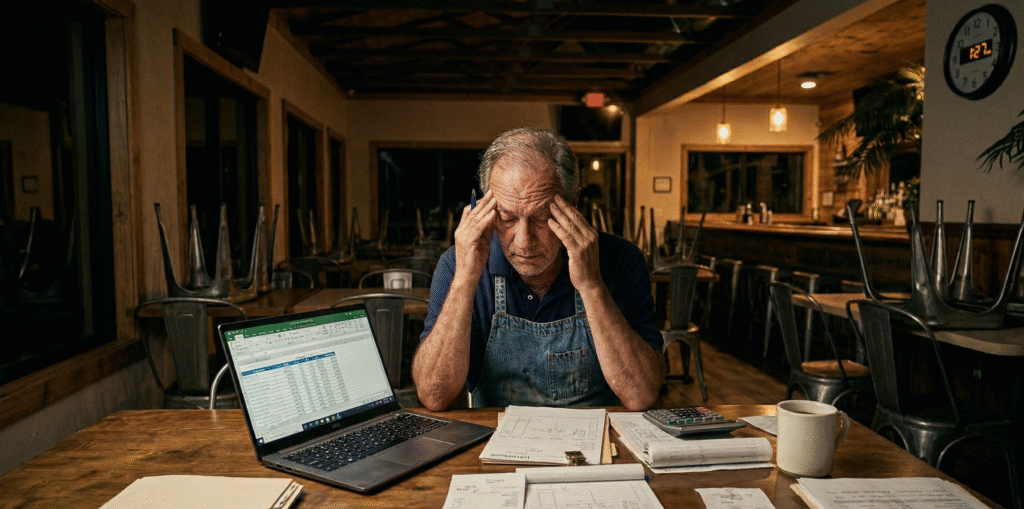
Many owners think the restaurant business is about food, service, and atmosphere. Those matter. But in survival terms, the real business is cash flow.
A restaurant can be busy and still be financially weak. It can have customers every day and still be drifting toward insolvency. The reason is simple: revenue and cash are not the same thing.
If a restaurant wants to avoid bankruptcy, it needs to know:
- how much money actually comes in each week
- how much goes out in fixed costs
- how much goes out in variable costs
- how much margin is left after food, labor, rent, utilities, and platform fees
- how many days or weeks the business could survive a disruption
For a restaurant, that principle never ends after launch. Cash flow must be reviewed continuously. A business that does not monitor it closely can feel healthy while it is actually bleeding.
That is why one of the first ways to avoid bankruptcy is brutally simple: stop guessing. Know the real numbers.
2. Stop Treating Sales as Proof of Financial Health
One of the most dangerous illusions in the restaurant industry is high-volume comfort.
Owners see tables full, orders moving, and staff busy, and they assume the business is doing fine. Sometimes it is. Sometimes it is not.
A restaurant can have:
- strong sales but weak margins
- busy nights but poor weekly cash retention
- growing volume but uncontrolled labor costs
- high ticket counts but major food waste
- delivery activity that adds revenue but reduces profit
This is where many owners get trapped. They feel the restaurant is alive because service is active, but the business side is deteriorating quietly.
The National Restaurant Association’s economic reporting tracks restaurant performance and food-cost trends because volume alone does not define the financial health of an operator. Food costs, labor pressure, and consumer conditions can all change the picture even when demand still exists.
The question is not only whether people are buying. It is whether the business is keeping enough of what it earns to remain strong.
3. Control Food Costs Relentlessly
Food cost discipline is one of the clearest dividing lines between restaurants that survive and restaurants that slowly collapse.
Owners usually understand food cost in theory. The problem is execution. Inventory gets sloppy. Ordering gets inconsistent. Portions drift. Waste is normalized. Theft goes unnoticed. Menu items stay underpriced even when ingredient costs change.
That is how margin disappears.
The National Restaurant Association recently reported that wholesale food prices continue to shift meaningfully over time, reinforcing the need for operators to pay attention to food cost movement rather than assume stability.
To avoid bankruptcy, a restaurant should:
- monitor food cost weekly, not casually
- compare actual usage with expected usage
- reduce menu complexity when it creates waste
- engineer the menu around profitability, not only popularity
- review portions consistently
- renegotiate supplier assumptions when needed
- remove emotional attachment from weak items
A menu full of low-margin favorites can still sink the business.
A restaurant that survives usually knows not only what sells, but what actually contributes to financial strength.
4. Keep Labor Efficient Without Letting Operations Collapse
Labor is one of the hardest areas to manage because owners can damage the business from both sides.
Too much labor and margins disappear.
Too little labor and service quality collapses.
That balance is where many restaurants struggle.
Restaurants should watch labor with the same seriousness they apply to sales. Staffing decisions affect:
- payroll pressure
- overtime risk
- morale
- training quality
- service consistency
- turnover
- customer experience
A business trying to avoid bankruptcy must treat labor as a system, not an emotional reflex. That means reviewing schedules against real demand, not idealized demand. It means identifying weak shifts, role overlap, and unnecessary inefficiency. It also means recognizing that chronic understaffing can be just as dangerous if it causes service failure, burnout, bad reviews, and turnover.
Restaurant survival is not about cutting blindly. It is about making labor productive.
5. Price the Menu for Survival, Not Just for Comfort
A lot of restaurants go under because they are too afraid to price correctly.
Sometimes the fear is emotional:
- “Customers will complain.”
- “The market is competitive.”
- “We don’t want to look expensive.”
But if prices are not aligned with actual cost structure, the business is gradually choosing weakness.
The owner should ask:
- Are our highest-effort items priced correctly?
- Are we carrying menu items that feel popular but hurt profit?
- Have ingredient increases been reflected in pricing?
- Are delivery and dine-in economics being treated differently when needed?
This is where discipline matters. A restaurant cannot avoid bankruptcy if it keeps subsidizing its own customers.
That does not mean reckless pricing. It means smart pricing. The menu should reflect what it truly costs to run the business well, not what the owner wishes those costs were.
6. Build Systems, Not Heroics
Some restaurants survive for years on owner intensity alone. The owner solves everything personally, remembers every detail, steps into every gap, and compensates for weak systems through constant pressure.
That can work for a while. It usually does not scale well, and it often burns the owner out.
A restaurant that wants to avoid bankruptcy needs repeatable systems for:
- ordering
- prep
- waste reduction
- opening and closing procedures
- incident reporting
- staffing communication
- training
- customer complaint handling
- vendor follow-up
- financial review
When a business depends too heavily on daily improvisation, mistakes multiply. Waste increases. Accountability weakens. Small leaks become normal. And bankruptcy rarely arrives as a giant event. More often, it arrives through tolerated inefficiency.
Strong systems reduce financial drag.
7. Prepare for Disruption Before It Happens
A restaurant that has no disruption plan is more fragile than it looks.
Storms, power outages, water damage, equipment failure, vendor interruptions, health concerns, legal claims, and staffing disruptions can all push a weak business toward insolvency faster than expected.
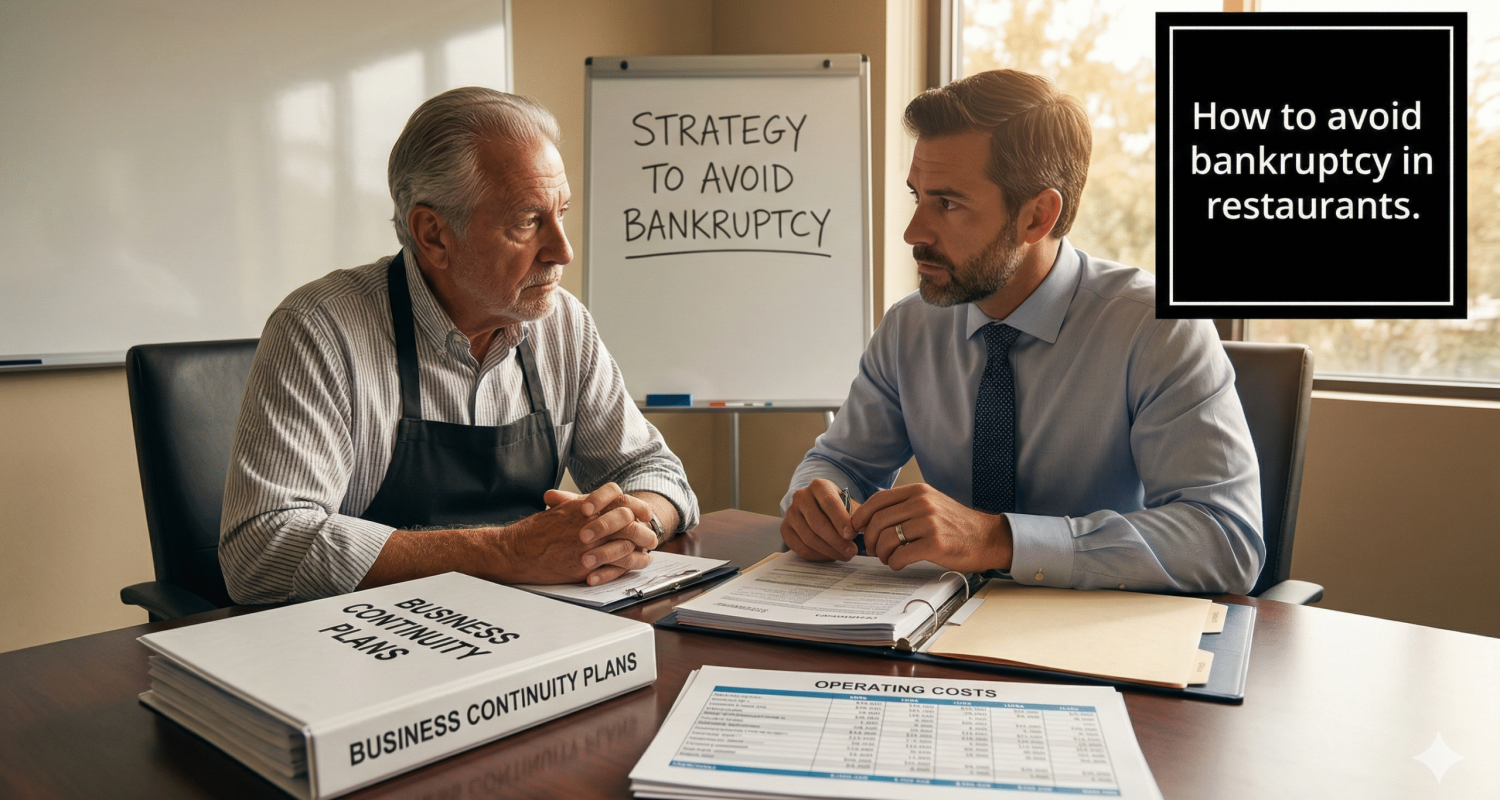
Ready.gov’s business continuity guidance recommends that businesses create continuity teams, identify critical operations, and build plans for disruptions before they happen. The site also provides a business impact analysis framework and continuity plan templates because recovery is much harder when a business is forced to improvise under pressure.
For restaurants, this matters because closure is especially expensive. A restaurant depends on rhythm. If operations stop:
- revenue stops immediately
- payroll pressure may continue
- inventory can be lost
- customers shift to competitors
- reopening may take longer than expected
A business trying to avoid bankruptcy should know in advance:
- what a one-week disruption would do financially
- which assets are most critical
- how staff would be contacted
- how inventory would be protected
- what documents and systems need backup access
- what insurance would respond, and how
Continuity planning is not paranoia. It is bankruptcy prevention.
8. Reduce Safety Problems Before They Become Claims
Operational sloppiness is expensive. Safety failures do not only hurt people. They hurt the business.
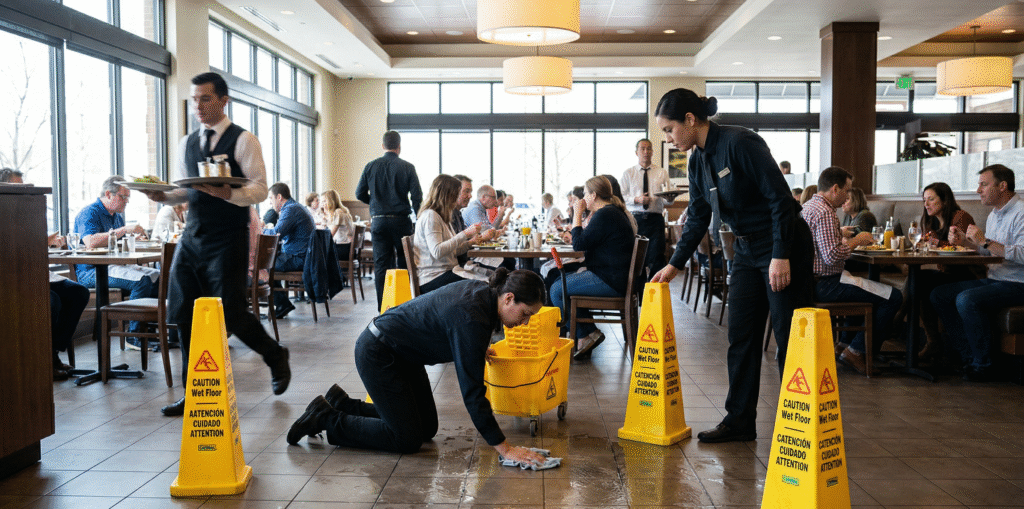
OSHA’s food-service safety guidance repeatedly emphasizes issues like wet floors, clutter, poor housekeeping, and uncontrolled hazards because these conditions predict injuries. In restaurant environments, slips, trips, and falls remain one of the most common categories of preventable harm.
A restaurant that wants to avoid bankruptcy should treat safety as a financial issue, not just a compliance issue.
That means:
- cleaning spills immediately
- keeping aisles and passageways clear
- enforcing better footwear and housekeeping habits
- maintaining equipment before failure
- documenting hazards and corrective action
- training staff to respond consistently
One customer injury claim, one employee injury claim, or one major incident can create exactly the kind of expense a weak restaurant cannot absorb.
Unsafe operations create financial risk whether the owner respects that or not.
9. Take Insurance Seriously Before a Crisis Forces the Issue
A surprising number of restaurants operate with either weak insurance or misunderstood insurance. That becomes especially dangerous when the business is already running with thin margins.
Insurance does not prevent bankruptcy by itself. But the wrong coverage structure can absolutely make bankruptcy more likely after a serious event.
Restaurants should think carefully about protection around:
- customer injury claims
- employee injuries
- property damage
- storm-related disruption
- delivery and vehicle exposure
- food-related claims
- interruption of operations
This is where restaurant and entertainment insurance matters more than generic business coverage. Restaurants simply carry a more layered risk profile than many other small businesses.
The same is true for commercial liability. A customer-facing business with daily public interaction should not treat liability as an afterthought.
Bankruptcy often follows a shock the business could not absorb. Insurance exists partly to keep one bad event from becoming the end of the company.
10. Do Not Ignore Delivery Economics
Many restaurants add delivery because it increases revenue. Sometimes it does. Sometimes it increases activity without increasing strength.
That is because delivery can bring hidden costs:
- app commissions
- packaging expense
- quality complaints
- driver issues
- order errors
- lower margins
- customer-service pressure
- refund frequency
Delivery can help a restaurant survive, but only if the economics make sense. A restaurant trying to avoid bankruptcy should know whether delivery is actually profitable, marginal, or quietly destructive.
If a sales channel makes the restaurant busier but weaker, that is not success. That is accelerated stress.
11. Review the Business Honestly, Not Emotionally
One of the hardest things for owners is honest internal review.
Restaurants often become personal. The owner loves the menu, the concept, the team, the room, the identity of the place. That emotional investment is real, but it can also make decision-making softer than survival requires.
A restaurant that wants to avoid bankruptcy has to review itself honestly:
- Which items are losing money?
- Which shifts are weak?
- Which roles are overstaffed?
- Which vendors are too expensive?
- Which habits are tolerated but costly?
- Which parts of the concept are emotionally important but financially weak?
This is one of the hardest disciplines in the industry, and one of the most important.
Restaurants often do not go bankrupt because the owner cared too little. They go bankrupt because the owner cared in the wrong way — emotionally protective of the business, but not ruthless enough about financial truth.
12. Keep the Business Legally and Operationally Clean
For restaurants, legal and operational sloppiness can become expensive quickly through:
- licensing issues
- labor disputes
- injury claims
- food safety complaints
- poor records
- inconsistent procedures
A restaurant trying to avoid bankruptcy should not wait until a problem is visible. It should assume that weak administrative habits eventually become financial problems.
Clean operations protect profit.
13. Build a Buffer, Even If It Feels Slow
Restaurants are vulnerable partly because many operate without meaningful reserves. That means every setback feels existential.
If possible, owners should work toward a buffer that can absorb:
- one bad week
- one equipment failure
- one weather disruption
- one temporary closure
- one legal or insurance delay
This is hard, especially for restaurants already under pressure. But without a buffer, every problem becomes a crisis. And businesses that live permanently in crisis mode make worse decisions.
A reserve is not wasted money. It is breathing room.
Final Thoughts: A Restaurant Avoids Bankruptcy by Becoming Harder to Kill
A restaurant avoids bankruptcy when it becomes harder to kill.
Not emotionally stronger. Operationally stronger. Financially clearer. Better priced. Better controlled. Better documented. Better protected. Better prepared.
That means:
- watching cash flow closely
- refusing to confuse sales with health
- controlling food and labor
- pricing honestly
- building systems
- preparing for disruptions
- reducing claims and safety problems
- keeping insurance aligned with reality
The restaurant industry is hard enough even when things go well. Owners do not need fantasy. They need clarity.
A restaurant does not survive because it hopes hard enough.
It survives because it knows its numbers, protects its margins, anticipates risk, and responds early before manageable problems become fatal ones.
If the goal is to avoid bankruptcy, that is the work.