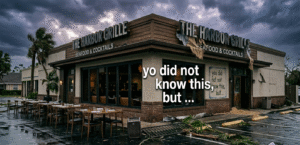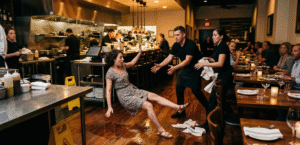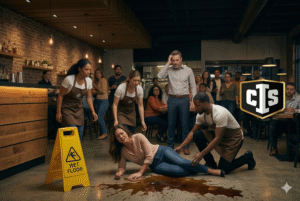
If a customer gets hurt at your restaurant, the situation can become serious much faster than many owners expect. What starts as a moment of confusion on the floor, at the entrance, near a restroom, or inside a crowded dining area can quickly turn into medical expenses, legal questions, insurance involvement, documentation pressure, and lasting reputational damage. For restaurant owners in Florida, that means a customer injury is not just an unfortunate incident. It is a real business-risk event.
The reason this matters so much is simple: restaurants bring the public onto the property every day. People walk through entryways during bad weather, move around busy dining rooms, step near wet areas, navigate crowded aisles, and interact with a space that changes constantly during service. The U.S. Small Business Administration notes that business insurance protects companies from unexpected costs tied to accidents, natural disasters, and lawsuits, which is exactly why customer injury risk should never be treated as a minor side issue in hospitality.
For many owners, the true shock is not just that someone got hurt. It is how many problems can follow from that one moment. There may be immediate medical concerns. There may be pressure from staff, managers, and other guests. There may be a customer complaint, an attorney letter, an insurance report, or an online review. And if the business is not prepared, the incident can feel chaotic even before anyone knows whether a formal claim will happen.
That is why this topic matters. If a customer gets hurt at your restaurant, you need to understand what can happen next, what creates the most exposure, and why the right restaurant insurance matters long before a claim is filed.
Why Customer Injury Risk Is So High in Restaurants
Restaurants are different from many other small businesses because they create a layered environment of public-facing risk.
A typical restaurant combines:
- constant customer movement
- food and drink spills
- wet floors during service or cleanup
- high foot traffic
- tight spaces between tables or service stations
- fast employee movement
- changing lighting or crowded conditions
- indoor and outdoor transitions
- sometimes alcohol service
- sometimes weather-related entry hazards
In other words, the environment is dynamic. It does not remain still, and that matters.
One of the most common examples is a slip-and-fall event. OSHA’s guidance on slips, trips, and falls repeatedly emphasizes the importance of keeping walking surfaces clean and dry and keeping aisles and passageways clear and in good repair. While OSHA rules are workplace-focused, the same practical reality matters inside restaurants: wet or obstructed walking surfaces create predictable injury risk.
From an insurance perspective, this is one of the core reasons restaurant liability is so important. The restaurant is not just serving food. It is hosting the public in an environment where accidents can happen if the space is not managed carefully every single day.
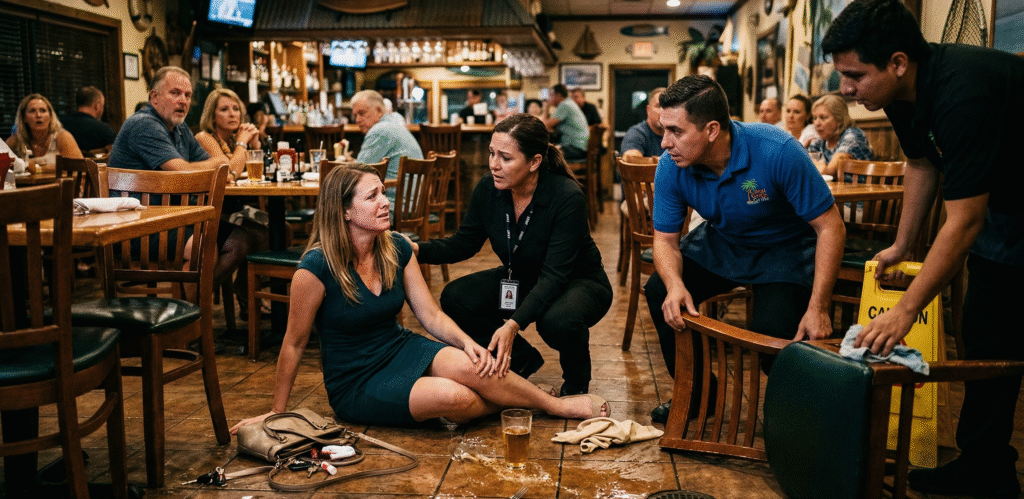
What Types of Customer Injuries Commonly Happen in Restaurants?
When owners think of injury claims, they often picture one dramatic lawsuit. But in reality, customer injuries at restaurants can happen in many ways.
Common examples include:
- slips on wet floors
- trips over uneven flooring or crowded pathways
- falls near entryways during rainy weather
- injuries from broken chairs or unstable tables
- cuts from damaged fixtures or glass
- burns from spilled hot food or beverages
- injuries connected to poor lighting or blocked exits
- allegations tied to unsafe conditions outdoors or on patios
Some claims are minor and end quickly. Others become more complicated because the customer seeks medical treatment, misses work, or believes the injury could have been prevented.
The important point is that a restaurant does not need a catastrophic event for the incident to become financially stressful. Even a moderate injury can create legal expense, settlement pressure, and reputational harm.
The First Few Minutes Matter More Than Many Owners Realize
When a customer gets hurt, the first response can shape what happens next.
Owners and managers are often under pressure in those moments. Staff may panic. Other guests may be watching. The injured person may be upset, frightened, or in pain. But this is exactly why procedure matters.
The business should be able to do several things quickly:
- help address immediate safety concerns
- respond with calm professionalism
- document what happened
- preserve relevant facts
- reduce additional risk around the area
- avoid careless statements that create confusion later
What often makes these situations worse is not just the incident itself, but a poor or disorganized response. If the staff does not know what to do, if the area is not documented, or if management responds inconsistently, the business may create avoidable problems on top of the original event.
Can a Customer Actually Sue a Restaurant for an Injury?
Yes. A customer can sue a restaurant if they believe the restaurant’s negligence or unsafe conditions caused their injury.
That does not mean every injury becomes a lawsuit or that every lawsuit succeeds. But the exposure is very real.
A customer claim may involve allegations such as:
- the restaurant failed to maintain safe conditions
- a spill was not cleaned quickly enough
- no warning sign was placed in a hazardous area
- walkways were blocked or poorly maintained
- furniture was defective or unstable
- lighting or visibility contributed to the accident
- management knew, or should have known, about the dangerous condition
This is where the business moves from customer service into liability exposure.
The reason these claims matter so much is that the customer is not only thinking about the physical injury. They may also be thinking about medical bills, lost wages, pain, inconvenience, future treatment, and whether the restaurant could have prevented what happened.
Why Slip-and-Fall Claims Are So Common
If there is one type of customer injury restaurant owners should take especially seriously, it is the slip-and-fall claim.
Why? Because restaurants naturally create conditions where slips are easier to imagine than in many other businesses.
- drinks spill
- floors are cleaned regularly
- kitchens and service areas generate moisture
- entrances become slick during storms
- customers move while distracted
- staff work fast, especially during rush periods
OSHA’s slip-and-fall guidance is centered on employee safety, but its core lessons are still relevant to restaurant environments: keep floors clean and dry, keep passageways clear, and deal with hazards promptly.
From a liability standpoint, slip-and-fall claims are especially frustrating because they can emerge from routine business activity. The restaurant does not need to be recklessly run for this kind of incident to happen. It just needs one gap, one delay, one unmarked spill, or one overlooked condition.
Why Florida Restaurant Owners Should Think About This Differently
Florida restaurant owners operate in a setting where customer injury exposure can be amplified by local conditions.
That includes:
- rain and water tracked into entrances
- heavy tourism and higher customer volume
- outdoor dining areas
- storm-related weather changes
- seasonal traffic patterns
- hospitality operations with fast turnover
Florida’s Division of Hotels and Restaurants licenses, inspects, and regulates public food service establishments in the state, which reinforces how seriously restaurant operations are treated from a health and safety standpoint.
In practical terms, that means Florida restaurant owners should not think of customer injury claims as rare or irrelevant. The environment creates enough customer movement and enough changing conditions that safety and documentation need to be part of everyday operations, not just emergency thinking.
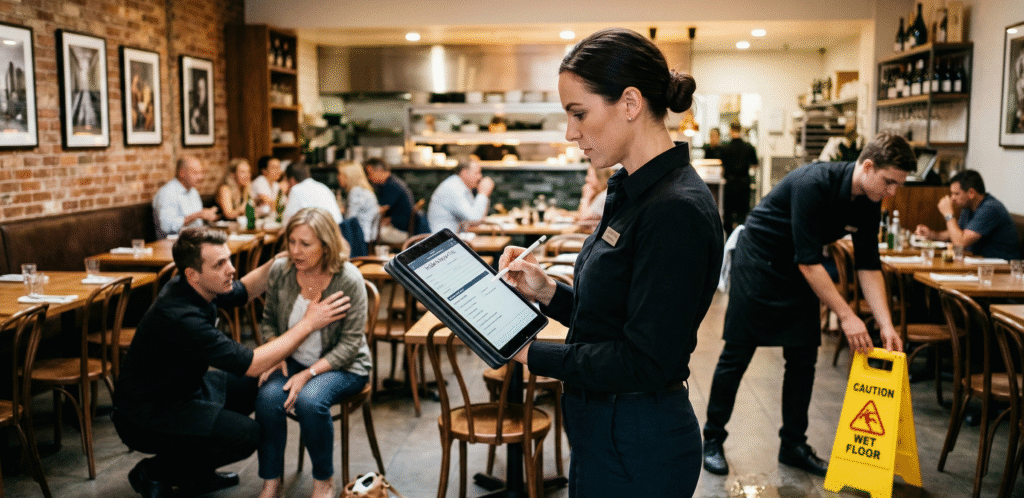
What Happens After the Injury Is Reported?
A lot of owners do not know what the timeline looks like after an injury is reported.
The incident may progress through several stages:
- the immediate event happens
- staff or management respond
- the injured customer leaves or seeks treatment
- the customer contacts the restaurant later
- the issue may be reported to insurance
- legal representation may become involved
- documentation and fact review begin
- a demand or claim may be made
Sometimes the customer contacts the restaurant directly first. Sometimes the first sign of escalation is an attorney or insurance communication. Sometimes the issue grows because the restaurant did not document the initial event clearly enough to respond with confidence.
That is why the event should never be treated casually just because the customer appears calm in the moment. The seriousness often reveals itself later.
Why Documentation Is So Important
When a customer gets hurt at your restaurant, documentation becomes one of the most important tools you have.
That may include:
- incident reports
- photographs of the area
- timing of the event
- names of staff present
- weather conditions if relevant
- cleaning records
- maintenance records
- witness information if available
- condition of the area after the incident
Without documentation, the business may struggle to explain what actually happened or what safety steps had been taken before the incident.
This matters because injury claims often turn on details. Was the area already being cleaned? Was a warning sign present? Had staff been notified of the hazard? Was the flooring damaged? Was the condition obvious or hidden? Those details are much harder to defend later if nothing was documented properly in the moment.
How a Customer Injury Can Become a Bigger Financial Problem
One of the most dangerous misunderstandings restaurant owners have is assuming that only severe injuries are worth worrying about.
In reality, even moderate injuries can become costly because the expense is not just about emergency treatment. A claim may involve:
- medical bills
- follow-up treatment
- physical therapy
- lost wages
- legal expenses
- settlement discussions
- internal time and disruption
- reputational damage
That is why a customer injury incident is never only about whether the person fell hard enough to need an ambulance that day. It is about the full financial and legal chain that may follow.
Where Commercial Liability Becomes Critical
This is exactly where commercial liability becomes one of the most important parts of a restaurant’s insurance structure.
A restaurant that serves the public every day has third-party injury exposure built into the business model. That is not paranoia. It is simply operational reality.
CIS’s commercial liability page is relevant here because it speaks directly to protection against claims tied to injury, damage, and legal exposure connected to business operations. For a restaurant, that is not abstract coverage. It is one of the core protections that stands between a painful incident and a much bigger financial problem.
Without the right liability structure, an owner may discover too late that the business was more exposed than expected.
Why Generic Small-Business Thinking Does Not Work Well for Restaurants
A restaurant is not a generic small business, and that matters a lot when someone gets hurt on the property.
Restaurants combine:
- public traffic
- wet and changing surfaces
- hot food and beverages
- service speed
- employee movement
- equipment exposure
- weather-sensitive entryways
- sometimes alcohol service
- sometimes outdoor areas or entertainment elements
That mix of exposure is exactly why restaurant and entertainment insurance should be treated as something more tailored than a basic general-business policy.
Restaurant owners often underestimate this because the space feels normal to them. They know the layout, the routines, the traffic patterns, the busy hours. But customers do not move through the space with that same familiarity, and claims happen in the gap between what feels routine to the staff and what feels dangerous to the guest.
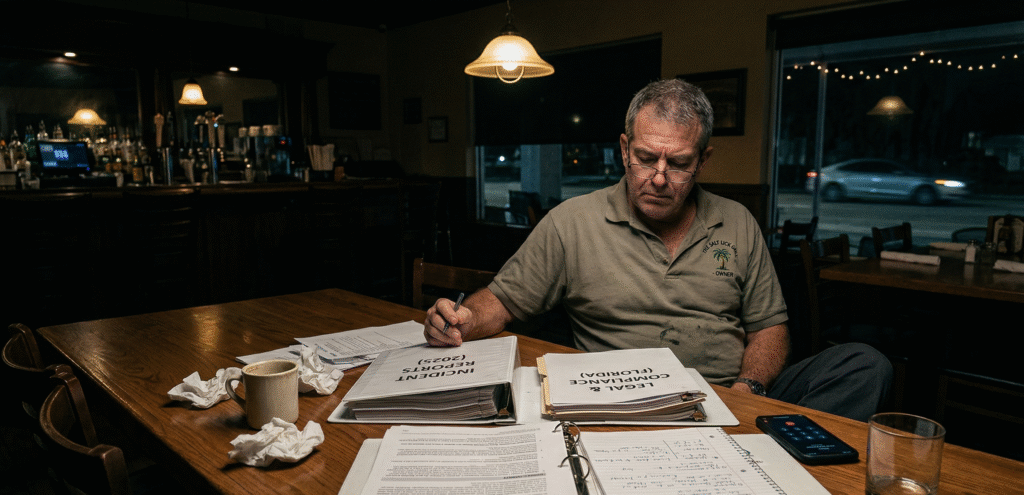
What About Employee Injuries During the Response?
Another layer owners sometimes forget is this: when a customer gets hurt, employees may also be affected during the response or while managing the conditions that caused the incident.
For example:
- an employee slips while cleaning a spill
- a staff member gets injured during emergency response
- a worker is hurt while moving furniture or equipment after the event
That is one reason workers’ compensation still belongs in the broader restaurant-risk conversation. Florida’s workers’ compensation coverage requirements make clear that employers conducting work in Florida must provide workers’ compensation coverage based on industry type, employee count, and entity structure.
The customer injury may be the main event, but the operational ripple effects can expand the exposure beyond the original claim.
Why Reputational Damage Can Be Almost as Painful as the Claim
A customer injury claim does not only affect legal or insurance outcomes. It can also affect how people see the restaurant.
That may include:
- negative reviews
- social media posts
- community word-of-mouth
- hesitation from regular customers
- perception that the space is unsafe
This matters because restaurant businesses are built on repeat trust. If guests begin to associate the business with unsafe conditions, the financial damage may extend beyond the actual injury event.
That is why preparation is not only about legal protection. It is also about protecting confidence in the brand.
What Restaurant Owners Usually Regret Most
After a customer injury incident, owners usually regret the same things:
- not documenting quickly enough
- not having a cleaner reporting procedure
- assuming the customer would not escalate
- not reviewing liability coverage carefully before the incident
- not correcting a known hazard sooner
- not training staff well enough on what to do
That last point matters more than many owners think. In fast-moving hospitality businesses, weak procedures create expensive inconsistency.
What Owners Should Review Before an Incident Happens
The smartest time to think about customer injury risk is before a claim.
A restaurant owner should be able to answer questions like:
- what are the most common customer injury risks in our space?
- do we maintain incident documentation consistently?
- are wet floors, entry hazards, and obstructions addressed quickly enough?
- do staff know what to do if a customer gets hurt?
- does our insurance structure reflect real public-facing exposure?
- have we reviewed our restaurant-specific liability needs recently?
These are not pessimistic questions. They are business-protection questions.
Final Thoughts: A Customer Injury Is Never Just an Awkward Moment
If a customer gets hurt at your restaurant, the event can become much more than an awkward or unfortunate moment.
It can become:
- a liability claim
- a legal problem
- an insurance issue
- a documentation issue
- a reputational problem
- a financial drain
That is why restaurant owners should take customer injury exposure seriously even if they have never faced a formal claim before.
Restaurants are public-facing businesses. People move through them constantly. Spills happen. Weather happens. Crowded service happens. Fast operations happen. Risk is built into the model.
The goal is not fear. The goal is preparation.
That means keeping conditions safer, responding professionally, documenting clearly, and making sure the insurance structure behind the restaurant actually reflects the real-world exposure of serving the public every day.
Because when someone gets hurt, the business will not be judged by what the owner meant to protect.
It will be judged by what was actually in place when the incident happened.