Business Insurance
If there is one pattern we see again and again, it is this: most Florida business owners do not fail because they ignored insurance entirely. They get hurt because they assumed they were protected when they were not.
That is what makes insurance mistakes so dangerous. The problem is rarely obvious in the beginning. A business owner buys a policy, puts the paperwork away, and believes the business is covered. Then a customer gets injured, an employee gets hurt, a delivery accident happens, a storm shuts operations down, or equipment is damaged. That is when the gap shows up. And by then, it is usually expensive.
For restaurants, hospitality businesses, and small companies operating in Florida, the stakes are even higher. Tight margins, unpredictable weather, employee turnover, deliveries, foot traffic, and rising replacement costs all increase the pressure. One misunderstanding about coverage can quickly become a claim worth thousands, sometimes much more.
The good news is that many of the most common insurance problems are preventable. When business owners understand where the real exposure is, they make smarter decisions. And that is exactly what this article is about.
Below are seven of the most common and costly insurance mistakes we believe Florida business owners should take seriously before a claim forces the issue.
Mistake 1: Assuming General Coverage Means Full Protection
One of the most common business insurance mistakes in Florida is assuming that having “some insurance” means the business is well protected.
This is where many owners get blindsided.
A policy may exist, but that does not mean it covers the actual risks of the business. A restaurant, for example, is not exposed in the same way as a small office. A business with employees is not exposed in the same way as a solo operator. A company that uses vehicles for deliveries or job-site visits does not face the same risks as one that operates from a single location without transportation needs.
Coverage can be incomplete in several ways:
- the wrong type of policy was purchased
- important endorsements were never added
- limits are too low for real-world claims
- exclusions remove protection for common risks
- the policy was not updated as the business changed
This is one reason restaurant and entertainment operations need specialized planning rather than generic coverage. Businesses with customer traffic, alcohol exposure, entertainment components, kitchen equipment, or hospitality-related liability often need a more tailored approach than many owners expect.
For companies operating in hospitality or food service, this is where reviewing broader restaurant and entertainment insurance can matter significantly. A business may think it has basic protection while missing exposures tied to premises liability, customer injuries, or operational interruptions.
The first real lesson here is simple: having insurance is not the same thing as having the right insurance.
Mistake 2: Choosing the Cheapest Policy Instead of the Right One
We understand why business owners do this. Costs matter. Cash flow matters. Premiums are not small. But one of the most costly insurance mistakes Florida business owners make is treating insurance like a race to the lowest monthly payment.
A cheap policy can feel like a smart short-term decision right up until something happens.
When owners focus only on premium, they often end up with:
- lower liability limits
- higher deductibles than they can comfortably absorb
- missing endorsements
- weaker property protection
- poor fit for the actual business model
This becomes dangerous when claims are larger than expected. A customer injury claim, a property loss, or a delivery-related accident can quickly exceed what a low-cost policy was built to handle.
Cheap coverage can also create a false sense of security. The owner thinks the risk is handled, so there is no urgency to review exclusions or ask tougher questions. But exclusions are exactly where many low-cost policies reveal their true cost.
In our view, the better question is not “What is the cheapest policy available?” It is “What could this policy fail to cover when my business actually needs it?”
That is a much more useful way to think about cost.
Mistake 3: Ignoring Commercial Liability Exposure
Many business owners underestimate how fast a liability issue can become a serious financial problem. They think in terms of freak accidents, rare lawsuits, or unlikely scenarios. But liability exposure is often much more ordinary than that.
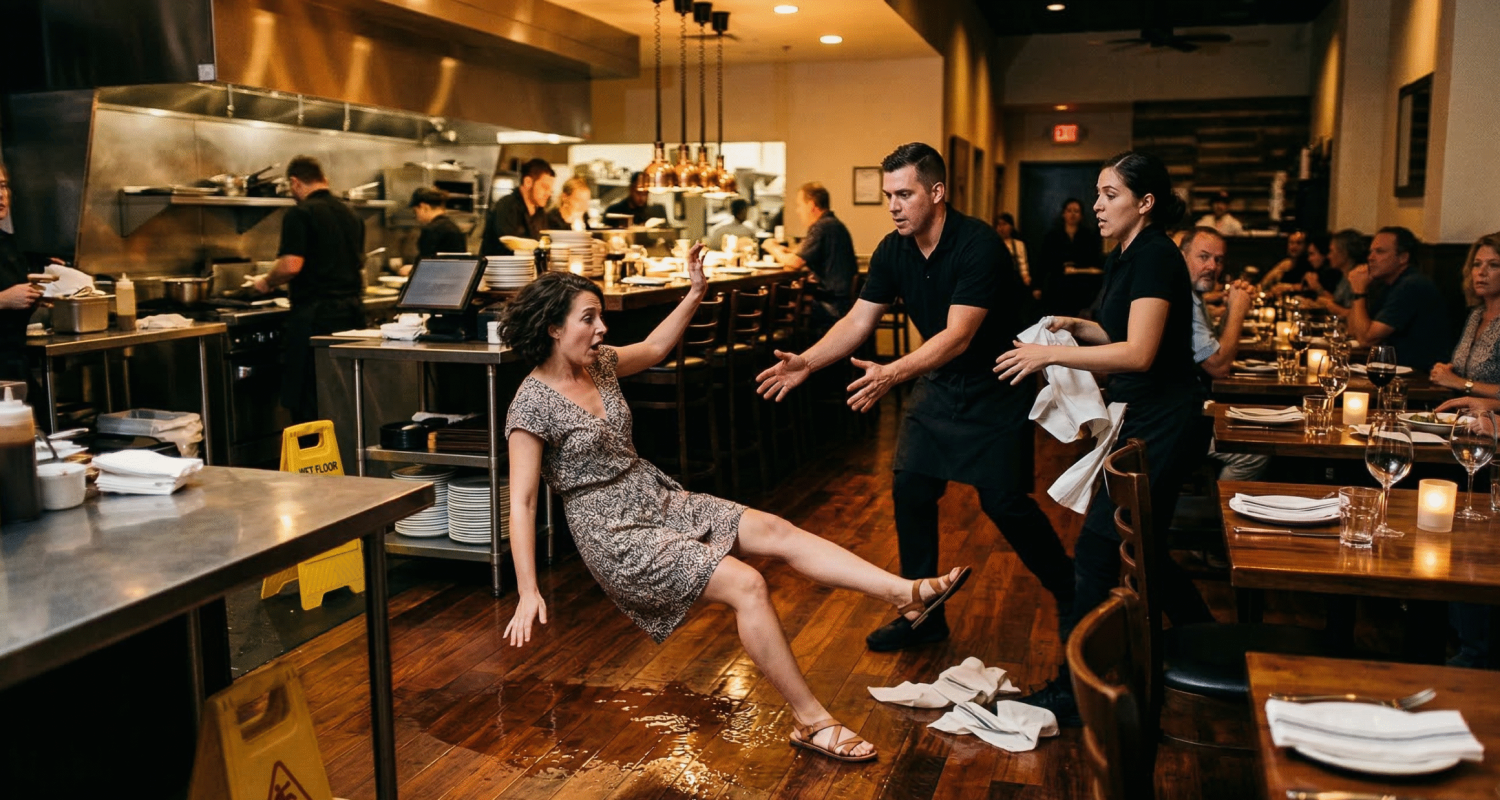
A customer slips on a wet floor.
A vendor claims property damage.
A guest alleges an injury at an event.
A client says the business caused a loss.
Now the business is dealing with legal expenses, defense costs, and possibly settlement pressure.
This is why overlooking commercial liability is one of the most dangerous coverage mistakes a Florida business can make.
For restaurants and businesses with public interaction, commercial liability is not just paperwork. It is one of the foundations of financial survival. High customer traffic, uneven surfaces, spills, alcohol service, temporary staffing, and busy operating environments all raise the risk of claims.
Florida business owners often assume that liability issues only matter to larger companies. In reality, smaller businesses are often more vulnerable because they have less cash available to absorb legal costs and fewer operational buffers if a claim disrupts the business.
That is why understanding broader commercial liability protection is essential. Many owners do not realize how quickly attorney fees, medical costs, and claim negotiations can escalate even before a case reaches a formal court process.
A liability gap is dangerous not only because of the amount of the claim, but because it hits the business at the exact point where stress, confusion, and uncertainty are already high.
Mistake 4: Failing to Update Coverage as the Business Evolves
A lot of policies start out reasonably. The problem is that businesses change faster than their insurance does.
This is one of the most common small business insurance mistakes in Florida: the owner buys coverage based on the original version of the business, then keeps growing without adjusting the policy.
A restaurant begins offering delivery.
A business adds employees.
A company starts using a vehicle for operations.
A location adds outdoor seating, events, or entertainment.
New equipment is purchased.
Revenue increases.
Each of those changes can alter the exposure significantly.
But many owners never notify their broker or review the policy structure after those changes happen. So when a claim occurs, the policy may no longer match reality.
This is especially important in Florida because the business environment can shift quickly. Seasonal demand changes, tourism cycles, labor changes, storm preparation, and operational adjustments can all affect what kind of protection makes sense.
Insurance should evolve with the business. If it does not, the business gradually becomes less protected while the owner feels more confident than they should.
That is a dangerous combination.
Mistake 5: Overlooking Business Interruption Risk
A surprising number of owners think only about physical damage. They think in terms of repairing the building, replacing equipment, or fixing what is broken. But one of the biggest financial threats after a disruption is not just damage. It is lost income.
This is why overlooking business interruption risk is one of the most expensive insurance gaps that hurt small businesses in Florida.
Imagine a storm damages a property. Or a pipe bursts. Or a fire suppression issue shuts down the kitchen. Or a refrigeration failure forces operations to pause. Even if the physical damage is covered, what happens to revenue while the business is closed or limited?
That is where owners start to feel the real pressure:
- payroll continues
- bills continue
- rent may continue
- customers go elsewhere
- inventory may be lost
- reopening takes longer than expected
For restaurants and hospitality businesses, even a short closure can be painful. A few lost days can already hurt. A few lost weeks can become a serious financial event.
Florida business owners, more than most, should think carefully about interruption exposure because storm events, humidity-related damage, plumbing issues, and weather-driven disruptions are simply part of the operating environment.
A business can survive a repair bill more easily than a prolonged income gap paired with ongoing expenses.
That is why any serious internal SEO article about business insurance in Florida should address not just damage, but downtime.
Mistake 6: Assuming Personal Auto Coverage Is Enough for Business Use
This is one of the most misunderstood areas in commercial insurance.
A surprising number of owners assume that if a personal vehicle is involved, personal auto insurance will handle the situation, even if the trip was related to business.
That assumption is risky.
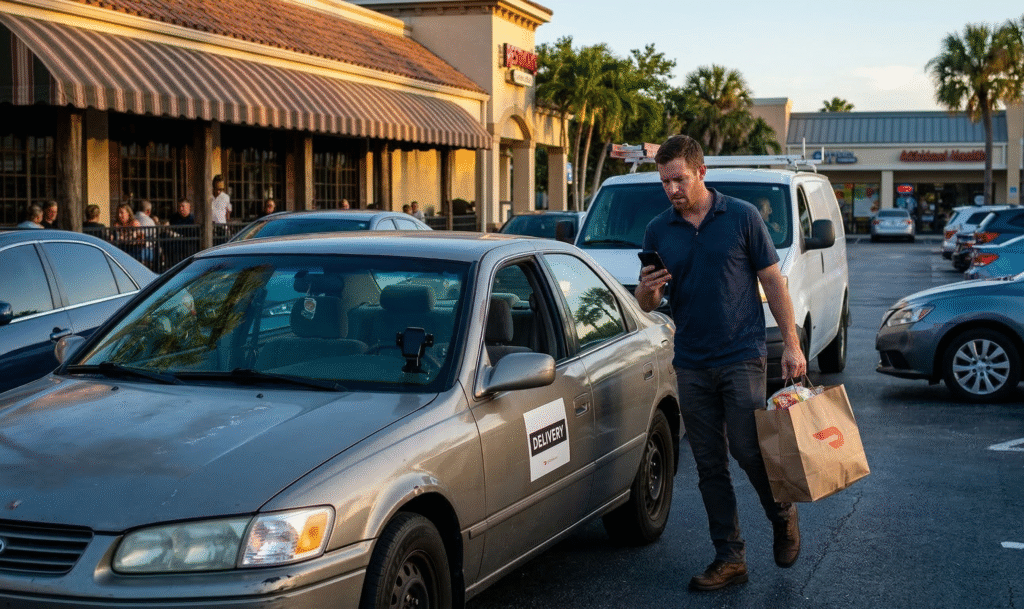
If a vehicle is being used to support business operations, whether for deliveries, supply runs, catering, job-site visits, transporting tools, or other work-related activity, the exposure changes. And personal auto coverage may not respond the way the owner expects.
This is especially relevant for:
- restaurants offering delivery
- catering operations
- businesses sending employees on errands
- service companies visiting customer locations
- managers using personal vehicles for business tasks
The trouble is that these activities often feel informal. Owners think, “It’s just a quick run,” or “We only do this occasionally.” But occasional business use can still create real liability exposure.
If a serious accident occurs and the vehicle use is connected to the business, the claim may involve questions about whether the correct commercial protection was in place.
This is one of those moments where a relatively small misunderstanding can lead to a very large financial problem.
Florida businesses that rely in any way on vehicle-based operations should review that risk directly rather than assuming the existing policy language will sort it out later.
Mistake 7: Treating Insurance as a One-Time Purchase Instead of an Ongoing Strategy
This is the deepest mistake underneath many of the others.
Too many owners treat insurance like a one-time administrative task. Something to check off. Something to renew. Something to pay for and forget.
But the strongest businesses do not approach insurance that way.
They treat it as an ongoing risk strategy.
That means reviewing:
- what has changed operationally
- where claims are most likely to happen
- what a shutdown would cost
- how employee risk has changed
- whether liability limits still make sense
- whether internal processes reduce claim frequency
- whether the policy still reflects real-world exposure
The businesses that do this tend to make fewer painful mistakes because they catch problems before a claim reveals them.
This matters even more in industries like restaurants, hospitality, and entertainment, where operations are dynamic and exposure is layered. Staffing changes, customer behavior changes, events happen, vendors change, equipment changes, delivery or service models change, and risk is never fully static.
Insurance should be reviewed as a living structure, not a dead document.
Why These Insurance Mistakes Hit Florida Businesses So Hard
Some of these coverage mistakes would be costly anywhere. But Florida increases the pressure for several reasons.
First, weather exposure is real. Business owners here operate in a state where storms, flooding concerns, wind exposure, water damage, and business shutdown risk are all part of the landscape.
Second, customer-facing businesses are common. Restaurants, hospitality venues, service businesses, and entertainment-related operations deal with high public interaction and therefore elevated liability exposure.
Third, many businesses operate with tight margins. That means even manageable claims can feel destabilizing when paired with downtime, repairs, staffing costs, or legal fees.
Fourth, operational complexity is often underestimated. A business may look small from the outside while actually carrying meaningful risk through employees, suppliers, customer movement, property dependency, alcohol service, or business vehicle use.
All of this means that insurance mistakes do not stay theoretical for long. Florida is the kind of environment where weak coverage tends to get tested.
What Smarter Insurance Planning Looks Like
The goal is not fear for the sake of fear. The goal is clarity.
Smarter insurance planning usually starts with better questions:
- What are the most likely claims this business could face?
- What risks would hurt us most financially?
- Where are we assuming coverage instead of confirming it?
- Has the business changed since the policy was written?
- Could we survive a closure, lawsuit, or serious injury claim without the right protection?
These questions lead to better decisions because they move the conversation away from generic coverage and toward actual exposure.
For restaurants and hospitality businesses, that often means reviewing the business through a more specialized lens. The risk profile of a food or entertainment-related operation is not identical to that of a standard office or low-foot-traffic business. Liability, interruption, employee injury, customer traffic, and operational complexity all deserve more attention.
When owners think this way, insurance stops being a reluctant expense and starts becoming what it is supposed to be: a tool for protecting stability.
The Hidden Cost of Waiting Until Renewal
Another issue many owners run into is timing.
They notice a concern, or they know the business has changed, but they tell themselves they will deal with it at renewal. That delay can be costly.
A lot can happen between now and renewal:
- a customer can be injured
- an employee can get hurt
- a storm can cause disruption
- a delivery-related accident can happen
- an equipment failure can shut operations down
Waiting until renewal is really just another way of accepting today’s gaps.
And because many business owners are busy, this happens more often than they expect. It is not negligence in the dramatic sense. It is operational overload. The business demands attention everywhere else, so policy review keeps getting postponed.
But insurance is one of those areas where delay can be expensive in a way that feels deeply unfair. The issue is fixable before a claim and painful afterward.
That is why periodic review matters even outside the renewal cycle.
Final Thoughts: The Most Expensive Insurance Mistake Is False Confidence
Of all the insurance mistakes Florida business owners make, the biggest may be false confidence.
Not panic. Not total ignorance. False confidence.
It is the belief that because a policy exists, the problem is solved.
It is the assumption that because nothing has happened yet, the coverage must be fine.
It is the habit of renewing without really reevaluating.
That is the mindset that creates the most expensive surprises.
If this article does one useful thing, it should be this: it should push business owners to look more carefully at what their policies actually do, what they do not do, and whether those policies still fit the business they are running today.
For restaurants, hospitality businesses, and small companies operating in Florida, protection should match reality. Not assumptions. Not outdated structures. Not the cheapest possible version of coverage.
Because one claim is often all it takes to reveal whether the foundation was strong or not.
And once that moment comes, the price of the wrong decision is rarely small.