Commercial Auto Insurance
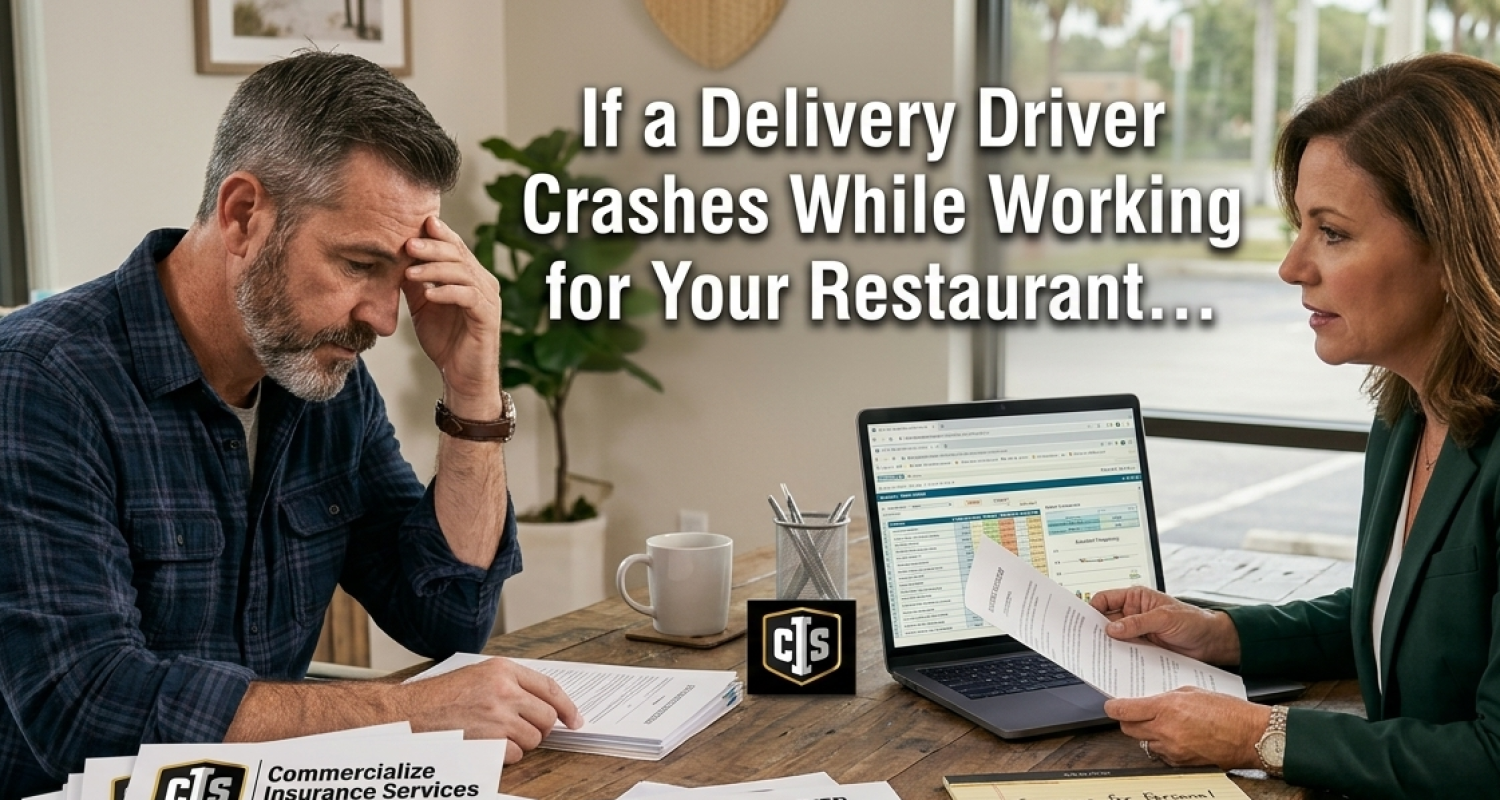
If your restaurant uses delivery in any form, whether it is full-time, part-time, in-house, catering-related, or occasional, one of the most important questions you can ask is this: what happens if a delivery driver causes an accident while working for your restaurant?
That is not a minor insurance question. For many restaurants, it is one of the most underestimated operational risks in the business. A delivery accident can trigger vehicle damage, injury claims, legal exposure, employee injury concerns, lost revenue, and major confusion over which policy is actually supposed to respond. And because Florida requires proof of auto insurance for registered vehicles while small businesses are also encouraged by the SBA to carry insurance that matches real operating risk, restaurant owners should not assume that a basic policy structure automatically covers business delivery exposure.
For restaurants, this risk tends to be misunderstood because delivery often feels informal. It may be a manager making a quick run. It may be an employee using a personal car during a busy evening. It may be a catering drop-off that seems routine. But once a crash happens, the situation stops feeling informal immediately. At that point, what matters is whether the restaurant’s insurance structure actually reflects how the business operates in real life.
Why Delivery Accidents Create More Exposure Than Owners Expect
A delivery accident is rarely just a transportation issue. For a restaurant, it can become a multi-layered business problem very quickly.
The obvious exposure is damage from the crash itself. But that is only the starting point. Once a driver is on the road for business purposes, the accident can raise questions about:
- bodily injury to other people
- damage to another vehicle or other property
- injuries to the employee making the delivery
- whether the vehicle was being used for business
- whether the restaurant can be pulled into a claim or lawsuit
- whether operations are disrupted while the issue is being handled
That is why delivery-related exposure deserves more attention than many owners give it. The SBA states plainly that business insurance protects against unexpected costs such as accidents and lawsuits, and in practice that is exactly the kind of financial pressure a restaurant can face after a delivery crash.
Restaurants are especially exposed because delivery often sits in a gray zone operationally. It may not feel like a transportation business, but vehicles are still being used to support revenue. That changes the risk.
The First Question After a Crash: Whose Vehicle Was Being Used?
One of the first facts that matters after a delivery accident is deceptively simple: whose vehicle was involved?
That question shapes everything that follows.
Company-owned vehicle
If the restaurant owns the vehicle used for deliveries, the conversation usually turns immediately to commercial auto exposure, policy structure, liability, and whether the coverage limits are appropriate for how that vehicle is being used.
Employee-owned vehicle
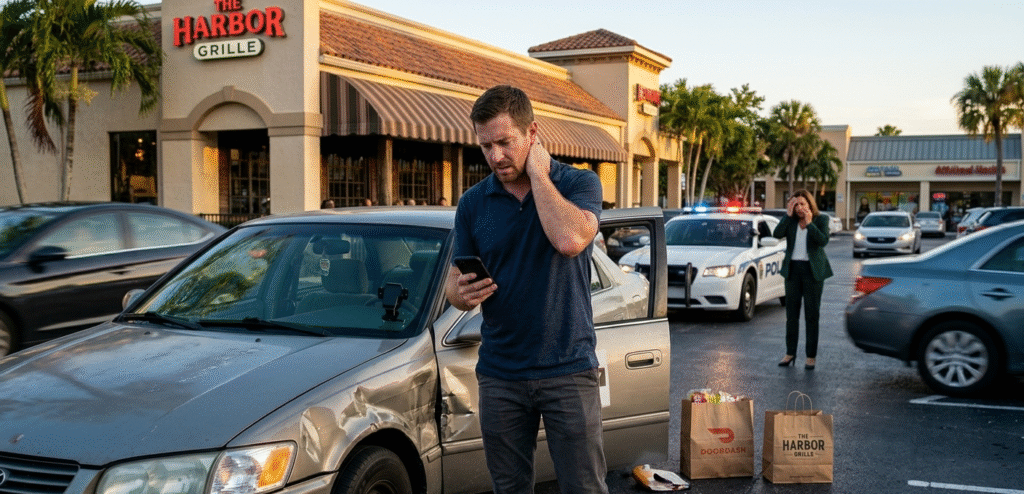
If an employee used a personal vehicle while making a delivery, things can become much more confusing. Many owners assume the employee’s personal insurance handles the matter automatically. That assumption is exactly where serious problems can begin.
Borrowed, rented, or occasional-use vehicle
Some restaurants use temporary vehicles, borrowed vehicles, or vehicles that are not formally integrated into a structured delivery program. Those situations can be even harder because the owner may not have thought clearly about how that exposure was being insured in the first place.
The point is not that one setup is always right and another always wrong. The point is that delivery risk changes depending on the vehicle arrangement, and insurance should match that reality rather than rely on assumptions.
Why Personal Auto Insurance Can Become a Dangerous Assumption
This is one of the most common misconceptions we see around restaurant delivery operations.
Owners often assume that if an employee uses a personal vehicle, then the employee’s personal auto policy is the only policy that matters. But if that vehicle is being used to support business operations, the exposure is no longer purely personal in a practical sense.
Florida’s vehicle insurance rules explain the state’s minimum requirements for registered vehicles, including Personal Injury Protection and Property Damage Liability, but those rules should not be confused with a full commercial risk strategy for a restaurant using vehicles to make money. A vehicle can satisfy registration requirements and still leave the business exposed in ways the owner did not expect.
This is where many restaurant owners get caught off guard. Delivery may feel occasional or secondary, but once someone is driving on behalf of the restaurant, the business connection becomes relevant. If a serious accident happens, questions about liability and coverage can become much larger than the owner imagined when that employee first agreed to make deliveries.
What If the Delivery Driver Injures Someone Else?
This is the scenario most owners immediately worry about, and for good reason.
If a delivery driver causes an accident and another person is injured, the claim may involve:
- medical expenses
- vehicle repairs
- lost wages
- attorney involvement
- potential settlement pressure
- allegations that the driver was acting on behalf of the restaurant
At that point, the business may not be able to remain a bystander. For restaurants, especially those that regularly offer delivery, catering, or operational errands, the issue is not just whether there is insurance somewhere. It is whether the restaurant has protection built for this type of exposure.
That is why restaurants should not think about delivery only as a convenience feature. It is also a liability channel.
What If the Delivery Driver Is Injured While Working?
This is the second major problem owners often forget to consider.
A delivery crash does not only threaten other people. It can also injure the employee who was on the road for work. The U.S. Department of Labor explains that workers injured on the job generally need to deal with the relevant workers’ compensation system for their coverage and benefits, which means an accident that happens while performing job duties can create an entirely separate layer of employer responsibility.
For restaurants, this matters because delivery accidents can create two major claim pathways at the same time:
- claims tied to injury or damage suffered by others
- claims tied to the employee’s own injury while working
That dual exposure can make a single crash much more costly than owners assume.
Why Restaurants With “Occasional Delivery” Still Need to Take This Seriously
A common reaction from owners is, “We don’t do delivery that often.”
But “not that often” is not the same as “not exposed.”
Many restaurants create delivery exposure without thinking of themselves as delivery businesses. Some examples:
- a manager drives supplies from one location to another
- an employee runs a catering order
- staff make occasional food drop-offs during busy periods
- a worker uses their own car for bank deposits or restaurant errands
- a restaurant offers seasonal or event-based delivery
All of those situations can create business-use vehicle exposure.
This is why restaurant owners should avoid treating delivery risk as something that only matters to major chain operators or dedicated fleet businesses. The trigger is not scale alone. It is business use.
The Liability Problem Many Owners Miss
One of the most uncomfortable realizations after a crash is that the restaurant may be named in a claim even if it was not physically in the car.
That possibility is exactly why delivery accidents deserve careful planning. If the driver was acting for the business, injured parties and their attorneys may look beyond the individual driver and toward the restaurant that benefited from the delivery activity.
For restaurants with customer traffic, staff turnover, delivery pressure, and public-facing operations, this kind of liability issue fits into a broader commercial risk picture. That is why commercial liability protection should be part of the conversation, not treated as a separate subject with no relationship to delivery operations.
The point is not to create unnecessary fear. It is to recognize that delivery accidents can move beyond simple repair issues and become full business-liability events.
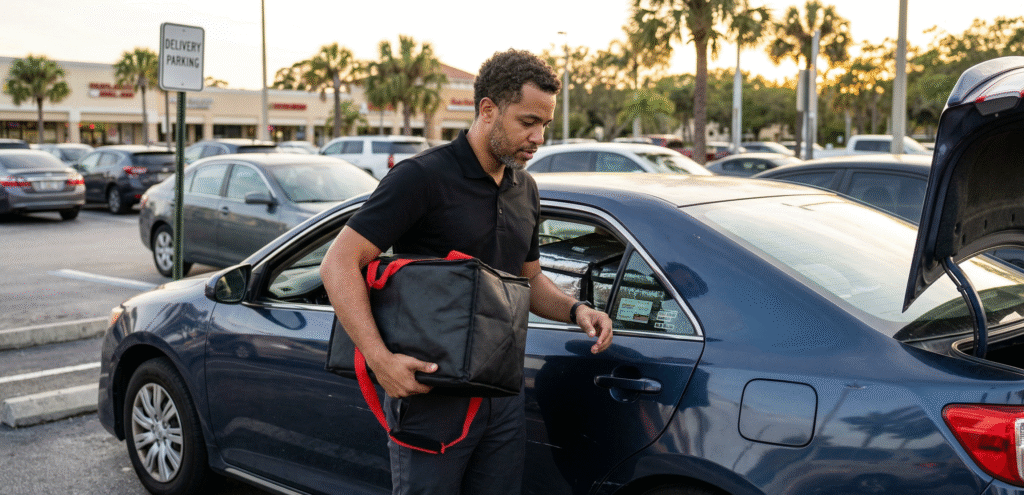
Why Commercial Auto Thinking Matters Even for Restaurants
Some owners hear “commercial auto” and assume it only applies to trucking companies, formal fleets, or businesses with multiple branded vehicles. That is too narrow a way to think about it.
Commercial auto exposure begins when vehicles become part of how the business operates. For a restaurant, that may mean deliveries, supply runs, catering transportation, or employee driving tied directly to restaurant activity.
This does not mean every restaurant has the exact same auto insurance need. It means owners should evaluate whether their current structure reflects reality.
Questions worth asking include:
- Are any vehicles owned by the business?
- Are employees driving for work in their own cars?
- Are deliveries a recurring part of operations?
- Do managers use vehicles for banking, supply pickup, or restaurant errands?
- Has the restaurant added delivery without revisiting insurance structure?
These questions matter because restaurants often change faster than their insurance does.
Hired and Non-Owned Auto Exposure: Why It Matters So Much
For restaurants, one of the most important ideas to understand is that owned vehicles are not the only source of auto exposure.
A lot of restaurants rely on vehicles they do not own:
- employee personal cars
- rented vehicles
- temporarily used vehicles
- manager-owned vehicles used for work tasks
That is why the concept of hired and non-owned auto exposure matters so much. Even when the restaurant does not own the vehicle, the business can still face risk because the vehicle was used to support operations.
Owners do not need to memorize technical terminology to understand the core issue. The issue is simple: if the business benefits from the driving activity, the business should think carefully about whether that activity is properly insured.
How a Delivery Crash Can Hurt the Business Even Beyond Insurance
A serious accident can create more than claim costs.
For a restaurant, the secondary damage may include:
- staffing disruption if the driver is injured
- customer complaints when delivery service stops
- reduced confidence in in-house delivery
- management time pulled away from operations
- administrative and legal distraction
- damage to reputation if the incident becomes public or local
This is why delivery accidents are not just claims events. They are operational shocks.
Ready.gov’s business continuity guidance emphasizes planning for disruptive incidents and maintaining continuity under stress. That guidance is often associated with major disasters, but the principle applies here too: a restaurant should not wait until the crisis begins to figure out how it will keep functioning.
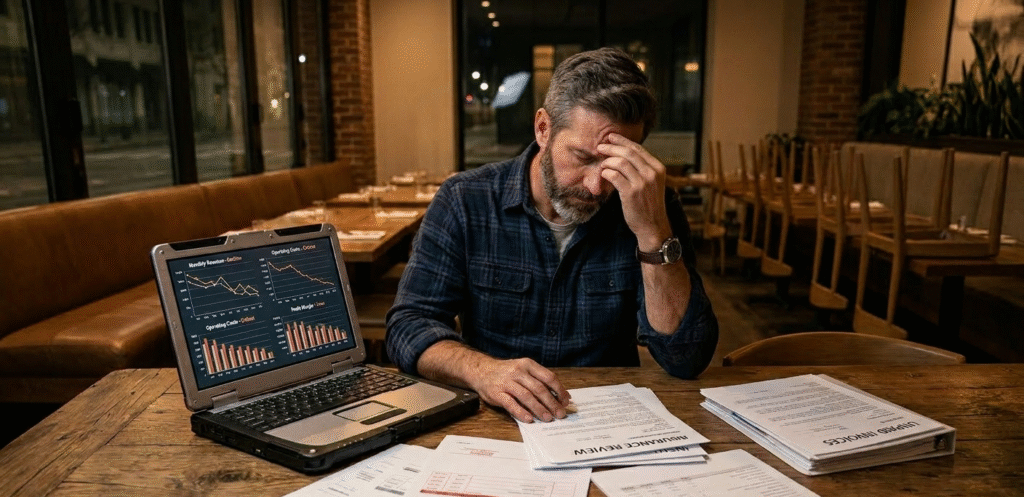
Why Restaurant Insurance Should Reflect Real Delivery Operations
Restaurants already operate with layered risk:
- customer injuries
- employee injuries
- food handling liability
- equipment dependence
- weather and property issues
- staffing volatility
Add delivery into that picture and the complexity increases. That is why restaurant and entertainment insurance should be reviewed in light of how the business truly works day to day, not just how it looked when the original policy was purchased.
A restaurant that began as dine-in only may now do delivery, catering, private events, or operational errands involving vehicles. If the policy has not evolved with those changes, the owner may be relying on old assumptions.
That is one reason we believe restaurant insurance should be reviewed as a living structure, not a one-time purchase.
Questions Every Restaurant Owner Should Ask Before a Crash Happens
The best time to think about delivery exposure is before there is an accident.
Here are practical questions restaurant owners should be able to answer:
- Do any employees drive for work, even occasionally?
- Are personal vehicles being used for deliveries or errands?
- Do we understand the difference between personal and business auto exposure?
- If a delivery driver injured someone, do we know how our coverage would respond?
- If the employee driver got hurt, do we understand that part of the risk too?
- Has our insurance been reviewed since delivery or catering became part of the business?
A lot of painful surprises happen because owners never had a structured conversation around those questions.
What Owners Usually Regret Most After a Delivery Accident
After a crash, owners often say some version of the same thing:
- “I assumed the driver’s insurance would handle it.”
- “We only did deliveries once in a while.”
- “I didn’t think the restaurant could be pulled in.”
- “I never reviewed that part of the risk.”
- “I thought our policy covered more than it actually did.”
That pattern is important because it shows the real problem is often not lack of care. It is false confidence.
The owner was trying to operate efficiently. Delivery was part of serving customers. But because the insurance structure was never reviewed with that exposure in mind, the business walked into a bigger risk than it recognized.
Final Thoughts: A Delivery Accident Is Never Just a Driving Problem
When a delivery driver causes an accident while working for your restaurant, the problem is almost never limited to the vehicle itself.
It can become:
- a liability issue
- an employee injury issue
- a business interruption issue
- a documentation issue
- a coverage gap issue
- a legal and financial pressure point
That is why restaurant owners should not treat delivery exposure casually, even if deliveries seem occasional or secondary to the core business.
If vehicles are helping the restaurant generate revenue, serve customers, move goods, or keep operations running, then the restaurant should think about that risk like a real business exposure, not a side detail.
Because after a crash, that “small detail” can become one of the biggest problems in the business.