Restaurant Insurance
Yes, a restaurant can be sued for food poisoning in Florida, and that possibility is one of the most serious liability risks restaurant owners need to understand. Foodborne illness claims can create legal expenses, customer injury allegations, reputational damage, insurance questions, and operational pressure all at once. For a restaurant, that means a single complaint can become much more than a customer service issue. The U.S. Small Business Administration notes that business insurance exists to protect companies from unexpected costs including accidents and lawsuits, which is exactly why this kind of exposure deserves attention from restaurant owners before a claim ever happens.
What makes this issue especially difficult is that food poisoning claims are emotionally charged. If a customer believes your restaurant made them sick, they are not thinking about policy language or procedural fairness. They are thinking about pain, lost time, medical costs, and blame. That emotional context can push complaints quickly toward legal action, public criticism, health department involvement, or insurance claims.
For Florida restaurant owners, the real mistake is assuming that this only happens to reckless businesses. It does not. Food service is a high-trust industry. Customers are placing their health directly in your hands every day. That is why restaurant liability needs to be taken seriously even when the operation is well run.
Why Food Poisoning Claims Feel So Dangerous to Restaurant Owners
Some liability issues are easier to separate emotionally from the core business. A broken chair, a delivery accident, or even some property claims may feel external to the food itself.
Food poisoning is different.
When a customer claims they got sick from food served by your restaurant, the allegation goes straight to the heart of the business. It raises questions about:
- food handling
- temperature control
- contamination
- storage procedures
- employee hygiene
- cleaning and sanitation
- supplier quality
- management oversight
And because restaurants depend so heavily on trust, the reputational impact can hit fast. Even before a claim is proven, an owner may be dealing with customer complaints, online reviews, internal stress, and concern about whether authorities or insurers will get involved.
The CDC explains that common food poisoning symptoms include diarrhea, stomach pain or cramps, nausea, vomiting, and fever, while more severe illness can involve bloody diarrhea, prolonged symptoms, high fever, and dehydration. That medical reality is part of what makes these claims potentially serious from both a human and legal standpoint.
Can a Customer Actually Sue a Restaurant Over Food Poisoning?
Yes. A customer can sue a restaurant over food poisoning if they believe the restaurant’s food caused their illness and they suffered harm as a result.
That does not mean every complaint becomes a successful lawsuit. But it does mean the legal exposure is real.
From a practical standpoint, a food poisoning claim may involve allegations such as:
- the restaurant served contaminated food
- food was stored at unsafe temperatures
- cross-contamination occurred during preparation
- staff hygiene practices were inadequate
- spoiled ingredients were served
- known food safety protocols were ignored
A lawsuit may seek compensation for:
- medical expenses
- lost wages
- pain and suffering
- additional health complications
- in some cases, broader damages depending on the severity of the situation
The FDA explains that foodborne illness occurs when people consume food or beverages contaminated with pathogens, chemicals, or toxins, and the agency works with state and local partners during outbreak investigations to identify causes and help prevent further illnesses.
So the core answer is straightforward: yes, a restaurant can be sued. And even before a formal lawsuit, a restaurant may still face complaints, investigations, insurer involvement, and reputational damage.
Why Proving Food Poisoning Can Be Complicated — But Still Risky
One reason some restaurant owners underestimate this issue is that proving food poisoning is not always simple.
Customers may have eaten in multiple places. Symptoms can appear later rather than immediately. Medical confirmation may be incomplete. The exact source of the illness may be disputed. In many cases, there is uncertainty.
But uncertainty does not remove the risk.
A restaurant may still have to respond to:
- a direct customer complaint
- a demand for reimbursement
- a public accusation online
- an insurance notice
- an attorney letter
- a regulatory inquiry
That is part of what makes these claims so expensive emotionally and operationally. The claim does not need to be perfectly proven on day one to create disruption.
The FDA also notes that when outbreaks are investigated, public health advisories may be issued when there are actionable steps consumers should take, which shows how quickly food-related concerns can move into broader public-health territory when patterns or evidence support it.
What Increases the Risk of a Food Poisoning Claim?
Restaurants do not all face the same level of foodborne illness exposure. Some factors make claims more likely or more severe.
Common risk factors include:
- improper cold storage
- undercooked food
- poor handwashing practices
- cross-contamination between raw and ready-to-eat items
- unsafe holding temperatures
- weak cleaning and sanitation routines
- employee illness not handled properly
- poor traceability of ingredients
- delayed response to customer complaints
The FDA’s safe food handling guidance centers on four core principles: clean, separate, cook, and chill. Those fundamentals may sound simple, but they go directly to the heart of what later becomes a liability issue if they are ignored or applied inconsistently.
For restaurant owners, the important takeaway is that food poisoning risk is not only about one dramatic mistake. It is often about repeated operational weaknesses that create openings for a serious problem.
Why Florida Restaurant Owners Should Take This Especially Seriously
Florida is a high-volume hospitality environment. Restaurants often deal with:
- heavy customer traffic
- fast service pressure
- heat and humidity
- seasonal staffing changes
- tourism-driven volume
- event-related surges
- expanded menu or service demands
That combination can increase operational stress in ways that matter for food safety and claims exposure.
It is not that Florida creates a unique legal theory for food poisoning. It is that the operating environment can magnify the conditions that make mistakes more likely if systems are weak.
For restaurant owners here, this matters because the business is not being judged only by intent. It is being judged by outcomes, documentation, consistency, and whether reasonable food safety practices were followed.
What Happens After a Customer Says Your Food Made Them Sick?
A lot of owners do not know what the first stages of this look like.
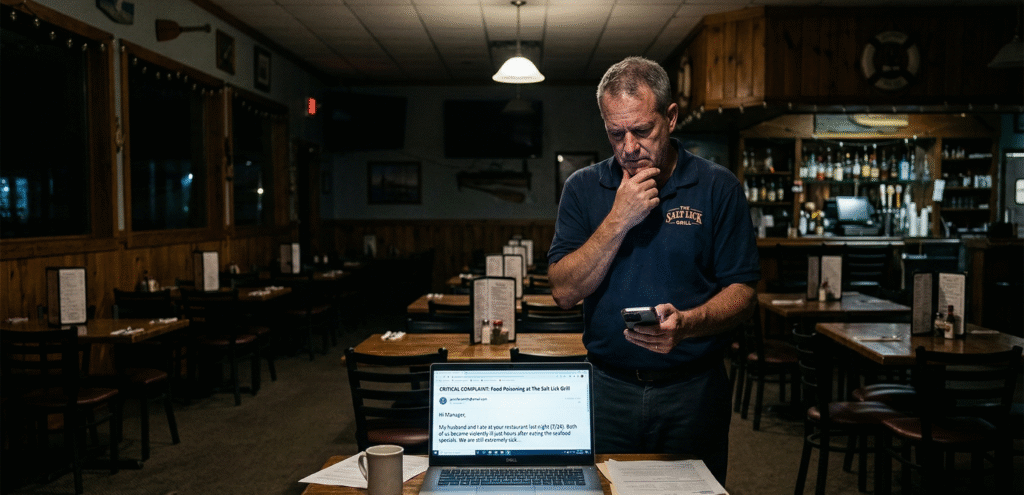
A food poisoning issue often starts with a direct complaint:
- a phone call
- an email
- a message through social media
- an online review
- a demand for refund or compensation
Sometimes that is where it ends. But other times it escalates.
The customer may say they sought medical care. They may claim others were affected too. They may report the issue to public health authorities. They may contact an attorney. They may ask that the restaurant preserve records or communicate with an insurer.
The FDA says consumers with symptoms should contact their healthcare provider and that complaints or adverse events involving food can also be reported through official channels.
For a restaurant owner, that means the complaint is no longer just a customer-relations problem. It becomes a legal, documentation, and risk-management problem.
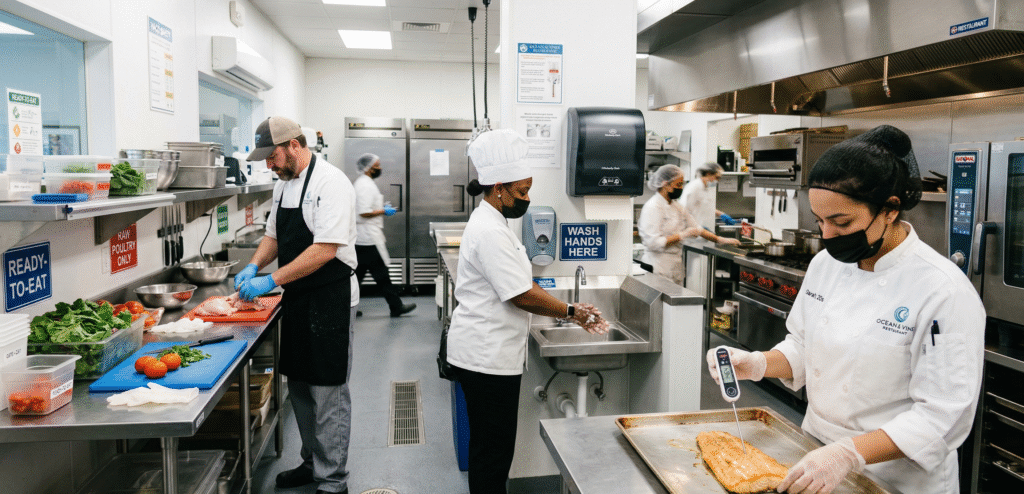
Why Documentation Becomes Critical Almost Immediately
If a restaurant faces a food poisoning allegation, documentation can matter enormously.
The business may need to review:
- what the customer ordered
- when the meal was served
- who handled the food
- temperature logs
- cleaning logs
- supplier records
- employee schedules
- product lot information if relevant
- any similar complaints from other customers
Owners who do not maintain consistent records place themselves in a weaker position when they need to respond clearly and credibly.
This is one reason food poisoning claims can become so stressful. Even when a restaurant believes it acted responsibly, weak documentation can make the business look less organized, less careful, or less defensible than it actually was.
Can One Complaint Turn Into a Bigger Outbreak Problem?
It can.
Not every complaint signals an outbreak, but restaurants should never assume a complaint is automatically isolated. If several people report similar symptoms after eating similar food, the situation can become much more serious.
The FDA’s outbreak investigation resources show that outbreak response involves coordination with state and local partners, and that consumers are urged to seek medical care and report symptoms when appropriate.
For restaurant owners, that means a single complaint should be taken seriously enough to prompt internal review. The worst-case scenario is not just one unhappy guest. It is failing to notice a pattern until it becomes much larger.
Where Insurance Enters the Conversation
This is where many restaurant owners finally realize how financially serious the issue can become.
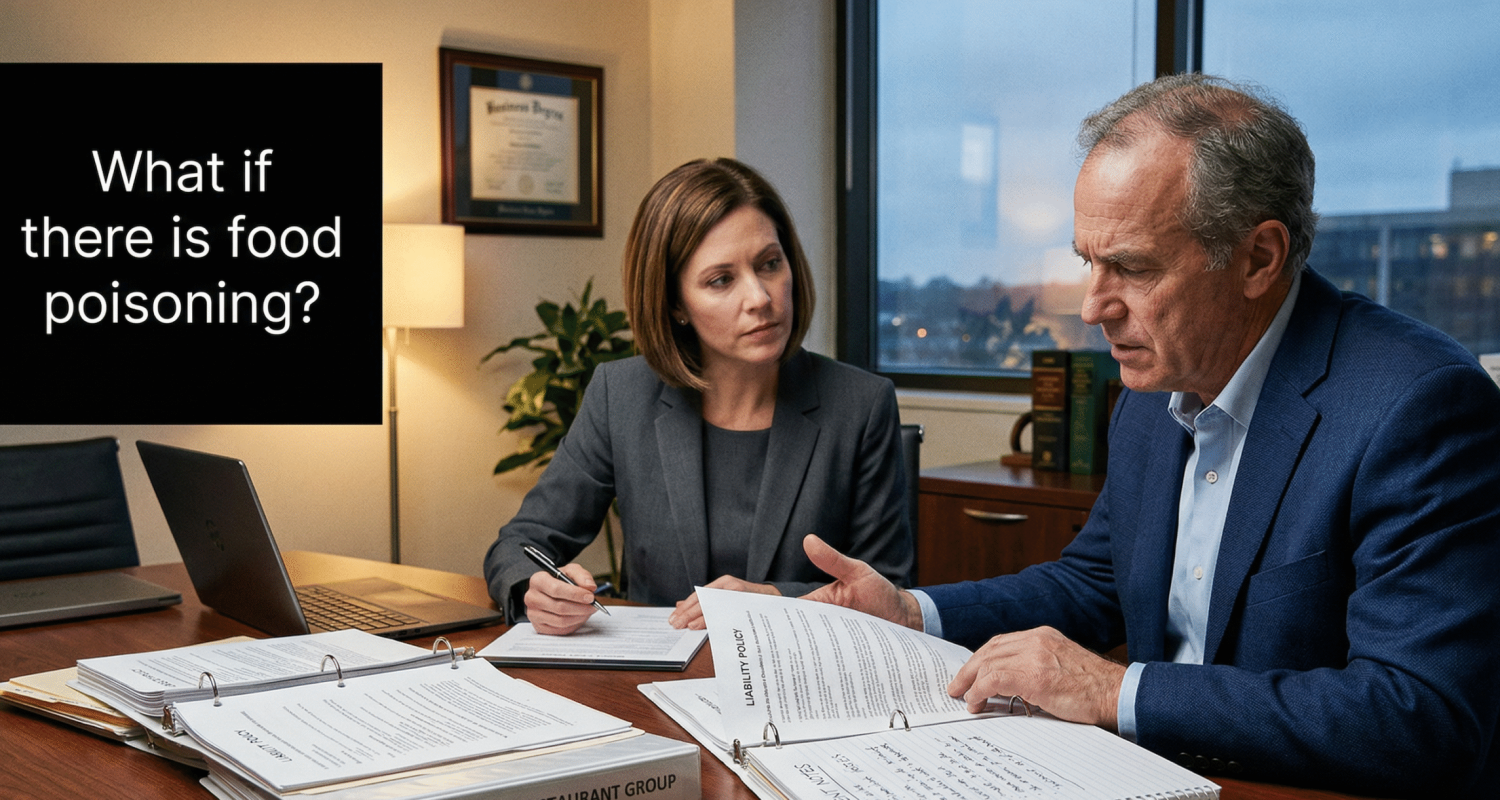
A food poisoning claim is not just about whether the business did something wrong. It is also about what kind of protection exists if a customer alleges harm and the restaurant has to defend itself.
That is why commercial liability matters so much. Liability protection is one of the main ways businesses prepare for third-party claims involving bodily injury or alleged harm tied to operations.
For restaurants, that insurance conversation is even broader because food service has its own operational exposures. That is one reason restaurant and entertainment insurance should be reviewed as something specialized, not generic.
A restaurant policy structure needs to reflect the real business model. A business that serves prepared food to the public every day carries a different exposure profile than many other small businesses. That should be reflected in how protection is built.
Why Food Poisoning Claims Are Not Only About Winning or Losing a Lawsuit
A lot of owners think in very binary terms:
- either the customer proves it or not
- either the case wins or not
- either the restaurant is liable or not
But in practice, the damage can begin much earlier.
A food poisoning allegation can still cost the business through:
- legal consultation
- insurer involvement
- staff time
- internal investigation
- lost customer trust
- negative reviews
- disrupted operations
- changes in handling or suppliers
- pressure from public complaints
This is why food poisoning risk should not be evaluated only as a courtroom issue. It is a business disruption issue.
The Cost of Reputational Damage Can Be Brutal
For many restaurants, reputational damage may be more painful than the original complaint.
A customer who believes they got sick may post online immediately. Friends and family may amplify the accusation. Social media can turn a single allegation into a broader perception problem before the facts are even clear.
That is one reason restaurant owners need to understand food poisoning risk as both a liability issue and a brand-trust issue.
Food service is built on repeat trust. Customers are not only buying a meal. They are trusting the restaurant with their health. Once that trust is shaken, rebuilding it can take real time.

Why Prevention Matters More Than Defense
The best response to a food poisoning lawsuit is still prevention.
That means not just reacting to claims well, but building operations that reduce the likelihood of claims in the first place.
Practical prevention includes:
- strong handwashing enforcement
- clear illness reporting rules for staff
- safe temperature monitoring
- separation of raw and ready-to-eat items
- cleaning and sanitation discipline
- proper cooking procedures
- documented food safety systems
- serious response to complaints
The FDA Food Code exists as a model for safe retail food handling practices and is designed to reduce foodborne illness risk in establishments such as restaurants.
For restaurant owners, that means the best insurance conversation starts before the claim, not after it.
What Restaurant Owners Usually Regret Most
After a food poisoning issue, owners tend to regret the same things:
- not taking a smaller complaint seriously
- not documenting food safety consistently
- not training staff strictly enough
- not reviewing insurance with restaurant-specific risk in mind
- assuming this only happens to careless operators
- waiting until the claim to understand what the policy actually does
That last one is especially important.
Many owners think they understand their coverage until the restaurant is accused of causing actual harm. That is when they realize they never reviewed the issue in enough detail.
Final Thoughts: Yes, a Restaurant Can Be Sued — and That’s Why Preparation Matters
Yes, a restaurant can be sued for food poisoning in Florida. That is the short answer. But the more useful answer is that the legal risk is only one part of the problem.
A food poisoning allegation can create:
- liability exposure
- legal expense
- public criticism
- operational stress
- record-review pressure
- insurer involvement
- customer trust damage
That is why restaurant owners should not think about this only as a rare legal scenario. It is a real business risk built into the nature of food service.
The smartest approach is not panic. It is preparation.
That means taking food safety seriously, documenting consistently, responding to complaints carefully, and making sure the restaurant’s insurance structure actually reflects the real exposure of serving food to the public every day.
Because when a claim comes, the question is no longer whether this topic matters.
The question is whether the business prepared early enough.